The paper trail
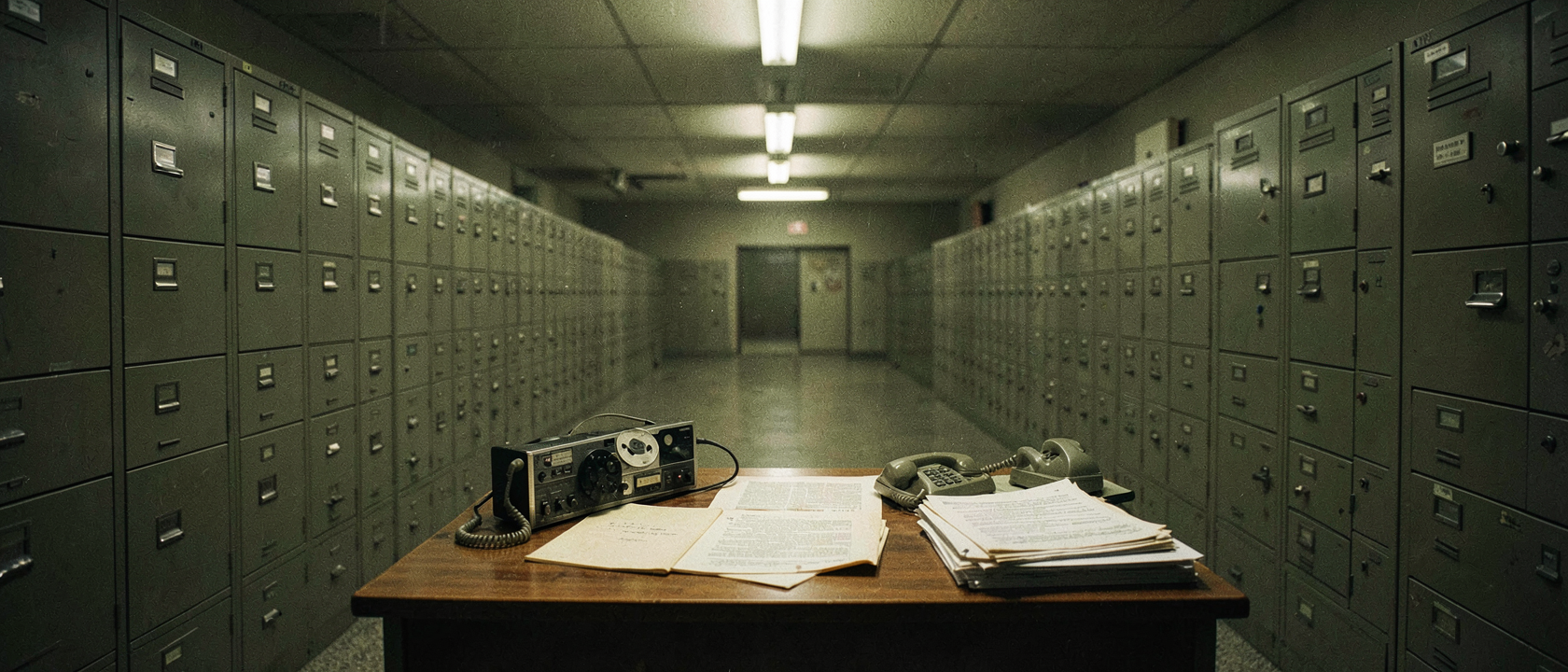
Henry Kissinger recorded his own telephone calls for the better part of seven years, from 1969 until he left government in late 1976. The recordings and transcripts were made by his own staff, at his own direction, while he served as national security advisor and, from 1973, as secretary of state. He began two years before President Nixon started taping his own calls in 1971, and continued more than three years after Nixon’s system was shut down in 1973. The result was roughly 20,000 pages of transcripts, known inside his office as “telcons.” A separate 2023 posting from the National Security Archive puts the total above 30,000 pages; the two figures have not been reconciled in the published record.
When Kissinger left office, he took the transcripts with him, labeling them his private papers. The National Security Archive, a Washington, D.C. research group, filed a legal complaint against the State Department and the National Archives and Records Administration in January 2001, arguing the transcripts were government property. Facing the risk of losing in court, State Department lawyers negotiated their return in mid-2001 and early 2002. Analyst Bill Burr then led Freedom of Information Act (FOIA) petitions that produced the declassification of more than 15,000 pages in August 2004. Burr died on December 11, 2025. Historian Tom Wells’s “The Kissinger Tapes: Inside His Secretly Recorded Phone Conversations” (Oxford University Press, March 2026, 620 pages) is the first book built around extended excerpts from that material.
Cambodia, August 10, 1973
On August 10, 1973, with Congress in the middle of hearings on the secret U.S. bombing of Cambodia, Kissinger telephoned Secretary of Defense Melvin Laird. According to the transcript, held in the Tom Wells Collection, he pressed Laird to defend the bombing publicly, arguing it had saved American lives and that the Cambodian government had itself requested it.
The same collection holds an earlier exchange from that summer. New York Times reporter Seymour Hersh called Kissinger about reports that after-action records on the bombing campaign had been falsified; Kissinger told him he had learned of it only from a newspaper. Three hours later, according to the transcript, Kissinger called his deputy, Alexander Haig, and briefed him on the same falsification he had just told Hersh he knew nothing about.
The Blood cable
In March 1971, Archer Blood, the U.S. consul in Dacca, East Pakistan (now Dhaka, Bangladesh), sent a cable describing mass killings by the Pakistani military. Kissinger relayed the cable to Nixon by phone. In a later call, held in the Tom Wells Collection, he dismissed the cable and disparaged Blood personally. Nixon then ordered Blood removed from his post.
Wiretaps and Watergate
Three further calls appear in the record as separate items, with no line drawn between them by the transcripts themselves.
Robert Kennedy’s wiretaps
In one call, part of “The Kissinger Transcripts: A Verbatim Record of U.S. Diplomacy, 1969-1977,” Nixon tells Kissinger he plans to make public that Robert Kennedy had ordered wiretaps on 300 people in 1963. Kissinger agrees with the plan.
The Safire denial
In another, New York Times columnist William Safire and colleague John Crewdson press Kissinger on whether he ordered a wiretap on Safire’s own phone. Kissinger denies personally requesting any wiretaps, saying the authority rested with Attorney General John Mitchell.
Garment on Watergate
In a third, Kissinger tells White House counsel Leonard Garment that he assumes Watergate is “not an isolated event.”
What the release amounts to
Neither the FOIA fight nor Wells’s book produces a single verdict. What exists is a documentary set: a verbatim transcript set beside a later public statement, with the gap between them left unexplained by any outside party. No investigator or court has offered an innocent or alternate account of the Cambodia, Blood, or wiretap exchanges. That absence is a fact about the record, not a finding in itself.
Where the pages stop
Three specific breaks appear in the published material. First, the excerpt of Kissinger’s first substantive call with Nixon after the 1973 Chilean coup against Salvador Allende, in which Kissinger says the United States “helped” bring the coup about, stops mid-sentence in “The Kissinger Transcripts: A Verbatim Record of U.S. Diplomacy, 1969-1977”; nothing beyond that point is quoted or described as existing.
Second, neither the released transcripts nor Wells’s book follows Blood’s story past Nixon’s removal order. What became of him afterward is not part of the published record.
Third, Wells’s book and the Archive elsewhere describe Kissinger as having had a role directing FBI surveillance of journalists and staff. That broader characterization is never reconciled, in anything released so far, with his denial to Safire’s colleague that he personally ordered any wiretap.
What people have said since
A review in Foreign Affairs described the recordings as reinforcing Kissinger’s reputation for brilliance and wit while also documenting less flattering traits. Wells’s book quotes Helmut Sonnenfeldt, a former State Department colleague, saying Kissinger “does not lie because it is in his interest” but “because it is in his nature,” and quotes Hersh saying Kissinger “lied the way most people breathe.” Wells has said the transcripts “shed new light” on the controversies of the period and on Kissinger’s personality. Tom Blanton, the Archive’s director, called Burr’s recovery of the files a “permanent accountability tribute” in a memorial published December 15, 2025. Peter Kornbluh, an Archive analyst, has called the book “an incomparable compilation of Henry Kissinger in his own words… and a verdict of history on his controversial foreign policies.” Each of these is a judgment offered after the fact, not a finding drawn from the transcripts themselves.
The shape of the file
What is on the record: roughly 20,000 pages of transcripts recovered against the wishes of the man who had them made, more than 15,000 pages of that total declassified in August 2004, and a set of excerpts published by one historian in March 2026. What is not on the record: the rest of the sentence about Chile, the rest of Archer Blood’s career, and any reconciliation between Kissinger’s denial to Safire’s colleague and what else has been said about his role in surveillance. Where the transcripts end, the book ends with them.