Box One: A Transmittal Slip, Two Boxes, One Accession Number
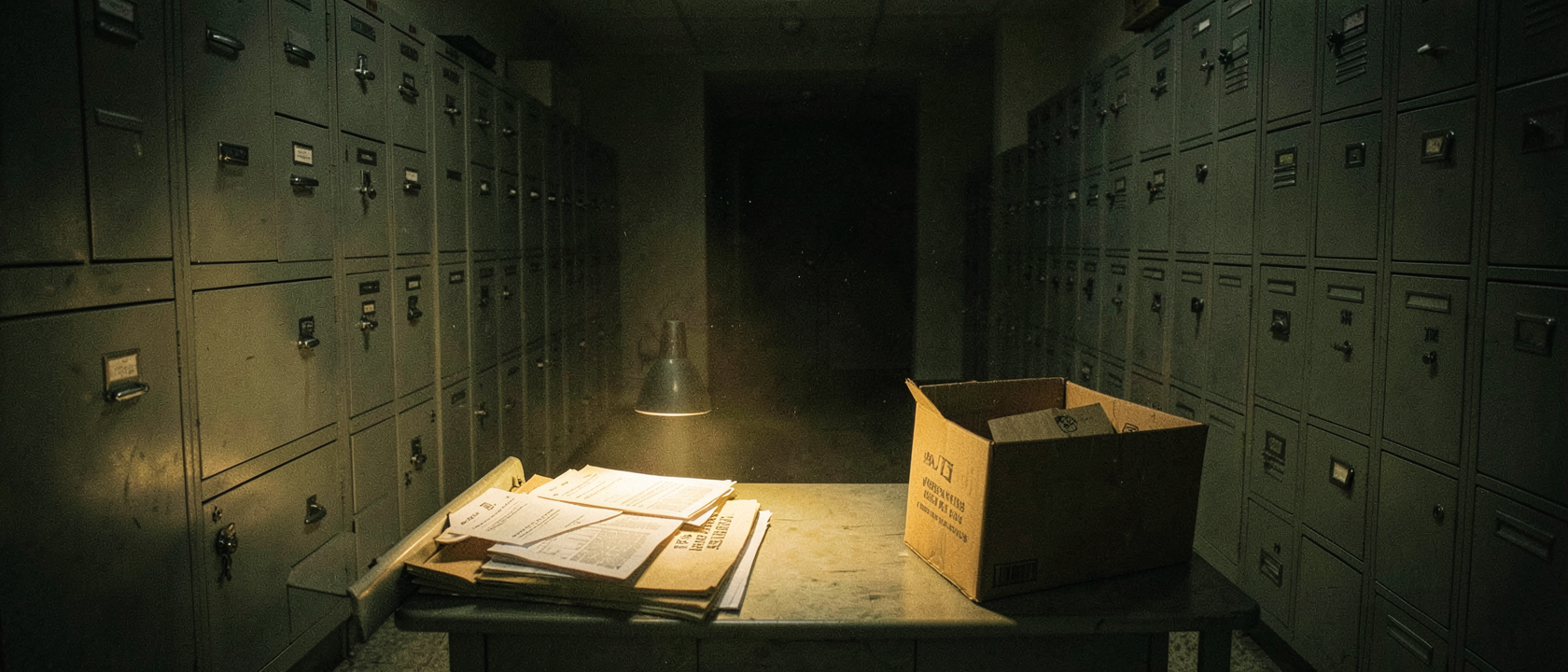
The record begins with a shelf label. Between late 1967 and early 1968, NASA sent a batch of documents to the National Archives and Records Administration, NARA, the federal agency that stores and tracks government records once an agency is done using them day to day. The transmittal slip and its index describe the material as “NASA Fragology Files consisting of reports of space objects recovery, analysis of fragments to determine national ownership and vehicle origin.” NARA logged the transfer under accession number 255-68A-2062, the tracking code an archive assigns to a batch of records so it can be found again as a single unit.
That is the whole of what survives about the contents. No inventory of individual reports, no list of incidents covered, no author names beyond what later correspondence would surface. The paperwork describes a purpose, figuring out whose hardware had come down and where it came from, but not what any specific report concluded.
Box Two: Flagged, Then Formally Lost
NARA’s internal tracking marked the two boxes as unlocated as far back as 1987. That status sat as an internal flag for nine years before it became a letter: in 1996, NARA wrote to NASA and said, in plain terms, that the boxes could not be found. A NASA records manager repeated the same account in a 2006 email: sent to Archives in the 1960s, declared missing in 1987, not located since. Nothing in the released record explains what happened in the nineteen years between the internal flag and the formal letter. There is no note of any search in that window. The gap is a fact about the paperwork, not a fact about the boxes.
Box Three: What Kean’s Lawsuit Surfaced
Leslie Kean, a freelance reporter, filed a FOIA request to NASA in January 2003 asking for records tied to a 1965 fireball reported over Kecksburg, Pennsylvania, along with the Fragology Files, Project Moon Dust material, and other named subjects. When NASA’s response stalled, she sued. A federal judge, after more than three years of pushing the agency, described NASA’s earlier search efforts as never having fully answered the request, and eventually ordered a proper search in October 2007.
According to Black Vault’s document archive, the litigation produced 21 pages of court records and a separate 13-page referral sent to the Executive Office for United States Attorneys, a Justice Department office. Those 13 pages came back withheld in full; their existence is documented, their content is not. No Fragology Files were recovered through the lawsuit. NASA’s later searches, running to 297 boxes checked by mid-2008, turned up hundreds of pages on other subjects and nothing on Kecksburg or the missing fragology material. By November 2009, Kean concluded the legal avenues were exhausted and closed the case.
Box Four: Greenewald’s 2021 Requests
John Greenewald, who runs the FOIA archive The Black Vault, filed new requests to NASA and NARA in May 2021 asking for fresh searches. NARA’s response letter that year describes a specific method: checking whether accession number 255-68A-2062 had been mistyped or misfiled under a variant number. That check came back empty too.
Separately, NASA’s response to the same round of requests produced more than 220 pages in July 2021, tied to the earlier Kean litigation, including Project Moon Dust material and internal correspondence from the lawsuit years. It did not include anything identified as the Fragology Files. Two agencies used different search methods and reached the same result.
Box Five: The Official Position, Stated Twice, Not the Same Way
NARA’s position, as written, is short: the records cannot be located. NASA’s position, given separately, is that an unspecified number of related temporary records, described as working notes and internal correspondence, were destroyed under the agency’s own records retention schedule, the rules fixing how long a category of file is kept before it can legally be discarded. NASA’s letter attributes the destruction to the event being judged of insufficient significance at the time, with disposal occurring after 15 to 20 years.
That is an ordinary bureaucratic explanation, and it accounts for some of the paper trail’s thinness without needing anything stranger behind it. But it answers a different question than NARA’s: NASA describes files it says were destroyed on schedule, while NARA describes files it says it cannot find. Neither letter addresses the other’s claim, and nothing in the record shows the two agencies ever reconciled them.
Box Six: Arrived, or Never Arrived?
Read closely, the two NARA statements pull in different directions. The 1996 letter and the 2006 NASA email both describe a transfer that happened, followed by a loss: the files came in and were later misplaced on the shelves. The 2021 letter, in Greenewald’s reading of its wording, leans toward a different story, that the accession number was checked and rechecked with no trace found, consistent with records that were never physically received in the first place.
NARA has not put the two readings side by side in writing. No single document states which account is correct, or whether the agency considers the question settled at all. This is the one place where the record contradicts itself rather than simply falling silent, and it stays open on the page.
Box Seven: Three More Things That Don’t Line Up
NASA’s letter about the destroyed working notes gives no list, no date range, and no description of what those files covered, a gap in the paperwork rather than evidence of content. Separately, the Project Moon Dust material that appeared in NASA’s July 2021 release, which originated as Department of State records, did not show up in a parallel FOIA request Greenewald sent directly to the State Department, and nothing in the source material explains why. The Black Vault has not, as of the available record, cross-checked Defense Intelligence Agency releases containing Moon Dust material against what NASA turned over, unfinished comparative work, not a finding.
Box Eight: What People Have Said Since
Kean’s lawsuit rested on her assertion that the Fragology Files existed and could be recovered with a proper search. That was her claim going in; the eventual searches did not confirm it, and she said as much when she closed the case in 2009. Attorney Lee Helfrich, working the case, called it unprecedented to have forced an agency into that scale of historical search. John Podesta, commenting afterward, called the settlement a win for open government.
Greenewald reads the 2021 NARA letter as a shift away from “lost after transfer” toward “never transferred,” though no NARA document uses that phrase or states it outright. He has also said he remains optimistic that a fresh search could still succeed, pointing to other cases where records once thought permanently gone turned up later under new staff or better search tools, an assessment of the odds, not a finding in any file. The accession number stands in NARA’s system. What it once pointed to, or ever did, is where the paper trail runs out.