The Paper Trail
Michael Townley pressed his thumbprint into four handwritten documents and gave them to his wife to hide. He was an American-born officer of Chile’s Dirección de Inteligencia Nacional (DINA), built under Augusto Pinochet, and in March 1978 he believed his own agency might kill him before the FBI could take him into custody.
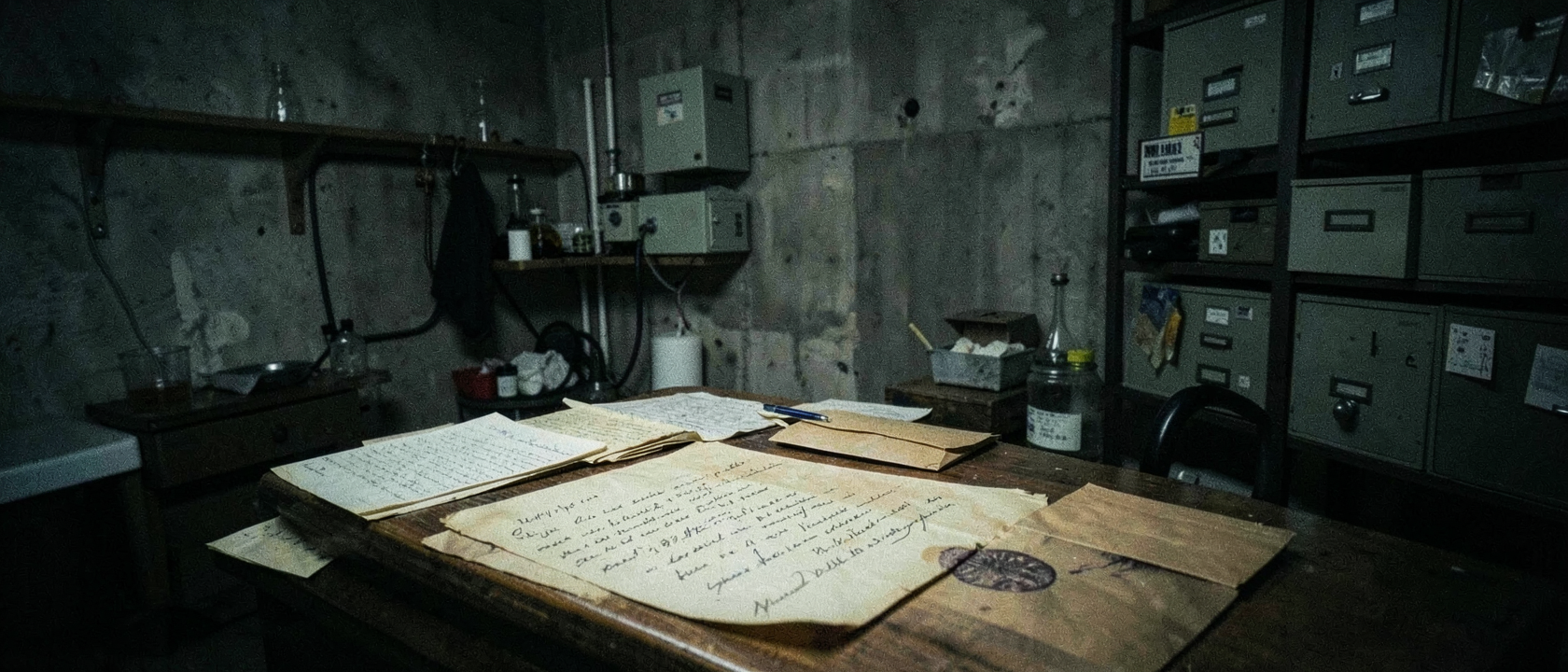
The documents share one author and roughly one moment of composition: “Confesión y Acusación,” dated March 13, 1978; a longer manuscript, “Historia de actuación en DINA,” setting out four years of Townley’s work inside the agency; an annex, “Relato de sucesos en la muerte de Orlando Letelier el 21 de septiembre, 1976,” on the Letelier killing; and an undated letter addressed to “Don Manuel,” signed with the alias “J. Andrés Wilson.”
Townley’s wife, Mariana Callejas, kept the papers even after Chile handed her husband to the FBI on April 8, 1978. She gave American authorities the letter in 1982; the rest arrived later, and a Justice Department affidavit filed in August 1991, backing an extradition request against Manuel Contreras and Pedro Espinosa, described how it had all reached U.S. hands. Justice Department staff transcribed the manuscripts in the early 1990s and passed copies to the government of Patricio Aylwin, Pinochet’s successor; journalist Pascale Bonnefoy later found those transcriptions in the Aylwin presidential archive at Universidad Alberto Hurtado in Santiago. In 2015 the Obama administration gave Chile’s government, then under Michelle Bachelet, the original letter along with more than 200 other declassified files on the case. The National Security Archive published the full set of confessions together for the first time on November 22, 2023, forty-five years after they were written; CIPER Chile carried the material two days later. The Archive tied the release to the fiftieth anniversary of DINA’s founding, not to any date on the letter itself.
What Townley Says He Built
In “Historia de actuación en DINA,” Townley writes that senior DINA officers recruited him in 1974 and gave him a house in the Lo Curro section of Vitacura, in Santiago. He states he was ordered to build a chemical-weapons laboratory in its basement and that he commanded a unit called Agrupación Avispa under the Brigada Mulchén. In the Letelier annex, he writes that DINA’s orders were to locate Letelier and have him killed “by sarin, by being run over, or by any method,” and that, in his words, the government of Chile wanted him dead. This is what the manuscript states; it is not, by itself, proof of how the operation actually ran, or of every act carried out under Townley’s command.
The Letter to Don Manuel
The letter is where the case turns. Writing as “J. Andrés Wilson,” Townley addresses Manuel Contreras directly and names him as the man who would order Townley’s own death if DINA decided he had become a liability. The letter is undated but appears to have been written in early March 1978, right after Chilean and American newspapers named Townley as the lead suspect in the Letelier-Moffitt killing. In it he complains that DINA should never have relied on Paraguay for false travel documents, and that once the operatives’ U.S. visas were canceled the mission should have been dropped outright, since the CIA already knew who they were. He writes that the “biggest mistake” was failing to tell Pinochet “the true scope of this problem,” and recommends tighter press controls to stop further disclosures.
What the letter establishes is narrow: in March 1978, Townley believed Contreras might have him killed, wrote that belief down, and marked the page with his thumbprint. Whether Contreras, or anyone above him, ever read a word of it is not something the letter itself can tell us.
What the Courts Did With It
After his handover to the FBI in April 1978, Townley pleaded guilty to the murders of Orlando Letelier and Ronni Moffitt and was sentenced to ten years; he served sixty-two months, roughly half the term. In 1979 he testified at the trial of the Cuban exiles who had carried out the bombing itself. Justice Department attorneys later transcribed his manuscripts and cited them, along with the account of how the papers reached American hands, in the August 1991 extradition request against Contreras and Espinosa. In 1993 a Chilean court convicted both men of conspiracy in the assassination of Letelier and Moffitt.
The Two Missing Pages
The copy of “Historia de actuación en DINA” later obtained by researcher John Dinges is missing its first two pages. Nothing in the record explains why. That is a fact about one surviving copy of a manuscript, not a claim about what those pages said or who took them out.
A second gap sits beside it: nothing in the released material describes how DINA responded internally to Townley’s 1978 warnings that his own colleagues might be sent to kill him. The one trace of any internal effort to manage the situation is Townley’s own preemptive denial, written into his confession, that he had ever worked for the CIA inside DINA. Whether he was answering a rumor already moving through the agency, or heading one off before it started, the record does not say.
The Question the Record Doesn’t Answer
The collection does not say whether Augusto Pinochet ever saw, or was told about, Townley’s letter to Contreras. This is not a redaction; no page has been blacked out and none is missing. It is simply the absence of any document, anywhere in what has been released, that puts the letter in front of him, an absence that leaves the question open rather than answering it.
Contreras’s Later Defense
At some point after these events, Manuel Contreras said publicly that Townley had been a CIA agent placed inside DINA to embarrass the Chilean regime. Townley’s own 1978 confession, written years earlier and kept private until Callejas turned it over, had already denied exactly that, in writing, with his thumbprint on the page. The record shows the denial came first. It does not show whether Contreras knew of it when he made his claim.
What Historians Said About the Release
When the National Security Archive published the collection, Peter Kornbluh, who directs the Archive’s Chile Documentation Project, called the documents a harsh reminder of the security apparatus Pinochet built. John Dinges, who had worked with pieces of this material for years, said its particular value was that Townley had written it as first-person testimony before he was ever in American custody, naming his own collaborators without a prosecutor asking him to. Both are readings offered in 2023, after the fact. Neither changes what the four documents themselves establish: a man’s fear, written down in March 1978 and pressed with his thumbprint, and no paper trail showing who above Contreras, if anyone, ever read it.