What arrived
Not every Freedom of Information reply is about something extraordinary. Some are about how little an archive will confirm, in writing, about its own paperwork. That is the shape of a response issued by The National Archives on May 3, 2026, under case reference CAS-315049, filed originally under the title “Closed records relating to RFA Sir Galahad & Sir Tristram Board of Enquiry.” Its status reads: request resolved.
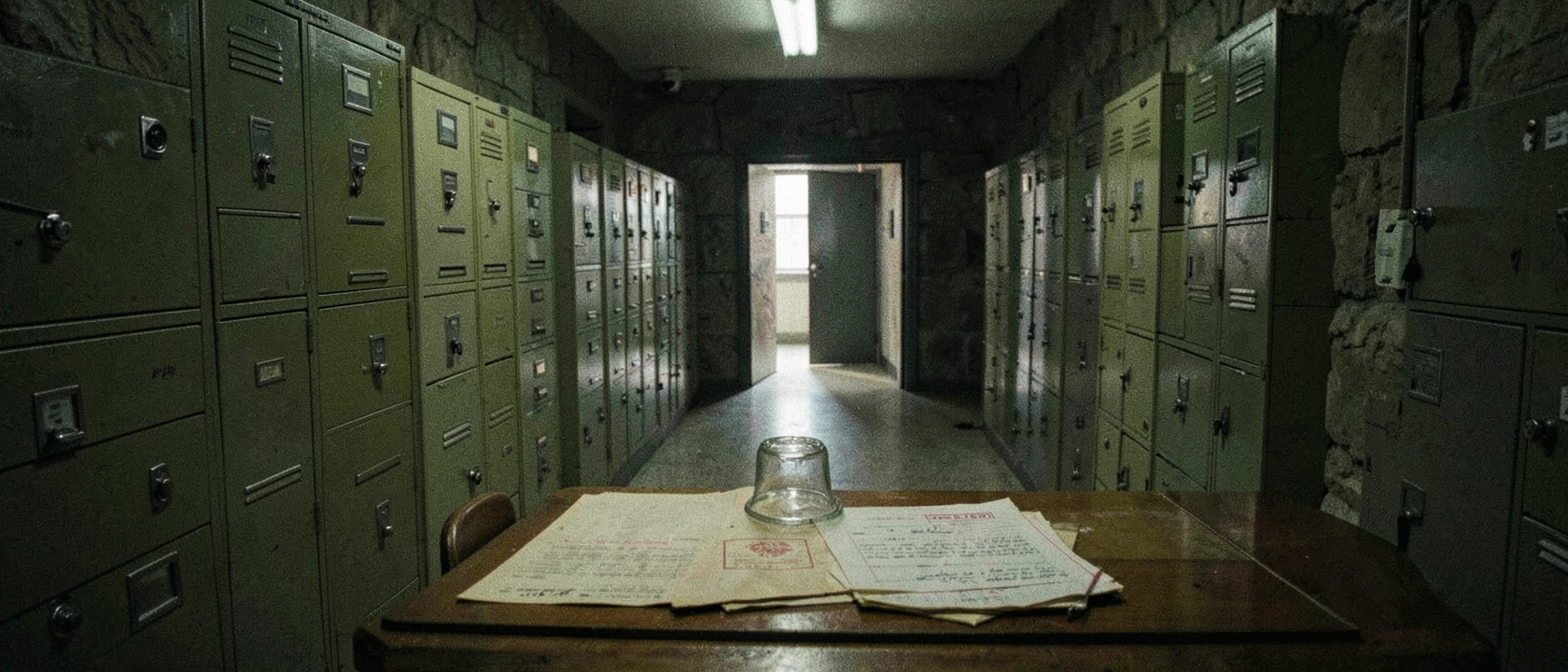
Seven files from the DEFE 69 series are named as closed until January 1, 2065: DEFE 69/920/1, 921, 922, 923, 924, 925 and 928/1. Five of them, 921 through 925, each hold the same three items: a research report, a chain of emails between the Archives and the Ministry of Defence, and a separate email specifically about the decision to keep the file shut. DEFE 69/920/1 has the report and the correspondence but no closure email. A related file in the same batch, DEFE 69/928, adds a Subject Access Request form, the standard form someone files to ask what personal data an organization holds on them, to that same bundle. DEFE 69/928/1 is the thinnest of the seven: only the email chain survives in it.
TNA’s stated outcome was “some information provided.” Redacted PDF copies of the closure-review material can be supplied on request.
The incident the files point to
None of this is explained inside CAS-315049 itself. The response gives file titles and administrative categories, nothing about the events behind them. What follows is background, not something the FOI reply states.
The Board of Inquiry named in the file title examined the attacks on RFA Sir Galahad and RFA Sir Tristram at Port Pleasant, Fitzroy, on June 8, 1982, often referred to as the Bluff Cove air attacks. Five Argentine A-4B Skyhawks of Grupo 5 struck both ships while they were landing Welsh Guards. Three bombs from First Lieutenant Carlos Cachón’s aircraft hit Sir Galahad; two from package leader Lieutenant Daniel Gálvez’s aircraft hit Sir Tristram. The fires that followed killed 48 men aboard Sir Galahad, 32 of them Welsh Guards, and eight more aboard Sir Tristram. Sir Galahad was later scuttled by the submarine HMS Onyx and stands as a war grave. Sir Tristram was brought back to Britain and rebuilt.
In Parliament, the government has separately stated that the losses were the result of enemy action, and enemy action alone (Hansard, November 18, 2024), and that the Board of Inquiry exonerated the Welsh Guards (Hansard, March 25, 2024). Neither statement comes from CAS-315049. An independent academic account in the RUSI Journal has separately identified six files in this series closed until 2065, five described as witness statements and the sixth, 69/928/1, as roughly 13 pages drawn from the main report, 69/920. CAS-315049 itself never uses the words “witness statement.”
The exemptions, and who signed them
TNA states it applied the public interest test, the balance the Act requires between the value of releasing something and the reason for withholding it, and released part of the material in redacted form. The rest was withheld under three sections of the Freedom of Information Act: Section 36(2)(b)-(c), protecting free and frank internal advice and material whose release would harm the effective conduct of public affairs; Section 40(2), covering personal data, applied here to the identities of junior staff; and Section 41(1), covering information given to the Archives in confidence by a third party.
Section 36 carries a specific procedural condition: it can only be applied on the opinion of a “Qualified Person,” a defined role under the Act. Here that opinion was given personally by the Chief Executive and Keeper of The National Archives, not delegated to a case officer.
What a redaction doesn’t tell you
The response names which sections of the Act were used. It does not describe what was cut. Nothing indicates how long the withheld passages run, whether they touch one witness or several, or whether a given Section 36 redaction removes an offhand remark from an internal discussion or a substantial paragraph of assessment. The categories are on record. The content behind them is not, and CAS-315049 gives no way to tell which.
Why 2065, and not some other year
The response confirms the closure date without explaining why 2065 was chosen over an earlier year. The exemptions cited elsewhere, personal data protection under Section 40(2) among them, point to an ordinary enough reason: keeping files closed for as long as the people named, or their close relatives, might still be alive. Parliament has noted, separately, that personal data in archival records is protected under the Public Records Act 1958. But CAS-315049 does not say which schedule or assessment set the date specifically at 2065, and gives no year to compare it against.
Who asked, and why
CAS-315049 does not name whoever filed the request, and no stated reason survives in the response: not veteran, not relative, not journalist, not historian. The record is silent on this point, and nothing in it explains why.
What this document is not
CAS-315049 contains no testimony from anyone who served on Sir Galahad or Sir Tristram, no statement from a campaigner, and no press commentary. It is not a reopening of the Board of Inquiry, nor a reassessment of its findings. Public comment on this file series exists elsewhere: on May 1, 2023, survivor Simon Weston was reported by the Daily Express as saying that any release of the documents should come alongside a new public inquiry. That is a claim, made outside this document, by a named person, in a different year. It appears nowhere in CAS-315049.
What the response leaves on record is a set of witness files, closed under general legal terms, sealed for 83 years after the attack, until anyone outside The National Archives and the Ministry of Defence is permitted to open them.