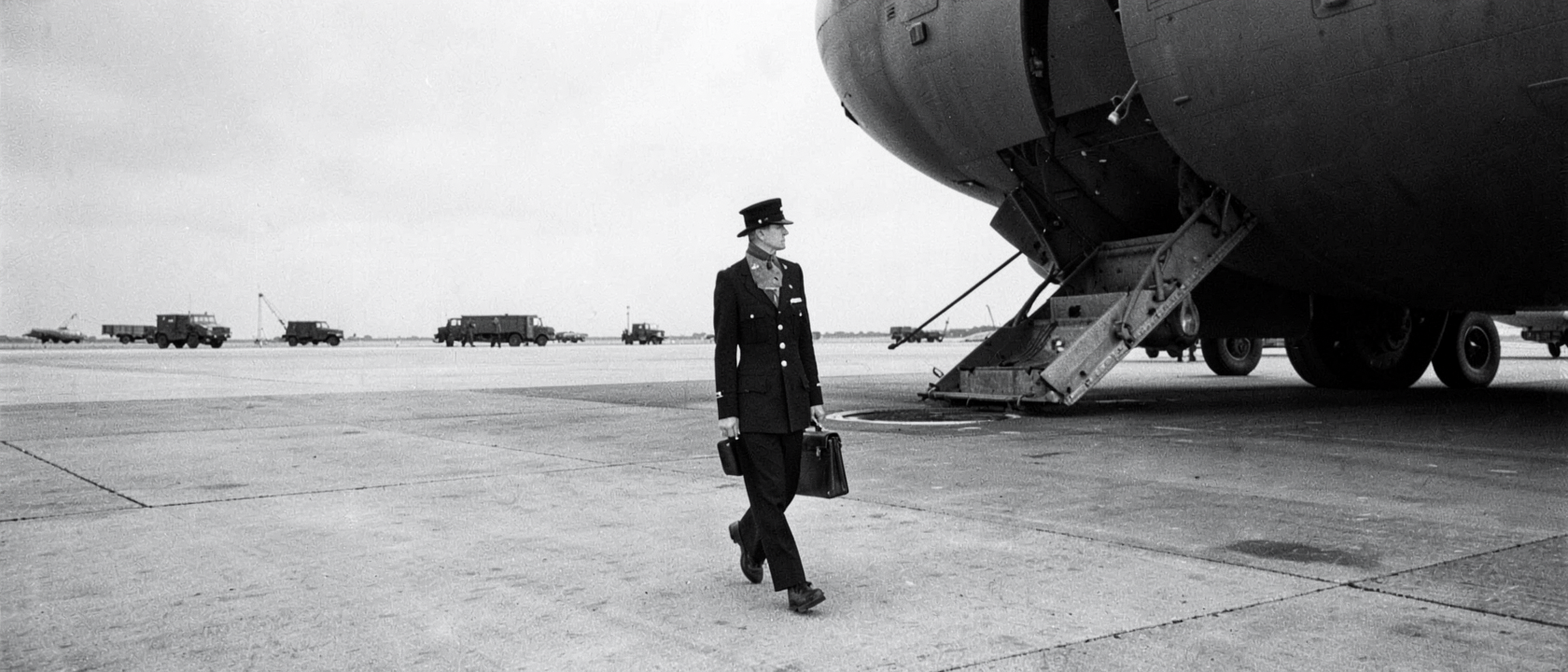
The Football’s Legal Problem
What the National Security Archive Published
The National Security Archive is an independent research institute at George Washington University. It collects declassified records, primarily through Freedom of Information Act requests, and makes them publicly available. On July 18, 2023, the Archive published Electronic Briefing Book No. 834, edited by senior analyst William Burr, under the title “The Presidential Nuclear ‘Football’ From Eisenhower to George W. Bush.” The compilation covers the early history of the Football, developments during the Carter administration, and photographs from the George W. Bush presidency. The Archive noted that “only a smattering of information has been declassified” on the subject, and that documents from the 1960s are in some cases heavily redacted.
Written Down, Inside the Apparatus Itself
The Football’s official designation is the Presidential Emergency Satchel. Among its contents were Presidential Emergency Action Documents, known as PEADs: draft classified executive orders, proclamations, and messages to Congress prepared in advance for emergency scenarios. They originated during the Eisenhower administration, derived their claimed legal authority from presidential constitutional powers, and were carried forward across successive administrations.
The records in EBB 834 include characterizations of those documents written by people inside the government that operated them. Edward A. McDermott, who led the federal Office of Emergency Planning in the 1960s, wrote that some PEADs were of “doubtful legality.” The Carter administration’s internal review found the emergency proclamations in the Football “badly out of date.” Hugh Carter Jr. President Carter’s second cousin and a leading figure in White House emergency planning at the time, put in writing that he was “concerned that the entire PEADs series is obsolete.” These were not congressional findings or inspector-general reports. They were produced within the same institutional apparatus the documents were designed to govern.
The specific PEADs these characterizations applied to are not identified in the available record. Whether the concerns were formally acted upon as a result of McDermott’s assessment does not appear in the published material covering the 1960s.
The Command Gap at the Worst Possible Moment
President Kennedy was assassinated on November 22, 1963, in Dallas. Vice President Lyndon B. Johnson was sworn in as President that afternoon aboard Air Force One at Love Field. The records in EBB 834 include excerpts from a William Manchester interview with Major General Chester Clifton, Kennedy’s White House Military Aide, conducted on April 21, 1964. Clifton told Manchester that Kennedy had directed his staff to brief Johnson on the Football, and that Johnson was told aboard Air Force One after the assassination that “this black bag was around.”
The records also show that high-level military leaders, including General Maxwell Taylor, were concerned that Johnson had not received an adequate briefing on the Football’s contents before he assumed the presidency. The two accounts are not necessarily contradictory: a notification that the satchel existed is different from a substantive briefing on its procedures, authentication requirements, and the emergency action documents inside it. The concern is documented as a concern, written down by military officials at the time, and the record does not close it.
One Formal Response, Unexplained
The Carter administration assigned a Football to Vice President Walter Mondale, permanently stationed at his residence. The compilation includes a Federal Preparedness Agency briefing prepared by Acting Director Dalimil Kybal for Mondale, dated August 11, 1977, and a subsequent memorandum from Denis Clift to Mondale, dated March 1, 1979, classified Secret, which addressed the PEADs directly. According to the Archive, the Mondale assignment became the practice for subsequent administrations. The Archive states there is no evidence that any of the four vice presidents between Lyndon Johnson and Mondale, Hubert Humphrey, Spiro Agnew, Gerald Ford, and Nelson Rockefeller, were assigned a Football. Whether the briefing gap identified in the Kennedy-Johnson transition contributed directly to the Carter administration’s decision is not stated in the documents.
Bureaucratic Inertia, and Where It Falls Short
The most straightforward explanation for the pattern these records describe is institutional drift: emergency decrees written under early Cold War pressures were carried forward across administrations and never systematically subjected to legal scrutiny until someone inside a particular administration happened to look. By 1980, after the Carter administration’s review, the PEADs had been revised and placed in the president’s emergency portfolio. The system, on that evidence, could self-correct when examined.
The specific problem with simple drift as a complete explanation is this: ordinary inertia means not knowing something is wrong. McDermott knew, in the 1960s, and wrote it down. The gap between a written acknowledgment that certain emergency decrees were of doubtful legality and any documented corrective action in the same period is a different category of problem. The records do not explain it.
The Silence, Described Accurately
The published compilation does not identify which PEADs were characterized as of doubtful legality. It does not state whether any were revised, rescinded, or replaced as a result of McDermott’s assessment. No formal investigative conclusion from any oversight body appears in the available record. The briefing concern documented regarding Vice President Johnson on November 22, 1963, is not followed by any stated remedial finding. Whether the Mondale assignment became a formally codified requirement or simply continued by precedent is not stated.
Each of these is a fact about the paperwork. None of them is evidence about what the missing material would contain, had it been released or had it been created at all.