The Line She Chose to Put on Record
Not every naturalization file has a sentence worth quoting sixteen decades later. This one does. In 1865, an American-born abolitionist told the British Home Office, under oath, that she would not return to the United States under any circumstances. She kept that promise for the rest of her life. What she also did, and what the file never explains, is stop going back to the country that had just made her a citizen of it.
The File
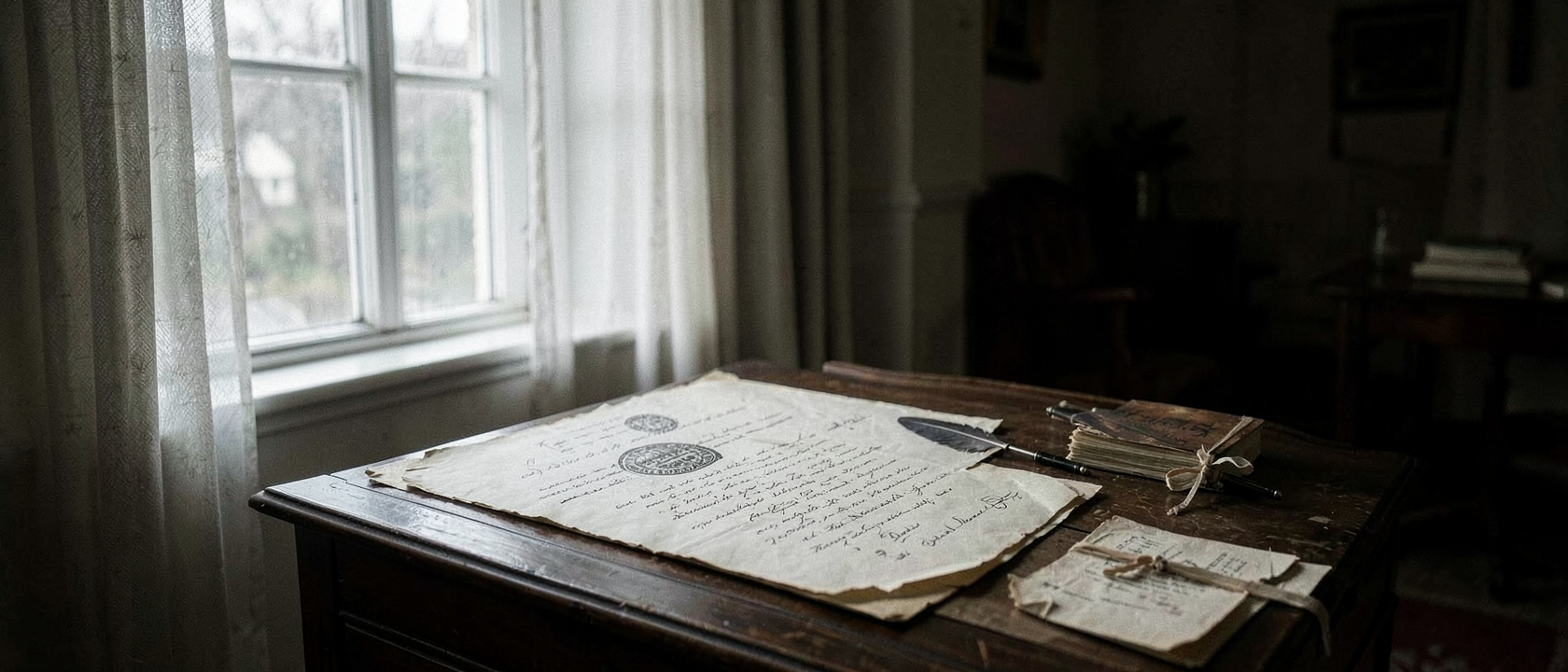
The record survives at The National Archives as HO 1/123/4809, covering 1865 to 1868. In order, it contains Sarah Parker Remond’s memorial, the formal application, addressed to the Home Secretary, Sir George Grey, and sworn before a commissioner named J H Bolton on June 8, 1865; four supporting declarations sworn between June 20 and August 24, 1865; a Home Office stamp dated August 30, 1865; and a short set of later minutes, from 1868, concerning requests for leave of absence. That is the entire physical file. Anything said about Remond outside these pages comes from elsewhere.
What She Told the Home Office
In her sworn memorial, Remond describes herself as “of African descent,” a native of Salem, Massachusetts, aged 41 and unmarried, living at Aubrey House in Notting Hill. She states she has resided in Britain “uninterruptedly” for six years and upwards and intends to go on living there permanently. She wants the legal right to own or lease property, she says, because many of her closest friends live in England. Then comes the sentence that has outlasted the rest of the document: that the prejudice against people of African descent in the United States, and the restrictions that followed from it, have determined her “under no circumstances” to return there to live. This is her own recorded language, sworn under oath, not a later writer’s summary of her views.
Four Men Who Vouched for Her
A naturalization memorial required character witnesses, and Remond produced four: James Stansfeld, a Member of Parliament; Peter Alfred Taylor, also an MP, in whose home, Aubrey House, Remond was then living; William Shaen, a Master of Arts; and Matthew Davenport Hill, one of Her Majesty’s Counsel. Each swears to being British-born and a householder. Stansfeld and Taylor say they have known her four years and upwards, Hill says five years and upwards, and Shaen simply says years and upwards, without giving a figure. All four use nearly identical wording, vouching for her “respectability and loyalty.” The file records what they swore. It says nothing about why, and nothing needs to be inferred beyond the oath itself.
An Ordinary Grant
The Home Office logged the case as No. 4809 and issued the Certificate of Naturalisation on September 11, 1865, roughly three months after Remond signed her memorial and about two weeks after the stamp confirming the file’s receipt. Nothing in the record shows a dispute, a request for further evidence, or any delay beyond the ordinary administrative interval. This is the paperwork working exactly as it was designed to work: a sworn application, four sworn character references, and a grant. There is no puzzle in the outcome itself.
Two Approvals, No Reasons Given
By 1868, Remond was living in Florence, where she had gone in 1866 to study obstetrics. The file records two leave-of-absence requests from that year, each granted for six months: No. 1460/68, dated from January 28, 1868, and No. 833/68, dated from July 28, 1868. Both entries state only that leave was granted. Neither gives a reason, a destination, or any correspondence explaining why a woman naturalized three years earlier was now asking permission to be somewhere else. The bareness of these two lines is not the file withholding something; it is simply all the file has to say.
Where the Record Stops
After the second 1868 approval, HO 1/123/4809 has no further entries. It does not record whether Remond ever asked for more leave, whether her status as a naturalized British subject was reviewed once she had settled permanently in Italy, or why she stopped returning to Britain at all. Remond died in Rome in 1894, at age 68, having never gone back to live in the country that granted her citizenship. The file does not say why, because the file ends well before that question would have been answered on paper.
The Names That Didn’t Survive
A different kind of gap sits inside the declarations themselves. The names of some of the commissioners before whom the declarations were sworn are illegible in the surviving document. This is not a redaction, and nothing in the file suggests it conceals anything; it is a fact about the condition of the paper, whether from faded ink or from later copying. It is worth keeping separate from the silence after 1868: one is a document that never said more, the other is a document that once did and can no longer be read.
What Gets Said Outside This File
The National Archives’ own descriptive material, published alongside the file but not part of it, offers an explanation the naturalization papers themselves never give: that Remond grew disillusioned with Britain following the suppression of the Morant Bay Rebellion in Jamaica, and that this contributed to her move to Florence. The same material states a belief, not a documented certainty, that Remond was the only Black woman to sign the 1866 mass petition for women’s suffrage presented to Parliament. And her autobiography, quoted by that same source rather than found in this file, is said to describe the racism she experienced in the United States as “a gigantic shadow over my whole life.” All of this may well be accurate. None of it appears in HO 1/123/4809.
What the file proves is a citizenship granted without friction, on the strength of one woman’s sworn word and four men willing to put their names to hers. What it never gets around to is the harder sentence: not why she refused to go back to America, which she stated plainly and under oath, but why the return to Britain she promised the Home Office also never happened. On that point, the paperwork simply stops.