
A president agrees to sit in
The chain of command for an American nuclear strike is not supposed to run through a live rehearsal with the president on the phone. Presidents are briefed on the Single Integrated Operational Plan, or SIOP, the classified menu of nuclear targeting options for a general war. Walking through it in real time, against a simulated attack clock, is different. That difference is what makes a short run of 1977 memos worth reading closely: they describe the first time a sitting president actually did it.
Jimmy Carter agreed to join a secret telephone exercise on October 6, 1977. Why he agreed, and what it did to him afterward, survives only in fragments: a request from his national security adviser months earlier, a scenario memo written after the fact, a diary entry, and two administrative orders that followed. Nothing in the file explains the decision to put a president on a line like this. It only shows that it happened, and some of what came next.
The paper trail
The documented record opens on March 31, 1977, when National Security Adviser Zbigniew Brzezinski wrote to Secretary of Defense Harold Brown asking for briefings on nuclear command procedures for the president. Over the following months the Joint Chiefs of Staff and Brown’s office produced preparatory material on early warning systems and the SIOP, cataloged in the eventual release as Documents 5 and 6 and still heavily redacted. After the exercise, Deputy Secretary of Defense Charles Duncan sent Carter a memo on October 14, 1977, recapping the scenario.
All of this became public on May 31, 2024, when the National Security Archive, a research group that compiles declassified U.S. government records, posted the documents online. Some pages remain withheld, and some requests are still moving through the Freedom of Information Act appeals process, by which a requester can challenge an agency’s decision to keep a record closed.
Ivory Item, October 6, 1977
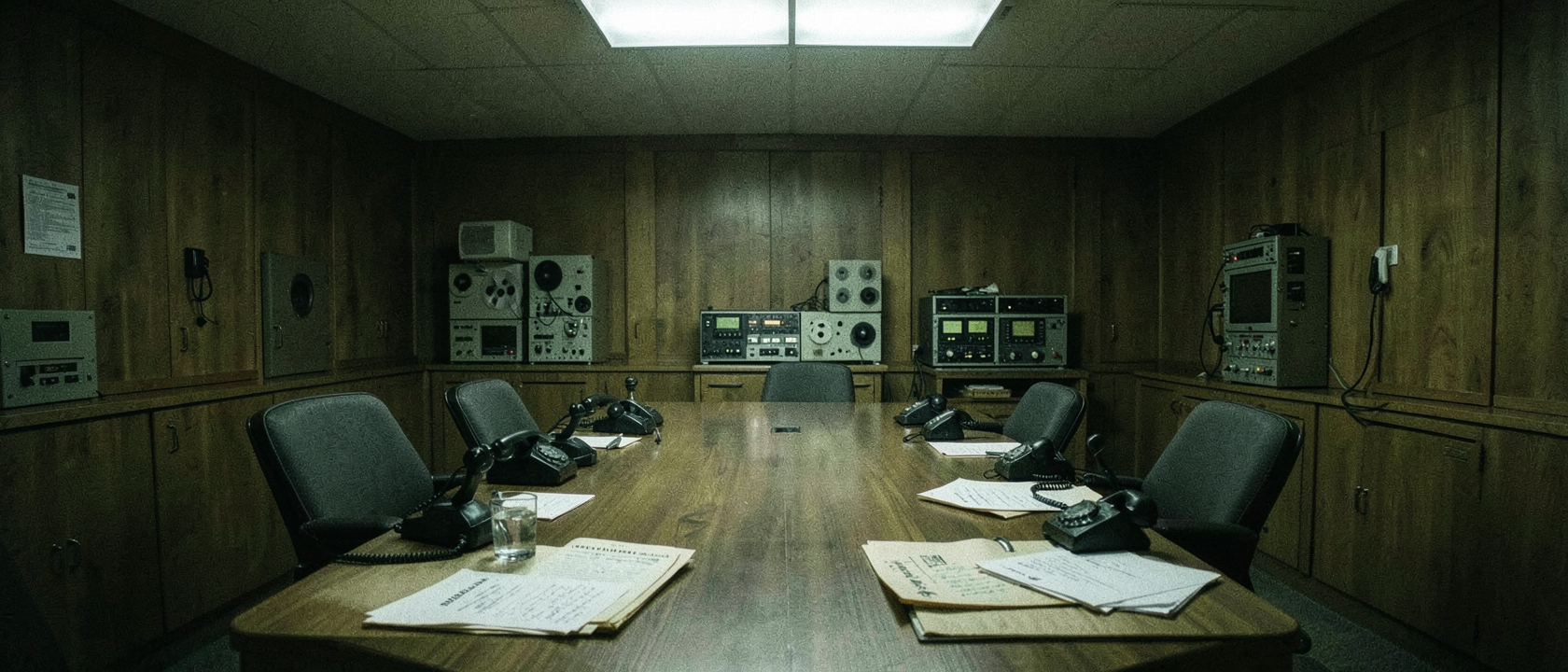
The exercise was built around a Missile Attack Conference, the Pentagon’s term for the secure call used to coordinate a nuclear response to an incoming attack. Codenamed Ivory Item, the October 6 session put more than twenty officials on the line, simulating a Soviet intercontinental ballistic missile strike on the United States. Planners picked an ICBM scenario over a submarine-launched one because it gave participants more time to work through decisions.
On the call, officials walked Carter through SIOP response options, including what the briefing materials labeled “minimum execution” and “complete execution” of Major Attack Option 1. The Joint Strategic Target Planning Staff, the Pentagon office that builds the SIOP, had already run a model called COBRA to produce fatality estimates for the options under discussion.
What the record says it triggered
An NSC staff document, cited in the State Department’s Foreign Relations of the United States series, states that Ivory Item “triggered revisions and changes in the SIOP based on Presidential guidance for the first time,” and that no previous president had taken part in anything like it. That is the document’s own wording, not an outside assessment.
The paperwork around Carter points the same way without closing the loop. At a November 17, 1977 meeting with Vice President Walter Mondale, Brzezinski, and Harold Brown, and again in a diary entry dated November 28, Carter asked for a simpler “Decision Handbook” to replace the denser briefing materials he had been given. Whether that request was a direct response to October 6, or something that had been building longer, is not spelled out in what survives.
The institutional reflex
One order followed the exercise and is preserved in detail. On October 18, 1977, Brzezinski directed that future Missile Attack Conference calls cut the number of participants, keep both a secure and a non-secure standby line available, and let him review any new SIOP instructions format before it reached the president. The Archive notes that much of the broader Ivory Item exercise series remains classified and that further material is being processed for future release.
Read plainly, Brzezinski’s directive is unremarkable bureaucratic housekeeping, the kind of fix any security officer would suggest after a first run went badly. The file does not explain why so many people had been patched in to begin with, and it does not need to for the order itself to make sense.
What the record does not say
Three things stay open. The documents do not state whether Carter authorized a simulated retaliatory missile launch during the call. Defense analyst Al Mauroni, citing a declassified NSC document in a separate account, has written that a retaliatory strike was probably part of the exercise, but that the specific timing of Carter’s decision remains classified. The released files also do not show whether Carter chose to let the simulated attack land before responding, or to launch on warning of incoming missiles, a real distinction built into SIOP planning. And a third SIOP response alternative referenced in the briefing material, beyond the two Major Attack Option 1 variants described above, is undetailed because the relevant pages are redacted.
These are blanks in documents that exist and have been read, not hints pointing anywhere in particular.
What people said afterward
David Aaron, Carter’s deputy national security adviser and a participant on the call, later told the National Security Archive that more than twenty people were on the line and that Carter had no idea who most of them were. Aaron recalled Carter asking how he could take advice from people he did not even know.
That recollection is specific and easy to picture, and it lines up with the crowded-line problem that Brzezinski’s October 18 directive went on to address. But it is still a recollection, offered years after the fact to an archive compiling the record, not a line from the memos, the scenario materials, or the directives themselves. It belongs in a different register from a signed, dated document, and it is worth keeping it there.
Why this one stays open
What the record shows is plain: a sitting president joined a simulated nuclear attack call for the first known time, on a documented date, with named participants and a scenario built by named officials. What it does not show is what passed through Carter’s mind when the options were laid out, or what he actually ordered to happen on the line. The paperwork states a result, that the SIOP’s presentation changed because of his guidance, without showing the moment that guidance was given.
That gap sits exactly where the explanation would be. It may narrow if the remaining Ivory Item material clears the FOIA appeals pending on it. Until then, the file ends the way a lot of real files end: a documented event, a documented consequence, and no record of what happened in between.