
The Posting
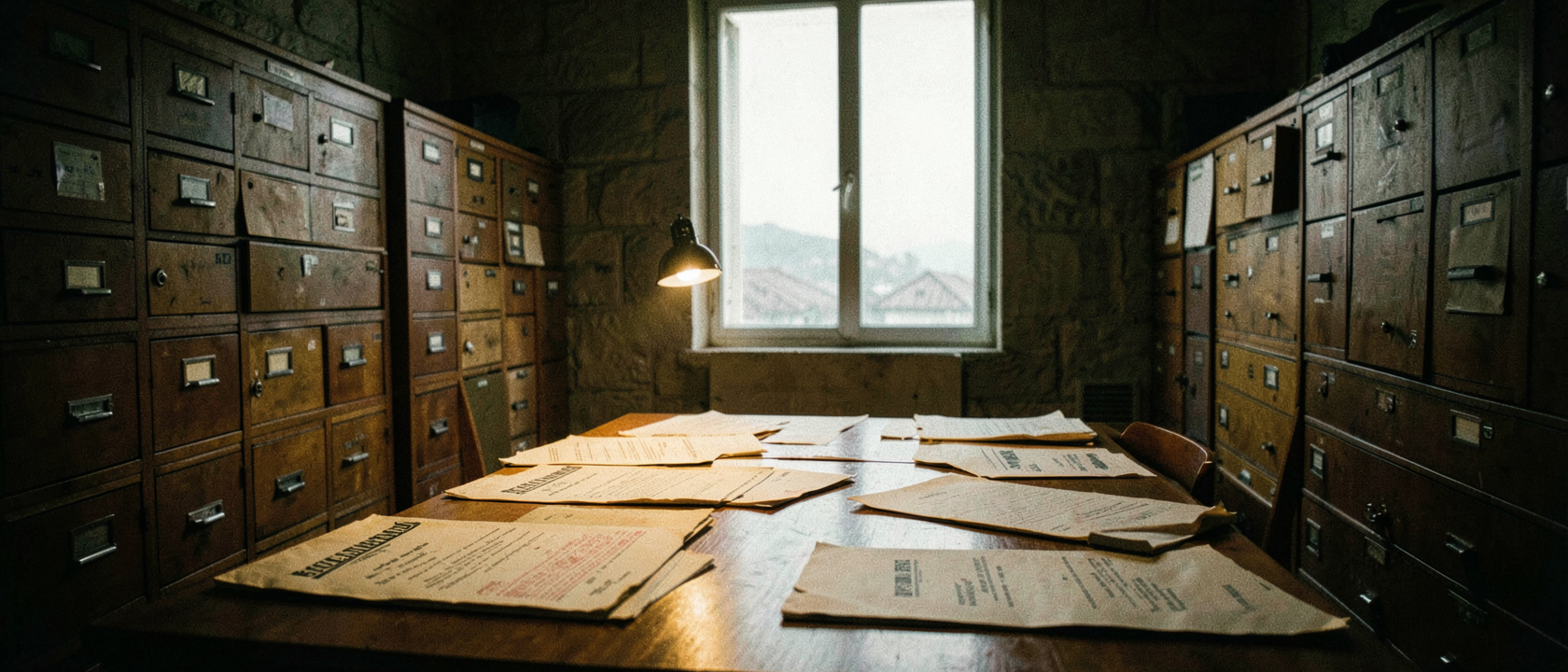
On September 19, 2023, the National Security Archive, a research organization in Washington, D.C. published an online posting titled “After Black November: The U.S. and the 1985 Palace of Justice Tragedy.” It draws on U.S. government records connected to the November 1985 siege of the Palace of Justice in Bogotá, several cited in a memoir by Helena Urán Bidegain, Mi vida y el Palacio: 6 y 7 de noviembre de 1985 (My Life and the Palace). Among the documents released is a one-page Defense Intelligence Agency report titled “Palace of Justice Update,” dated November 6, 1985, obtained through a Freedom of Information Act request and marked Confidential/Noforn, meaning it was restricted from release to foreign nationals. Other cables and reports from the State Department and the Pentagon are described by the Archive as still redacted 38 years after the events they cover. The posting does not present any of this as a closed matter; it reads as an argument for further declassification, which is a different thing than a finished set of findings.
Six Hours in November
The outline of events is not disputed. On the morning of November 6, 1985, 35 members of the M-19 guerrilla group entered the Palace of Justice, seat of Colombia’s Supreme Court, and took control of the building, holding magistrates, staff, and visitors inside. Colombian security forces moved in at 1:00 p.m. the same day with armored vehicles, helicopters, and tanks, firing on floors they had not yet retaken. Full control was not reestablished until the morning of November 7, roughly 28 hours after the takeover began. A Defense Intelligence Agency report drafted the day the siege began records a U.S. military source’s account that President Belisario Betancur had given the army “a green light,” telling commanders to do whatever was necessary to end the crisis quickly. The same report calls the decision “particularly significant” and predicts Betancur will emerge “a winner.” That is what one document says about the authorization; it says nothing about what the army did with it afterward.
Two Lines That Sit Next to Each Other
Two further facts sit in the same set of records. First, shortly after the initial M-19 assault, a request for assistance led U.S. Southern Command, the U.S. military command responsible for operations across Latin America, to dispatch a C-130 aircraft and a six-person support team carrying high-powered C4 explosives and detonating cord to Bogotá. Beyond that single line, the posting does not cite the cable that authorized the request, name the Southcom unit that supplied the team, or give a date or time for when the aircraft landed. Second, Colombian military intelligence had reportedly received reports since August 1985 that M-19 might attempt to take the Palace, and the National Police security detail normally posted there was withdrawn two days before the attack, without notice. Nothing in the released material states that these two facts are connected; they simply appear in the same paper trail, from the same period, without a document that draws a line between them.
No Verdict Attached
The released material includes no summary paragraph and no analyst’s assessment. It does not conclude who bore responsibility for how the siege ended, what caused the fire that later gutted much of the building’s interior, or whether the U.S. shipment had any bearing on the explosion that later blew open a metal door on the building’s third floor, an explosion associated with a high number of civilian casualties. Helena Urán has publicly asked whether the C4 the U.S. sent was the material used in that explosion. The record, as released, does not answer her. Separately, in December 2014, the Inter-American Court of Human Rights ruled the Colombian state responsible for disproportionate use of force during the operation and for failing to investigate the enforced disappearance of civilians who left the building alive. That ruling concerns what happened after the building was retaken; it says nothing about the shipment, the warning, or any link between them.
What the Record Doesn’t Say
Four things remain open in what has surfaced. Which unit or command authority beyond the single reference to Southcom actually assembled and sent the team is not stated. The precise date and time the shipment reached Bogotá, as opposed to the general phrase “shortly after the initial assault,” is not given. Whether the Colombian military’s advance warning was acted on, ignored, or never reached the officers running the operation on the ground is not addressed anywhere in the excerpt. And no accounting, casualty figures, judicial proceedings, disciplinary findings, is offered for the assault phase itself, apart from the later disappearances the 2014 ruling addressed. These are gaps in what has been released so far, not claims about what a still-redacted cable might contain.
A Daughter’s Request
Helena Urán Bidegain’s father, Carlos Horacio Urán, an auxiliary magistrate, is recorded as having survived the initial assault only to be detained, tortured, and killed by the Colombian Army afterward; his body was returned to the building to make his death look like a casualty of the crossfire. Urán has publicly called on President Gustavo Petro to invoke the 2014 court ruling and to formally ask President Joe Biden to declassify all remaining U.S. records tied to the case. On December 5, 2024, Petro announced he had asked the United States to expedite that declassification, a step Urán welcomed. That is a request about what should happen to the paperwork next, not a description of what the paperwork, as it stands, currently says.