
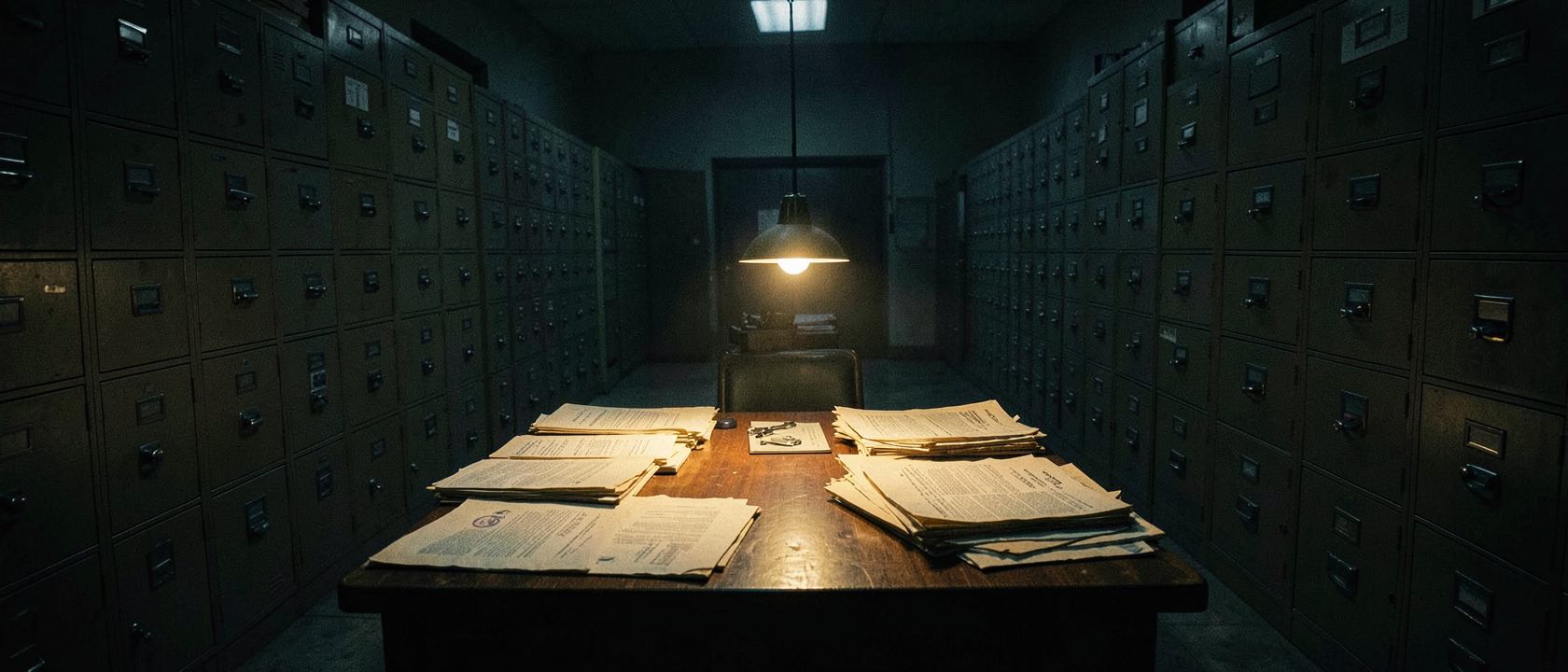
A Peruvian intelligence report dated May 1988 quotes Prime Minister Armando Villanueva telling senior army officers that he had no objection to executing captured Shining Path fighters, as long as it was done “discreetly.” The same report says an investigation into a recent peasant massacre in the Ayacucho highlands “would be rejected immediately.” Both lines sit inside a collection of declassified US records that the National Security Archive released on August 28, 2023.
The collection
Titled in English translation “Declassified Documents Narrate 20 Years of Conflict and Violence in Peru,” the release gathers more than twenty cables, intelligence assessments, and one Pentagon field report, drawn from the CIA, the Defense Intelligence Agency (DIA), the State Department, and the Pentagon’s Southern Command (SOUTHCOM). Document dates run from 1981 to August 2003. Publication fell on the twentieth anniversary of the final report of Peru’s Truth and Reconciliation Commission. The Archive describes the documents as recording a “war without quarter” counterinsurgency strategy, and attempts, inside both governments, to keep security force members out of court.
“Liquidate,” and “discreetly”
A State Department intelligence report from October 1984 warned that the Peruvian Army “could be tempted to try to physically liquidate” Shining Path by eliminating anyone suspected of being a member or sympathizer. The following year, a Defense Intelligence Agency assessment called Alan García’s election a “milestone in the development of Peruvian democracy.” Both documents sit in the same release. The Villanueva report follows, in May 1988, recording what one official told a room of officers, as US intelligence understood it at the time. In the material made available, the document carries a date but no file number: a gap in the paperwork, not a claim about what a missing number would show.
Operation Aries, March 1994
A SOUTHCOM report describes an operation codenamed “Aries”: helicopters strafing villages in the central highlands, then infantry who, the report states, raped and killed survivors on the ground. Its own account calls the result “numerous civilian casualties,” with no number given. The release holds nothing beyond that account: no casualty figure, no later corroboration, no record of what followed.
Washington’s own hands
One cable records a contradiction inside the US government itself. Under Secretary of State Thomas Pickering is quoted reprimanding Peru’s foreign minister for sending Major Tomás Ricardo Anderson Kohatsu, described in the cable as a known human rights violator, to testify at a US hearing. The same cable states that the State Department then invoked diplomatic immunity for Anderson Kohatsu, to block a Justice Department attempt to prosecute him over the torture of fellow agent Leonor La Rosa, who was left permanently disabled. Nothing in the cable reconciles the rebuke with the shielding.
A colleague of La Rosa’s, Mariela Barreto, was tortured, killed, and dismembered by the “Colina” squad, an Army Intelligence Service unit headed by Major Santiago Martín Rivas. In June 2023, Martín Rivas and Vladimiro Montesinos, Fujimori’s intelligence adviser, were convicted for her murder, decades after the killing: a verdict belonging to what came after, not to the files from the period itself.
The commission’s number
The collection does not total the conflict’s cost. That figure comes from a separate body, the Truth and Reconciliation Commission (CVR), created by interim President Valentín Paniagua on June 4, 2001, and ratified by Alejandro Toledo. The CVR operated from July 13, 2001, to August 28, 2003, collecting close to 17,000 testimonies for a nine-volume report, presented to Toledo, Congress, and the national chief prosecutor, and handed to the public in Ayacucho, where the violence began.
Chaired by Salomón Lerner, the commission concluded that more than 69,000 people were killed or disappeared between 1980 and 2000, more than double the figure previously accepted. It attributed 54 percent of deaths to Shining Path and 37 percent to the armed forces and allied groups, and found three of every four victims were Quechua-speaking rural peasants.
The number is not uncontested. A 2019 academic study put the toll at roughly 48,000 killings, well below the CVR’s figure, and found the Peruvian state responsible for a larger share of deaths than the commission had. In response, the CVR defended its methodology. The NSA collection takes no side in that dispute: all but one of its documents predate the commission’s report, and the exception, an August 2003 embassy cable, only describes the CVR’s stated goal of getting Peruvians to confront the recent past.
What the record doesn’t explain
The oldest document in the release is also the one the Archive itself flags as a problem. A 1981 CIA National Foreign Assessment Center report judged Shining Path a lesser threat, concluding that a return to the intensity of the group’s founding campaign in the mid-1960s “seems unlikely.” Within three years, the State Department was warning of a possible campaign to eliminate anyone merely suspected of sympathizing with the same movement, a movement that went on to help drive the eventual death toll past 69,000. No later document in the collection explains the distance between those two readings: no memo admitting the estimate was wrong, no note on where the sourcing failed. The file simply moves to the next period.
The edges of the release
The collection, as made available, has visible limits. Detail thins after the mid-1990s. The CVR’s own findings are referenced, not reproduced, and the Villanueva report still carries no file number in the material reviewed. None of this says what the missing material contains. It describes what this particular release does and does not hold.