
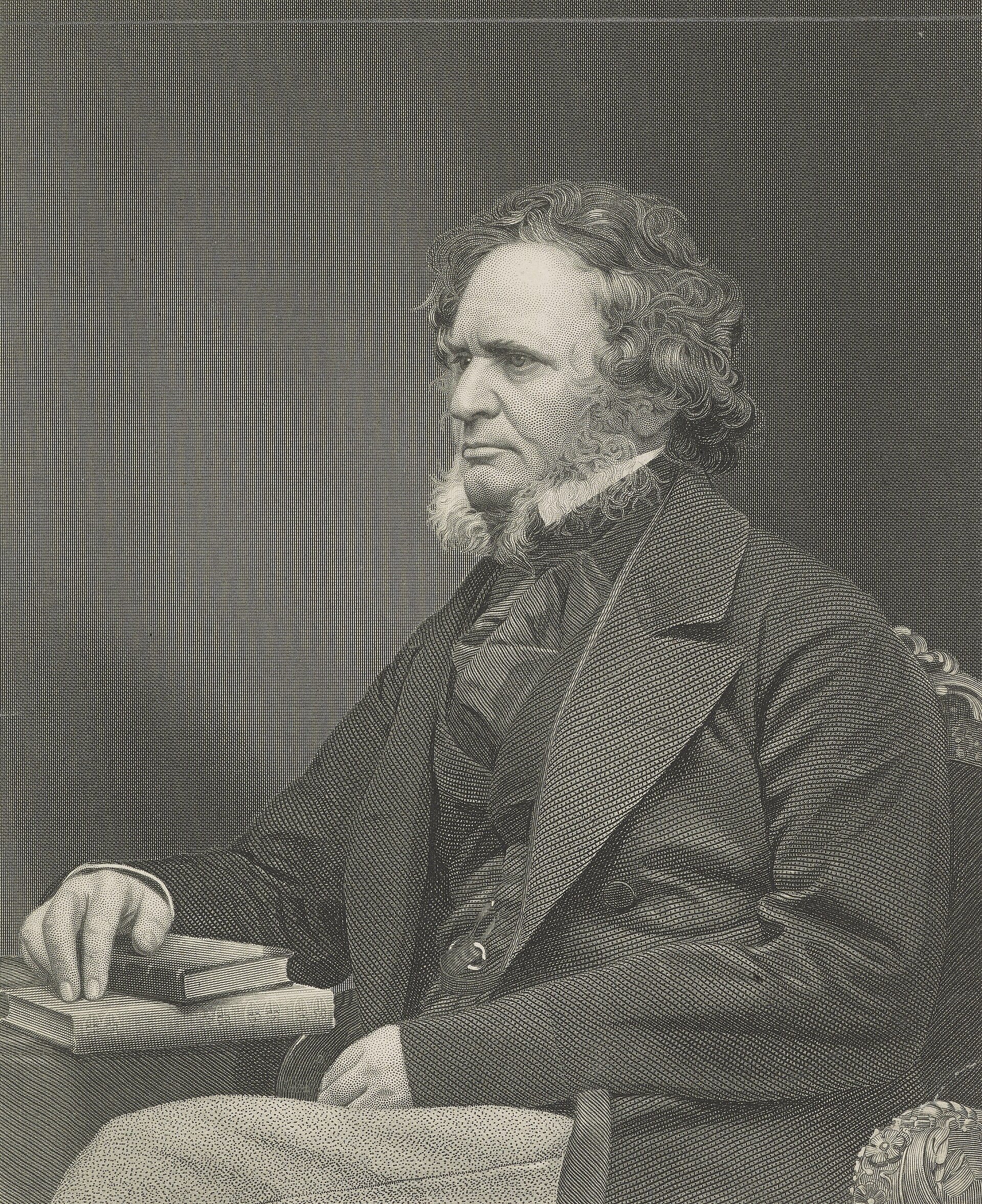
Edward Smith-Stanley, 14th Earl of Derby, was a British politician who served as Prime Minister three times and led the Conservative Party for 22 years, a span longer than any other Conservative leader on record. The single act most associated with his early career is the Slavery Abolition Act of 1833, which freed more than 800,000 people across the British Empire. Benjamin Disraeli, who worked alongside him through all three of his governments, later distilled his legacy into three achievements: abolishing slavery, educating Ireland, and reforming Parliament.
Key facts
- Born: 29 March 1799
- Birthplace: London
- Died: 23 October 1869
- Place of death: Lancashire
- Country: United Kingdom of Great Britain and Ireland; Kingdom of Great Britain
- Occupation: politician
- Education: Christ Church; Eton College
- Awards: Order of the Garter
Early Life and Education
Edward Smith-Stanley was born on 29 March 1799 at Knowsley Hall, Knowsley, Lancashire, the eldest of seven children of Edward Smith-Stanley, 13th Earl of Derby, and Charlotte Margaret Hornby, daughter of Reverend Geoffrey Hornby. He was educated at Eton College before proceeding to Christ Church, Oxford, where he matriculated on 17 October 1817. In 1819, while still at Oxford, he won the Chancellor’s Latin verse prize for a poem on the subject of Syracuse. He left Oxford without taking a degree.
His oratorical gifts were evident early, and the writer Edward Bulwer-Lytton attached to him the label ‘Rupert of Debate’. Lord Grey went further, regarding his debating skills as unrivalled.
Abolition of Slavery and Early Office
Stanley’s parliamentary career began under the Whigs. Moving from the role of Chief Secretary for Ireland to Secretary of State for War and the Colonies in 1833, he was the minister who presented the Slavery Abolition Bill to Parliament. The bill received royal assent on 28 August 1833 and freed more than 800,000 enslaved people across the British Empire.
He served as Colonial Secretary under Robert Peel from 3 September 1841, but resigned on 23 December 1845 in protest at Peel’s proposed repeal of the Corn Laws. That rupture placed him at the head of the protectionist Tories and set the trajectory of his subsequent leadership of the Conservative Party.
Succession to the Earldom
In 1844 Stanley was summoned to the House of Lords by a writ of acceleration in his father’s junior title, becoming Baron Stanley of Bickerstaffe. He inherited the full earldom of Derby on 30 June 1851, when his father died. His elevation to the Lords removed him from the Commons but did nothing to diminish his authority over the Conservative Party, which he continued to lead from that chamber.
Three Premierships
Derby formed three separate governments, each supported by his partnership with Benjamin Disraeli, who served as Chancellor of the Exchequer in each administration and managed the government’s business in the House of Commons.
His second ministry, in 1858, produced two pieces of legislation of lasting consequence. The India Act transferred the administration of India from the East India Company to the British Crown. In the same period, the Jews Relief Act made it possible for Jewish persons to sit in Parliament.
The third ministry generated the Reform Act of 1867, which extended the vote to urban working men and stands as the most constitutionally significant measure passed under Derby’s name. During the Lords debate, challenged on the revolutionary character of the bill, Derby called it a leap in the dark. Disraeli steered the legislation through the House of Commons. Derby led the Conservative Party from 1846 to 1868, a continuous span of 22 years.
Health and Resignation
From his late thirties Derby was afflicted by gout. To obtain relief from the pain he took opium. In February 1868 his health had deteriorated to the point where he could no longer continue in office, and he resigned the premiership, passing it to Benjamin Disraeli. It was the end of a period of active government that had stretched across three decades.
Death and Commemoration
Derby died on 23 October 1869 at Knowsley Hall, Lancashire, aged 70, after a lingering illness. He was buried at St Mary’s Church at Knowsley.
On 11 July 1874, Disraeli delivered what became the definitive summary of Derby’s career at the unveiling of a statue of him in Parliament Square. The words he chose were precise and few: that Derby had abolished slavery, educated Ireland, and reformed Parliament. Derby was also a recipient of the Order of the Garter.
Did you know
- Derby was the first British statesman to serve as Prime Minister three times. He is one of only four British prime ministers in history to have held office in three or more separate periods. (museumofpm.org)
- Despite a political career that placed him at the centre of Victorian government for decades, Derby left Oxford University without taking a degree. He had matriculated at Christ Church on 17 October 1817. (pdavis.nl)
- Derby was a keen racehorse owner and a member of the Jockey Club. In 1824 he travelled to Canada and the United States, making him one of the few British politicians of his generation to have visited North America. (victorianweb.org)
Data sources
- Wikidata
- unofficialroyalty.com
- victorianweb.org
- ebsco.com
- archontology.org
- politics.co.uk
- museumofpm.org
- archive.org
- en.wikiquote.org
Where it appears
Data updated: 2026-10-27