
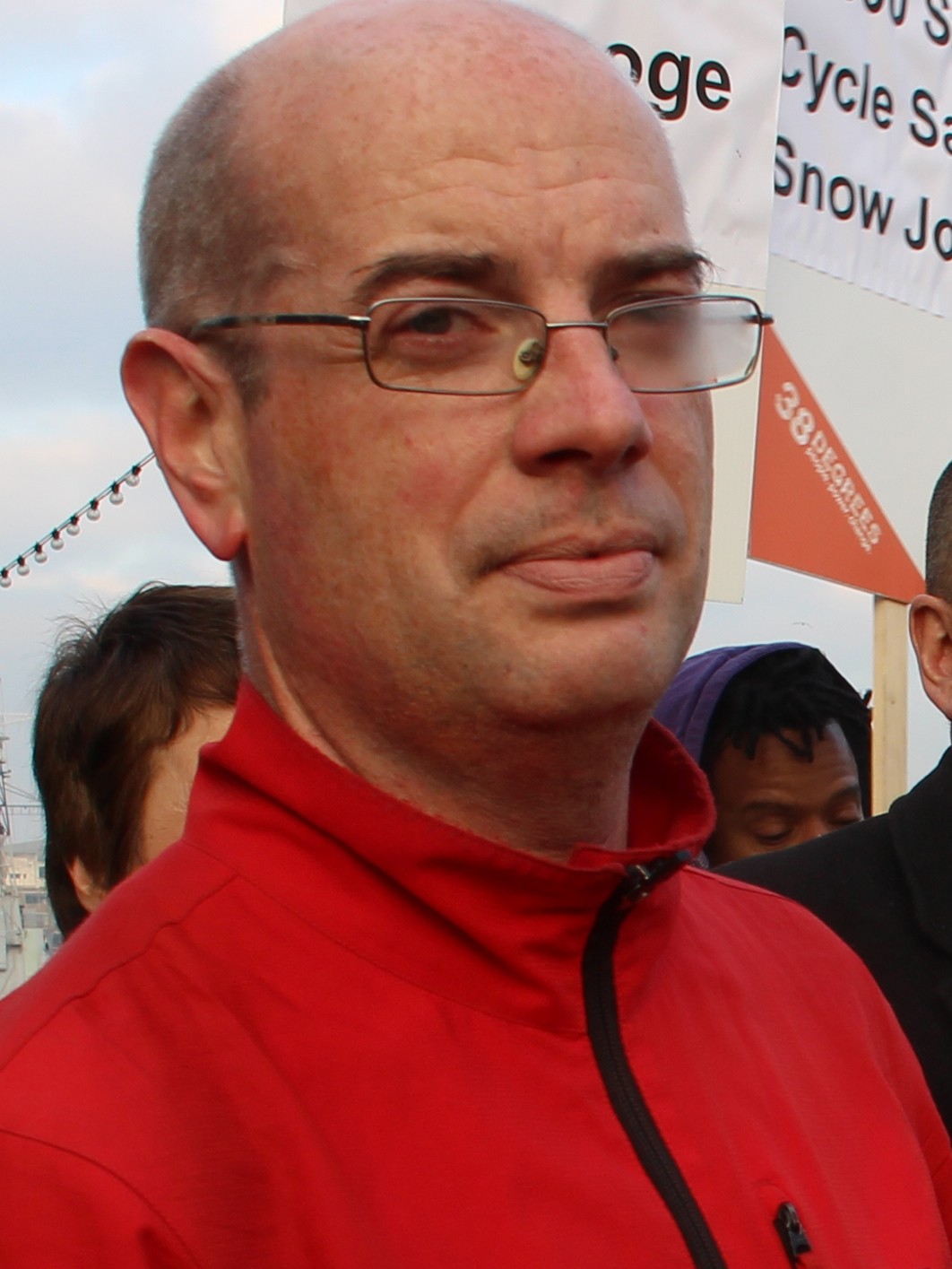
Andrew Gilligan, born on 22 November 1968 in Teddington, London, is a British journalist whose career spans defence reporting, political investigation, and transport policy commentary. He is best known for a broadcast on BBC Radio 4’s Today programme in which he reported claims about the government’s dossier on Iraqi weapons, a story that set off a major editorial crisis at the BBC. Gilligan has reported from approximately 40 countries, including Iraq, Pakistan, and Afghanistan, and his work has earned him the overall Journalist of the Year at the British Press Awards.
Key facts
- Born: 22 November 1968
- Occupation: journalist
- Employer: British Broadcasting Corporation
- Education: St John’s College; Grey Court School
Early life and education
Gilligan grew up in Teddington, London, the son of Kevin and Ann, who were Catholic. He attended Grey Court School before going on to St John’s College, Cambridge, where he read history. At Cambridge he served as news editor of Varsity, the student newspaper, a role that gave him early experience of editing and pursuing stories under deadline pressure.
Career before the BBC
After leaving Cambridge, Gilligan moved into national newspaper journalism. From 1995 to 1999 he worked as the Sunday Telegraph’s defence correspondent, spending four years covering military affairs. That grounding in defence and security matters shaped the areas he would pursue throughout his subsequent broadcasting career.
In 1999, Today programme editor Rod Liddle recruited Gilligan as Defence and Diplomatic Correspondent. Liddle’s stated aim was to sharpen the programme’s investigative journalism, and Gilligan’s arrival was part of that strategy.
Investigative work at the Today programme
At the Today programme Gilligan pursued a run of defence investigations using leaked Ministry of Defence reports. Those documents showed that the Army’s rifles and radios had not functioned properly during the Kosovo war, that only a small fraction of RAF bombs hit their targets, and that a £1 billion upgrade to the RAF’s main combat jet had left the aircraft unable to drop smart bombs. Each story drew on official material obtained without ministerial cooperation.
Among his less publicised operations before the Iraq controversy, Gilligan entrapped an arms salesman into offering to sell him land mines, which were banned in Britain at the time, and then broadcast the result on the Today programme.
The Kelly affair and departure from the BBC
On 22 May 2003, Gilligan met Dr David Kelly at the Charing Cross Hotel in London.
The report provoked an immediate and sustained dispute with the Blair government. The conflict eventually led to the Hutton Inquiry, a judicial examination of the circumstances surrounding Dr Kelly’s death.
Lord Hutton’s report, published in January 2004, was highly critical of the BBC’s editorial processes. Gilligan resigned from the BBC on 30 January 2004, two days after the report was released. In a statement he said the BBC had been ‘the victim of a grave injustice’.
Relations with the Blair government
The Kelly affair was not the first time the Blair government had clashed with Gilligan. In November 2000, Downing Street nicknamed him ‘Gullible Gilligan’ after his Today programme report on a draft EU constitution was challenged by the Prime Minister’s spokesman Alastair Campbell. The label was part of a broader effort by the government’s communications team to discredit his reporting.
Post-BBC career
After leaving the BBC, Gilligan joined the Evening Standard. On 8 April 2008, at the British Press Awards, he won the overall Journalist of the Year Award. The judges described his investigations into Ken Livingstone’s office as ‘relentless investigative journalism at its best’.
Beyond political investigation, Gilligan also developed a specialism in cycling infrastructure and transport. The London Cycling Campaign presented him with an award for his outstanding contribution to cycling.
As of 2026, Gilligan holds the position of Senior Fellow and Head of Transport, Infrastructure and Liveable London at the think tank Policy Exchange, and writes for The Spectator.
Did you know
- Before the Iraq controversy, Gilligan posed as a buyer and entrapped an arms salesman into offering to sell him land mines, which were banned in Britain. He then reported the exchange on the Today programme. (ccnmtl.columbia.edu)
- In November 2000, the Blair government started calling him ‘Gullible Gilligan’. The nickname followed a Today programme report on a draft EU constitution that the Prime Minister’s spokesman Alastair Campbell publicly disputed. (ccnmtl.columbia.edu)
- The Varsity website counts Gilligan among the notable alumni of the Cambridge student paper, placing him alongside figures including BBC sports editor Dan Roan and Ben Riley-Smith, political editor of The Telegraph. (varsity.co.uk)
Data sources
- Wikidata
- ccnmtl.columbia.edu
- academickids.com
- pressgazette.co.uk
- cbc.ca
- cohsat.org.uk
- policyexchange.org.uk
Data updated: 2026-10-28