
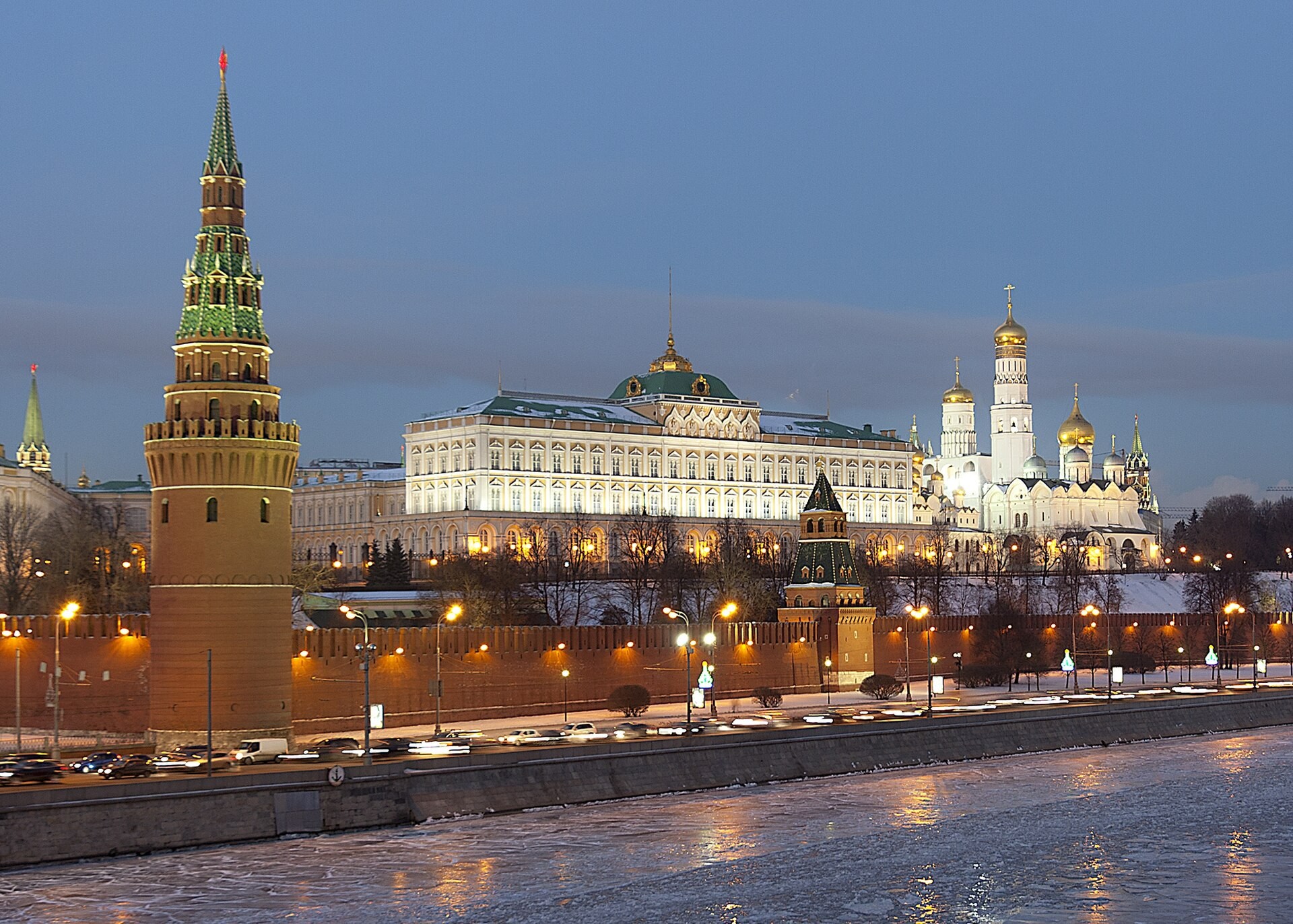
Russia is a country stretching across Eastern Europe and Northern Asia, covering 17,075,400 square kilometres and spanning 11 time zones, making it by far the largest nation on Earth by area. With a population of 146,119,928 and its capital in Moscow, it sits at the intersection of European and Asian history, geography, and culture. Its territory touches three oceans and is bordered by twelve seas, a geographical reach that has shaped its role in global trade, politics, and conflict for centuries. Oil and natural gas remain central to its economy, accounting for approximately 40 percent of federal revenue and 60 percent of exports.
Key facts
- Capital: Moscow
- Continent: Europe; Asia; Eurasia
- Population: 146,119,928
- Area: 17,075,400 km²
- Official language: Russian
- Currency: Russian ruble
- Head of state: Vladimir Putin
- ISO code: RU
- Founded: 1263
Geography and Natural Scale
Russia’s 17,075,400 square kilometres place every other country at a considerable distance in terms of sheer land mass. The country spans two continents, Europe and Asia, and has coasts on the Atlantic, Pacific, and Arctic Oceans, a combination that makes it the only country in the world bordered by twelve seas. Eleven time zones cross its territory from west to east.
Among its natural features, Lake Baikal stands apart. It holds 23,000 cubic kilometres of freshwater, more than all five North American Great Lakes combined, and is home to the nerpa, the world’s only freshwater seal species. The Trans-Siberian Railway crosses this vast interior: at 9,289 kilometres from Moscow to the Pacific coast and crossing seven time zones, it is the longest railway line in the world. Russia also holds the world’s largest proven natural gas reserves, estimated at 47.805 trillion cubic metres as of 2023.
Russia has 33 UNESCO World Heritage Sites as of 2024–2025, comprising 22 cultural and 11 natural properties. The first three were inscribed in 1990: the Historic Centre of Saint Petersburg, Kizhi Pogost, and the Kremlin and Red Square in Moscow.
History: From Medieval State to Empire
Russia’s founding is traced to 1263.
The Rurik dynasty died out in 1598, plunging the country into a period known as the Time of Troubles. That period ended in 1613, when Mikhail Romanov was elected tsar, founding the Romanov dynasty.
Peter the Great accelerated Russia’s transformation. On May 27, 1703, he founded the city of Saint Petersburg on the banks of the Neva River and in 1712 made it the new capital, a status it held until 1918. In 1721, Peter I formally transformed the Tsardom into the Russian Empire and assumed the title of Emperor of All Russia.
Revolution and the Soviet Era
The Bolshevik Revolution of 1917, led by Vladimir Lenin, overthrew the Provisional Government and established communist rule. The Soviet Union followed in 1922, a political entity that defined much of the twentieth century’s global order.
The Russian Federation that emerged from the Soviet period retains the official language of Russian. Its currency is the Russian ruble, and the head of state as of the verified record is Vladimir Putin.
Economy: Energy at the Centre
Oil and gas are the structural foundation of Russia’s economy. Together they account for approximately 40 percent of federal revenue and 60 percent of exports. Russia holds the world’s largest proven natural gas reserves, estimated at 47.805 trillion cubic metres as of 2023.
Those energy assets have become a central lever in geopolitical disputes. Following Russia’s full-scale invasion of Ukraine on February 24, 2022, the European Union adopted 21 successive packages of sanctions through July 2026, targeting trade, finance, energy, technology, and transport. As of December 2025, EU individual sanctions applied to over 2,500 individuals and entities found responsible for undermining Ukraine’s territorial integrity. In October 2025, the United States sanctioned Russia’s two largest oil companies, Rosneft and Lukoil, along with nearly three dozen of their subsidiaries, marking the first direct punitive energy measures imposed by the Trump administration against Russia.
Literature and Culture
Russian literature has produced works that remain central to the global canon. Leo Tolstoy’s novel ‘War and Peace’ is widely regarded as a masterpiece of world fiction. Fyodor Dostoevsky’s works, including ‘Crime and Punishment’ and ‘The Brothers Karamazov’, engage directly with morality, guilt, and the structure of the human psyche, and continue to be studied and translated across the world.
Did you know
- Lake Baikal holds 23,000 cubic kilometres of freshwater, more than all five North American Great Lakes combined. It is also the only lake on Earth home to the nerpa, the world’s only freshwater seal species. (isolatedtraveller.com)
Data sources
- Wikidata
- kids.nationalgeographic.com
- geographyworlds.com
- westportlibrary.libguides.com
- preceden.com
- ebsco.com
- saint-petersburg.com
- historycrunch.com
- theflags.org
- worldheritageexplorer.org
- finance.ec.europa.eu
- globalsecurity.org
- cfr.org
Data updated: 2026-10-28