
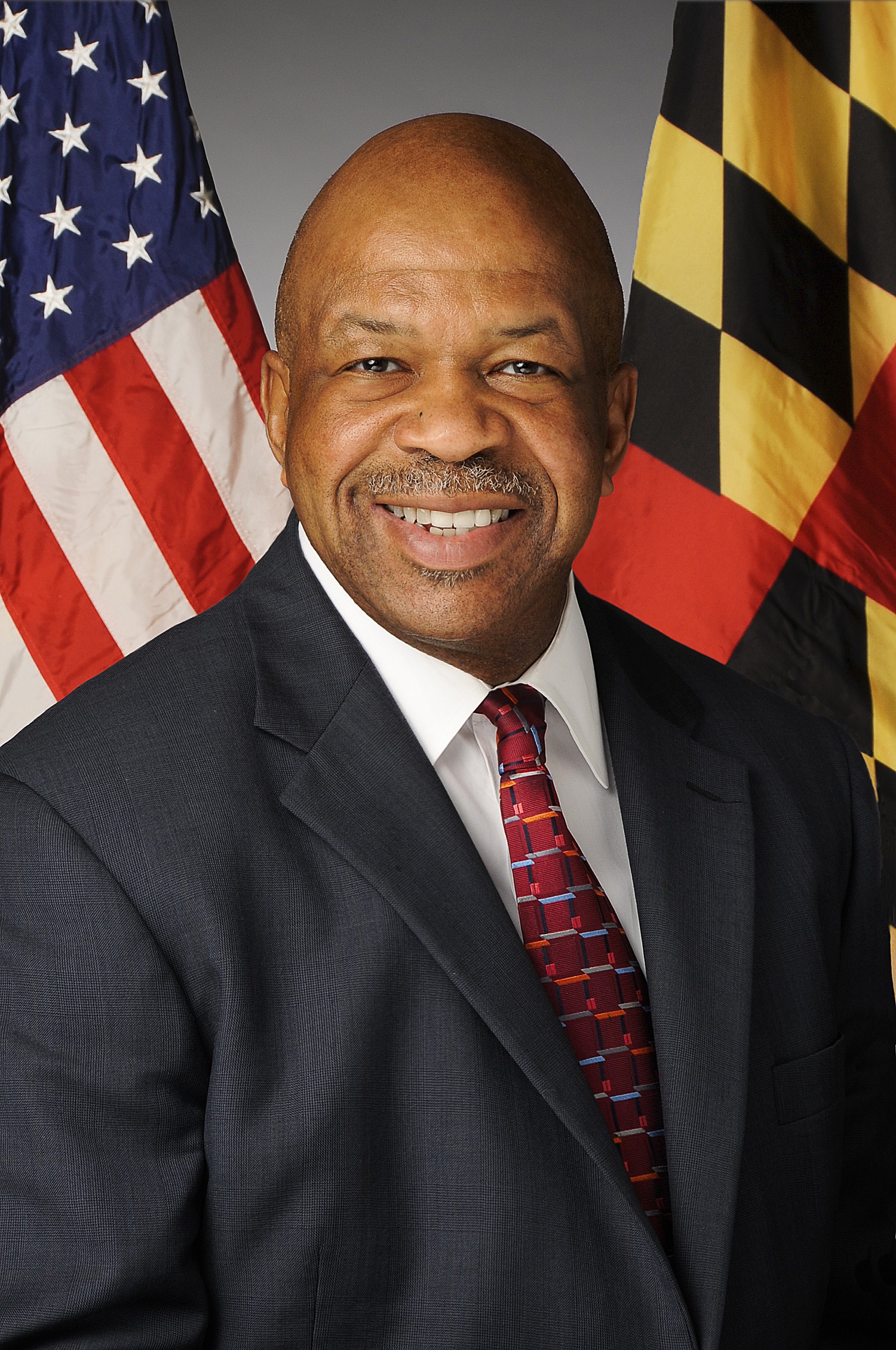
Elijah Eugene Cummings was an American politician, lawyer, and judge who represented Maryland’s 7th Congressional District in the United States House of Representatives from 1996 until his death on October 17, 2019. Born in Baltimore on January 18, 1951, the third of seven children of sharecroppers who had migrated from South Carolina, he rose from a segregated, underserved neighborhood to become one of the most prominent legislative voices in the country. He was the first African American in Maryland history to be named speaker pro tempore of the House of Delegates, the second-highest position in that chamber. His career as a public servant encompassed the Maryland General Assembly, the U.S. Congress, and leadership roles on some of the most scrutinized committees in Washington.
Key facts
- Born: 18 January 1951
- Birthplace: Baltimore
- Died: 17 October 2019
- Place of death: Baltimore
- Country: United States
- Occupation: politician; lawyer; judge
- Education: Howard University; University of Maryland Francis King Carey School of Law; Baltimore City College; University of Maryland, Baltimore
Early Life and Education
Cummings grew up in Baltimore, where his parents, Robert and Ruth Cummings, had settled after leaving South Carolina. Both parents had been taken out of school in the fourth grade to work the fields, yet they made education the center of family life. As a child, Cummings was placed in special education classes in the public schools of his neighborhood, yet went on to become a stellar academic achiever.
At age 11, he participated in his first civil rights demonstration, joining an action organized by Baltimore’s local NAACP and leader Juanita Jackson Mitchell to integrate a South Baltimore swimming pool.
He attended Baltimore City College and then Howard University in Washington, D.C., where he served as sophomore class president, student government treasurer, and ultimately student government president. He graduated Phi Beta Kappa in 1973 with a bachelor’s degree in political science. Three years later, he received his Juris Doctor from the University of Maryland School of Law and was admitted to the Maryland Bar in 1976.
Legal Career
After completing law school, Cummings joined a small Baltimore law firm and subsequently established his own private practice. During this period he also served as Chief Judge of the Maryland Moot Court Board, a role that gave him early judicial responsibilities even as he built his practice.
Maryland General Assembly
Cummings served in the Maryland House of Delegates before his federal career, and during that time he made history by becoming the first African American in Maryland to be named speaker pro tempore, the chamber’s second-highest position. The achievement marked a clear measure of the influence he had developed within state politics before he ever reached Washington.
U.S. Congress
In 1996, Cummings won a special election to fill the seat left vacant by Kweisi Mfume, who had departed to lead the NAACP. That election placed him in Maryland’s 7th Congressional District, and he held the seat for the remainder of his life.
He served as chairman of the Congressional Black Caucus from 2003 to 2004. In 2007, he co-founded and chaired the Congressional Caucus on Drug Policy, an effort that reflected his sustained attention to public health and community impact in urban districts.
From 2014 to 2016, Cummings served as the ranking member on the Select Committee on the Events Surrounding the 2012 Attack in Benghazi. He publicly criticized the committee as a taxpayer-funded effort directed against Hillary Clinton’s presidential campaign, a characterization that put him at the center of one of the more contentious congressional debates of that period.
The phrase ‘We’re better than this’ became closely associated with Cummings over the course of his congressional career. He repeated it frequently in floor speeches, including during Michael Cohen’s 2019 testimony before the Oversight Committee. It later became the title of his posthumous memoir.
Awards and Recognition
Cummings accumulated a substantial record of formal recognition across his career. Howard University awarded him an Alumni Achievement Award in 2000 and an honorary Doctor of Laws degree in 2003, the year he also served as Charter Day Orator at the university. The Congressional Black Caucus presented him with its Founders’ Day Award in 2006. The University of Maryland School of Law recognized him with its Distinguished Graduate Award in 2008, and the U.S. Coast Guard awarded him the Commodore Ellsworth P. Bertholf Award in 2010.
Death and Legacy
Cummings died on October 17, 2019, at approximately 2:45 a.m. at Gilchrist Hospice Care, a Johns Hopkins affiliate in Baltimore. The cause was listed as complications from longstanding health challenges, including previously treated heart and knee issues. He was 68 years old.
A 28,000-square-foot public park in south Baltimore’s Baltimore Peninsula development was named Elijah’s Park in his memory. The park features crab-shaped play equipment, chosen as a tribute to his legacy as a champion for Baltimore.
Did you know
- As a child, Cummings earned pocket money as a paperboy, walking miles across Baltimore each morning to deliver the Afro-American Newspaper. He later recalled that receiving a one-dollar tip made him feel rich. (bet.com)
- While still building his legal career, Cummings served as Chief Judge of the Maryland Moot Court Board, taking on judicial responsibilities at the same time he was establishing his private law practice. (history.house.gov)
- Cummings’ parents had both been pulled out of school in the fourth grade to work the fields. They would regularly drive the family to the Baltimore airport just to watch airplanes take off, telling the children they would one day fly even if he himself never had. (cbsnews.com)
- A 28,000-square-foot public park in south Baltimore’s Baltimore Peninsula development was named Elijah’s Park in his memory. It features crab-shaped play equipment, selected as a tribute to his role as a champion for Baltimore. (baltimorefishbowl.com)
- The phrase ‘We’re better than this’ originated as a repeated refrain in Cummings’ congressional speeches, including remarks he delivered during Michael Cohen’s 2019 testimony before the Oversight Committee. After Cummings’ death, the phrase became the title of his posthumous memoir. (caribbeantoday.com)
Data sources
- Wikidata
- magazine.morgan.edu
- jacksonvillefreepress.com
- bet.com
- history.house.gov
- msa.maryland.gov
- avoice.cbcfinc.org
- foxbaltimore.com
- thedig.howard.edu
- cbsnews.com
Data updated: 2026-10-28