
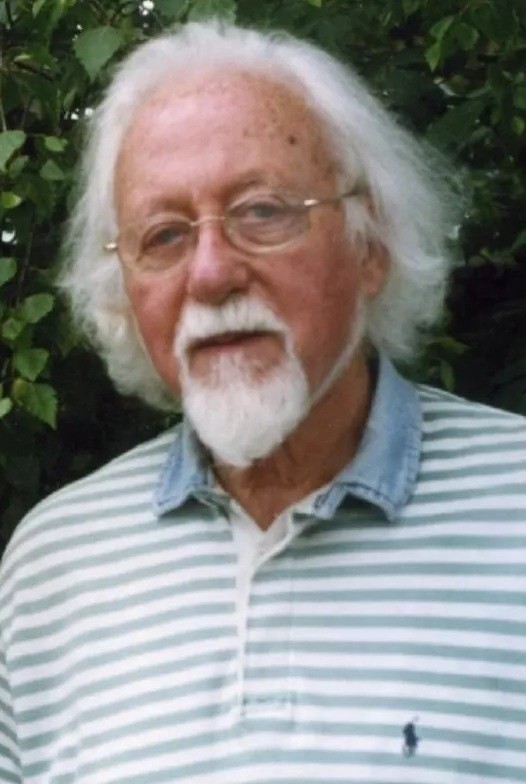
Zhores Medvedev was a Soviet-born biologist, biochemist, and historian whose career was defined equally by rigorous laboratory work and open resistance to state science policy. Born in Tbilisi on 14 November 1925, he spent decades navigating the tension between professional science and political dissent inside the Soviet Union before settling permanently in London. His exposure of the Kyshtym nuclear catastrophe, suppressed by Soviet authorities, and his account of Lysenko’s grip on Soviet genetics brought him a wide international audience.
Key facts
- Born: 14 November 1925
- Birthplace: Tbilisi
- Died: 15 November 2018
- Place of death: London
- Country: Soviet Union; United Kingdom; Soviet Union; Russia
- Occupation: biologist; biochemist; historian; scientist
- Field: biology
- Employer: Nikitsky Botanical Garden; Russian State Agricultural University; Medical Radiological Research Center; National Institute for Medical Research
- Education: Russian State Agricultural University
- Awards: Messenger Lectures
Origins and family
Zhores Medvedev was born in Tbilisi, then part of the Transcaucasian Soviet Socialist Republic, on 14 November 1925, as the identical twin of the historian Roy Medvedev. The choice of names was deliberate and pointed: their father named Zhores after the French socialist leader Jean Jaurès, while Roy was named after the Indian revolutionary M. N. Roy, a pairing that announced the elder Medvedev’s internationalist political commitments.
That father, Aleksandr Romanovich Medvedev, was a professor at the Military-Political Academy in Leningrad. In August 1938 he was arrested on the charge of being a follower of Bukharin, sentenced to eight years of forced labor, and sent to the Kolyma camps, where he died in March 1941. The arrest and death left a mark on both twins that shaped their approach to Soviet authority for the rest of their lives.
War and education
In February 1943 Medvedev was drafted into the Soviet Army and sent as a foot soldier to the Taman front. He was wounded and subsequently discharged from military service, returning to civilian life before the war’s end.
He began studies at the Timiryazev Agricultural Academy in Moscow in 1944. In 1950 he received a master’s degree in biology from the Moscow Institute of Plant Physiology, and in December of that same year he was awarded a PhD (kandidat biologicheskikh nauk) for research into sexual processes in plants. Further graduate work yielded a doctorate in biochemistry from the Timiryazev Academy in 1954.
Scientific work and the Lysenko book
In 1962 Medvedev wrote a full historical account of Soviet genetics and the damage done to it by Trofim Lysenko’s official monopoly on biological doctrine. The manuscript passed editorial review but was blocked by state censors. It was eventually published in the United States in 1969 by Columbia University Press under the title The Rise and Fall of T. D. Lysenko.
In 1963 Medvedev moved to Obninsk, where he was appointed head of the molecular radiobiology laboratory at the Institute of Medical Radiology. That same year he published Protein Biosynthesis and Problems of Heredity Development and Ageing, followed in 1966 by Molecular Mechanisms of Development. Because he refused to restrict his writing to purely scientific subjects, Soviet authorities in 1969 secured his dismissal as head of the department of molecular biology at that institute.
Psychiatric confinement and its aftermath
On the evening of 29 May 1970, Medvedev was taken from his flat in Obninsk to the Kaluga City Psychiatric Hospital for what was officially described as diagnosis and observation. Hospital staff diagnosed him with incipient schizophrenia and paranoid delusions of reforming society.
The detention provoked an immediate and unusually broad protest. Scientists including Andrei Sakharov, Pyotr Kapitsa, Igor Tamm, Vladimir Engelgardt, Boris Astaurov, and Nikolai Semyonov objected, as did writers including Solzhenitsyn and Tvardovsky. The pressure contributed to his release. Medvedev and his twin brother Roy documented the episode in the 1971 book A Question of Madness, which gave a detailed account of how psychiatric diagnosis was being applied as a political instrument.
Exile and London career
Medvedev joined the National Institute for Medical Research in London as a senior research scientist, working in the Department of Genetics on gerontology, biochemistry, and genetics until his retirement in 1991. British citizenship followed in 1980. By decree of President Mikhail Gorbachev, his Soviet citizenship was restored in 1990, but Medvedev chose to remain in London.
In 1974 he delivered the Messenger Lectures at Cornell University.
Exposing the Kyshtym disaster
Among his most consequential historical contributions was his investigation and publication of information about the nuclear accident at the Kyshtym facility in the Ural Mountains, which Soviet authorities had suppressed. The Kyshtym disaster was subsequently rated Level 6 on the International Nuclear Event Scale, classifying it as a serious accident and placing it third in terms of radioactivity released among nuclear disasters in history, after Chernobyl and Fukushima.
Did you know
- Zhores Medvedev’s given name is the Cyrillic transliteration of “Jaurès,” honoring the French socialist leader Jean Jaurès. His twin Roy was simultaneously named after the Indian revolutionary M. N. Roy, reflecting their father’s internationalist political sympathies. (caucasus-mt.net)
- The Kyshtym disaster that Medvedev exposed was rated Level 6 on the International Nuclear Event Scale, classifying it as a “serious accident.” In terms of radioactivity released, it ranks as the third-worst nuclear disaster in history, after Chernobyl and Fukushima. (icheme.org)
Data sources
- Wikidata
- caucasus-mt.net
- wral.com
- chronicle-of-current-events.com
- findagrave.com
- commons.wikimedia.org
Data updated: 2026-10-29