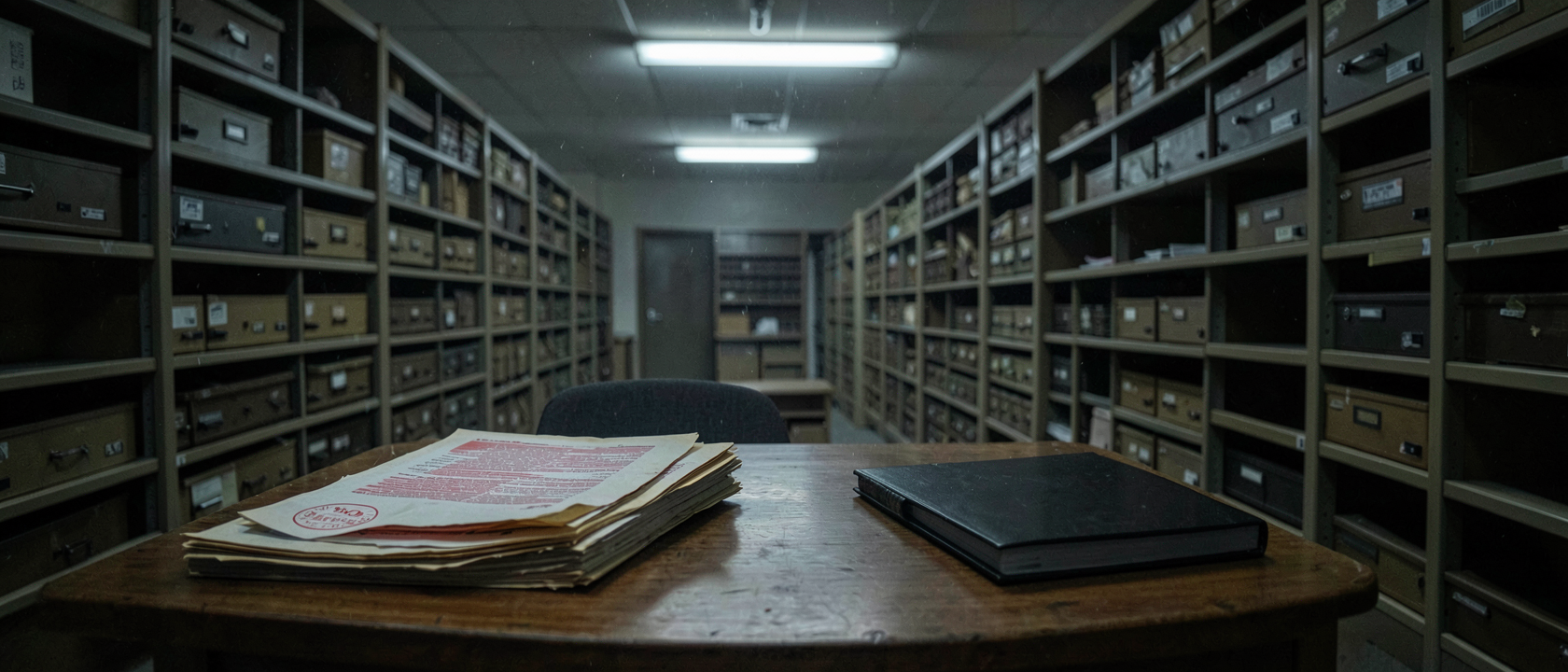
A 342-Page PDF With a Government Seal and an Unresolved Interior
The combined PDF runs to 342 pages and 71 megabytes. The Black Vault archived it directly from the Department of Justice without editorial annotation. On February 27, 2025, the DOJ and FBI jointly released it as the first formal phase of declassified Epstein records under Press Release Number 25-201.
The government seal carries a specific consequence: it transforms material into an officially released record, distinct from material that has circulated without that status. The DOJ press release acknowledged this directly, stating that the first phase “largely contains documents that have been previously leaked but never released in a formal capacity by the U.S. Government.” The Black Vault and multiple news outlets noted that social media traffic on and after February 27, 2025 treated the release as newly disclosed information. The DOJ’s own statement explains why that characterization is inaccurate. The formal release assigned new legal standing to information that had already moved through unofficial channels; it did not create new information.
The Request, the Delivery, and the Number That Did Not Match
Attorney General Pamela Bondi requested the complete Epstein file. The FBI delivered approximately 200 pages. Bondi was then informed that thousands of additional pages connected to the Epstein investigation and indictment existed within government holdings and had not been included.
Bondi’s letter to FBI Director Kash Patel, dated February 27, 2025 and published alongside the DOJ press release, states that she had repeatedly asked whether the delivery represented the full set of documents and had been repeatedly assured by the FBI that it did. The letter is in the record. The reason the delivery was incomplete is not.
The record does not describe a controlled, staged release with material held deliberately for a later phase. It describes a delivery that the official receiving it immediately found to be substantially short. The DOJ release names the gap. It does not explain it.
The February 28 Deadline and the Question Assigned to Patel
Bondi issued two responses to the shortfall. The first was operational: she ordered the FBI to deliver all remaining documents to the Department by 8:00 AM on February 28, 2025. The second was investigative: she tasked FBI Director Kash Patel with determining why the full document set had not been provided initially and directed him to propose personnel action within two weeks.
Patel’s public statement, quoted in the DOJ press release, reads: “There will be no cover-ups, no missing documents, and no stone left unturned, and anyone from the prior or current Bureau who undermines this will be swiftly pursued.”
The corrective deadline and the inquiry assignment are administrative acts documented within the release. Patel’s statement is a public claim about future conduct. Bondi later stated publicly that the FBI delivered a “truckload” of Epstein files after she imposed the 8:00 AM order. That account is a claim made after the fact; the volume or content of any subsequent delivery is not established in the February 27, 2025 source material, and no findings from the Patel inquiry appear there either.
Scope and Limits of What the First Phase Describes
The records released in the first phase describe Jeffrey Epstein’s sexual exploitation of more than 250 underage victims across properties in New York, Florida, and other locations. The release includes an evidence list with entries for more than 150 items, six parts of flight logs previously released in the U.S. v. Maxwell proceedings, a redacted contact book of approximately 95 pages, and a redacted masseuse list.
The DOJ press release references Epstein’s “co-conspirators” explicitly. The source material released on February 27, 2025 attaches no names to that designation. No formal investigative conclusion appears anywhere in the first phase. The scale of the documented abuse is stated in the record; the identity of anyone beyond Epstein in this release is not.
What the Officials Said, and What the Documents Support
AG Bondi characterized the release as the beginning of “long overdue accountability” and described Epstein’s “extensive network” as addressed within the documents. Patel pledged full disclosure and consequences for obstruction. Both are claims made by officials on February 27, 2025 about the significance of what was being disclosed and about future institutional conduct. The released record cannot confirm or contradict those claims. Official statements about what a document release means are not the same thing as the documents.
Three Questions the Source Material Does Not Answer
Three discrete gaps remain open within the available source material as of February 27, 2025.
First, the record does not identify which specific documents in the first-phase PDF are genuinely new and which had previously circulated through unofficial channels. The DOJ’s own press release acknowledged the first phase largely consists of previously leaked material, but drew no document-by-document distinction.
Second, the reason the FBI delivered approximately 200 pages when thousands were known to exist is not explained in the record. It is the subject of the internal inquiry assigned to Patel, whose findings do not appear in the February 27, 2025 source material.
Third, the thousands of additional pages remained unreleased as of February 27, 2025, with no confirmed public timeline beyond Bondi’s 8:00 AM February 28 corrective deadline. What came after that deadline is outside the first-phase release as it stands.
These are gaps in the paperwork. The record stops at each of them.