
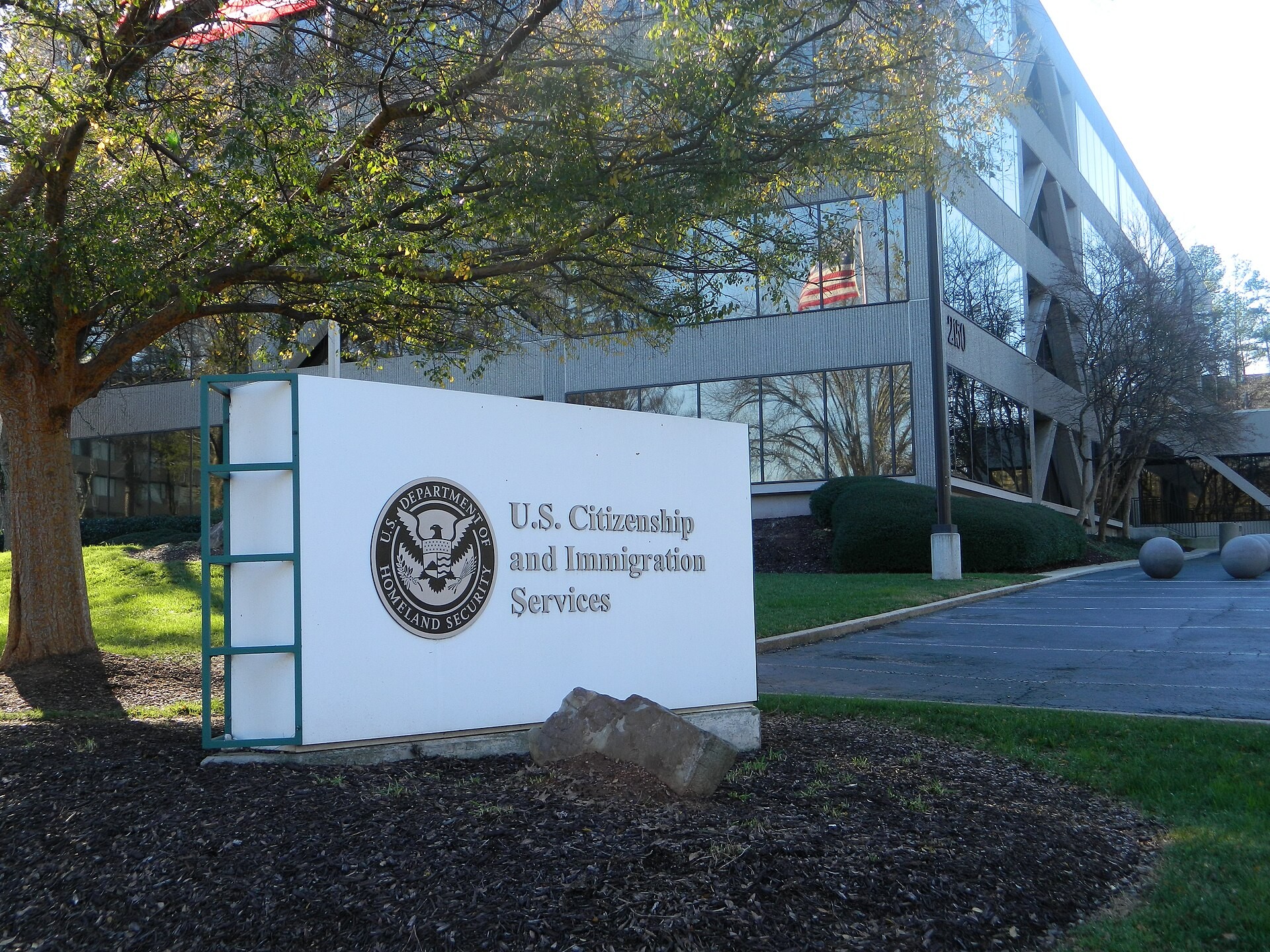
United States Citizenship and Immigration Services (USCIS) is the federal agency within the Department of Homeland Security responsible for administering immigration benefits in the United States. Established on March 1, 2003, under the Homeland Security Act of 2002, it is the institutional successor to a line of federal immigration bodies stretching back to 1891. The agency handles a large volume of work: on an average day, it processes approximately 40,500 requests for immigration benefits, naturalizes around 3,400 new citizens, and collects biometric data from roughly 12,000 individuals. Its operating budget for fiscal year 2025 stood at approximately $7.4 billion, roughly 95 percent of which came directly from applicant filing fees rather than congressional appropriations.
Key facts
- Country: United States
- Founded: 1 March 2003
- Headquarters: Washington, D.C.
- Type: federal law enforcement agency of the United States; immigration office
- Parent organisation: United States Department of Homeland Security
- Website: https://www.uscis.gov/
Origins and the Federal Takeover of Immigration
Federal oversight of immigration in the United States began in 1891. The Immigration Act of 1891 established the Office of Immigration, which later became the Bureau of Immigration, and transferred responsibility for inspecting and processing arriving immigrants from individual states to the federal government. One of the most visible results of that shift was the opening of the Ellis Island immigration station on January 1, 1892. Administered by what would become USCIS’s predecessor agencies, Ellis Island processed more than 12 million immigrants between 1892 and its closure in 1954.
That lineage of federal immigration administration continued through successive reorganizations across the twentieth century, eventually producing the Immigration and Naturalization Service, which held primary responsibility for immigration enforcement and benefits until 2003.
Creation of USCIS
USCIS came into existence on March 1, 2003, as a direct result of the Homeland Security Act of 2002. That legislation dissolved the Immigration and Naturalization Service and folded its functions into the newly created Department of Homeland Security, which itself was assembled from 22 different federal agencies in one of the largest reorganizations of the United States federal government in history. Within the new department, immigration benefits adjudication was separated from enforcement and placed under USCIS, while enforcement responsibilities went to other components.
The agency is headquartered in Washington, D.C., and operates as a federal law enforcement agency and immigration office under the parent authority of the Department of Homeland Security.
Funding Structure
USCIS operates on a funding model that is unusual for a federal agency of its size. Rather than relying primarily on annual congressional appropriations, the agency draws the large majority of its revenue from fees paid by applicants and petitioners. These fees flow into the Immigration Examinations Fee Account (IEFA). In fiscal year 2025, fee revenue accounted for approximately 95 percent of total USCIS funding, or $7.0 billion out of a total of $7.4 billion.
DACA Renewal Backlogs as of 2026
Between October 2025 and June 2026, USCIS received 230,053 renewal applications under the Deferred Action for Childhood Arrivals (DACA) program but completed only 131,258 of them during that period. The gap between incoming and completed cases produced a pending backlog of 228,969 renewal applications by June 2026, a figure representing a 76 percent increase from the backlog level recorded in October 2025. Applicants whose renewals remain pending risk losing the work authorization that accompanies an active DACA grant.
Did you know
- USCIS processes an average of 40,500 daily requests for immigration benefits, welcomes a daily average of 3,400 new citizens, and fingerprints and photographs approximately 12,000 individuals every day. (ballotpedia.org)
- Unlike most federal agencies, USCIS is funded almost entirely by filing fees rather than congressional appropriations. In fiscal year 2025, applicant fees accounted for approximately 95 percent of the agency’s $7.4 billion total funding. (federalregister.gov)
- The Ellis Island immigration station, which opened on January 1, 1892 following the Immigration Act of 1891 and was administered by USCIS’s predecessor agencies, processed more than 12 million immigrants between 1892 and its closure in 1954. (nps.gov)
- The Homeland Security Act of 2002, which created USCIS, combined 22 different federal agencies into the new Department of Homeland Security, representing one of the largest reorganizations of the United States federal government in history. (uslawexplained.com)
Data sources
Data updated: 2026-10-30