A Plea Written the Same Day
Hours after John Paul Jones and his crew rowed back out into the dark, the leading men of Whitehaven sat down and wrote to London. They were not reporting a triumph. They were asking for protection.
What survives is a single letter, dated April 23, 1778, signed by Samuel Martin, Peter Gale, John Serjeant, Thomas Lutwidge, and a longer list of other Whitehaven residents. It is addressed to the Earl of Suffolk, Secretary of State for the Northern Department, the minister with responsibility for the security of northern England. It is now held in the National Archives among the State Papers of King George III, catalogued as SP 37/12/69.
No inquiry report sits beside it in that file. No departmental minute records what Suffolk’s office did with it, and no follow-up correspondence is filed alongside it. What exists is the letter itself, not a case file built around it.
Thirty Men, Two Boats, One Fire
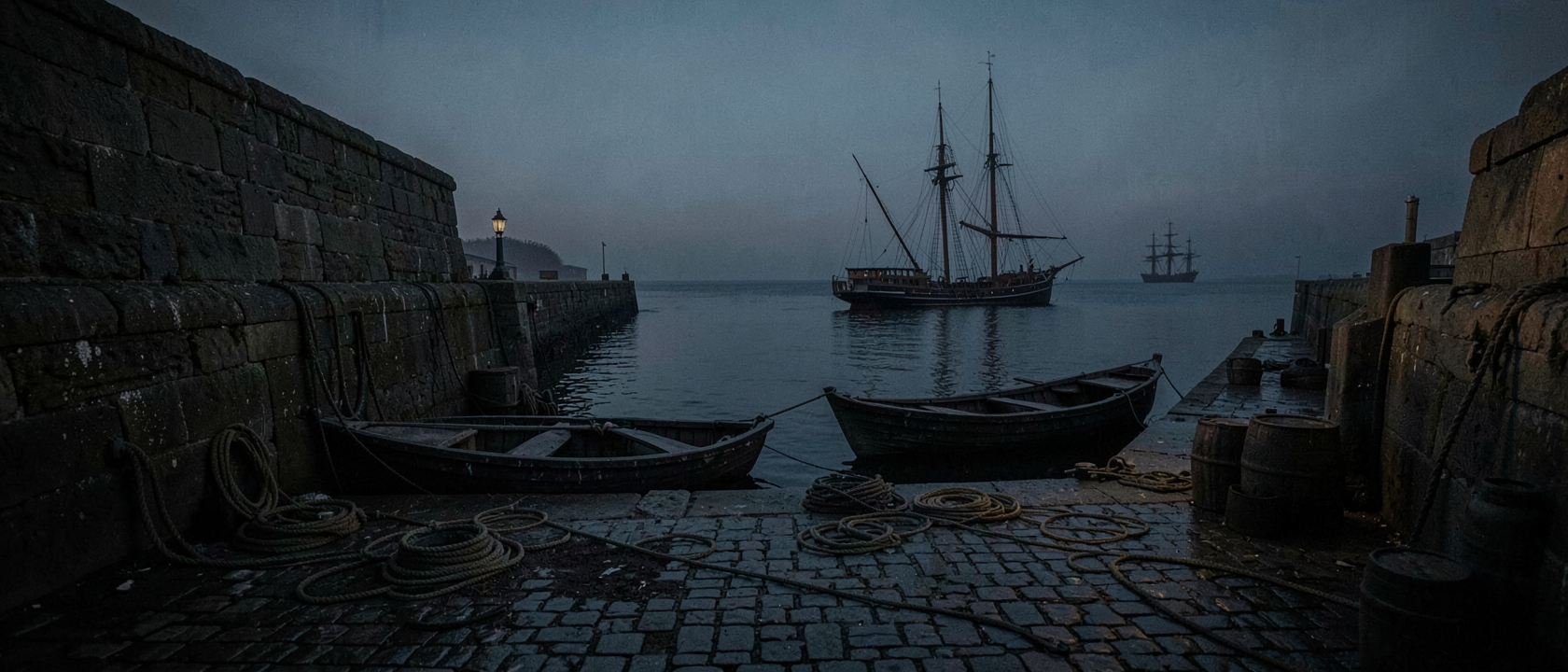
The letter states that around 3 a.m. that morning, roughly thirty men came ashore from two boats. Six vessels lay in the harbor. One of them, the collier Thompson, was set alight with a tar-soaked device. Townspeople raised the alarm, and the fire was put out before it could spread to the other ships.
One member of the landing party was caught and questioned where he stood. According to the letter, he told his captors the ship had already been lying in the channel for ten days, that it had been hired at Brest, and that a French frigate carrying 38 guns had escorted it through the Bay of Biscay and the North Channel to reach the coast.
The Man the Letter Would Not Name
The letter does not linger on the raid’s leader. It describes him only in passing, as a man previously known in the town, without dwelling on who he was or what drove him. What it does do is direct: the authors used the incident to ask Suffolk outright to arrange protection for the town.
Nothing in this file records an answer. No reply is preserved, no order, no naval deployment sent north in response. The request stands in the record unanswered.
A File With No Inquiry
No board of investigation followed. There is no assessment of blame, no tally of damage compiled by any government office in this file.
The National Archives’ own catalog description, written long after the event, offers a separate estimate: financial damage somewhere between £250 and £1,250, alongside a judgment that the raid’s real significance was psychological and political, a shock to confidence in coastal defense rather than a serious material loss. That assessment belongs to the modern archive commentary. It is not something the 1778 letter itself states.
What the Letter Never Says
The letter never states how many ships beyond the Thompson were damaged, even though later commentary on the raid cites far higher figures without showing how those totals were reached. It never records what became of the captured crewman, nor of a deserter mentioned in other accounts of that night. And it never records whether Suffolk’s office answered the plea for protection at all.
Each of these is a gap in the paperwork. None of them is filled in here, and none should be read as evidence of what happened in the missing part.
What Came After the Letter
Later retellings added details the 1778 letter does not contain. The National Archives account itself flags one as “alleged”: that the commander released all but three of his prisoners and was the last man to leave the beach. Separately, later accounts describe his subsequent international fame and his reputation as a founding figure of the U.S. Navy. The National Archives’ own account states that London newspapers criticized the coastal defenses as “inexcusable,” though it does not name the specific papers.
None of it appears in the letter Samuel Martin, Peter Gale, and their neighbors signed on April 23, 1778. That letter says a fire was lit and put out, a prisoner was questioned, and a request for protection was sent to London. What happened to the request is not in the file.