One Letter Among Hundreds
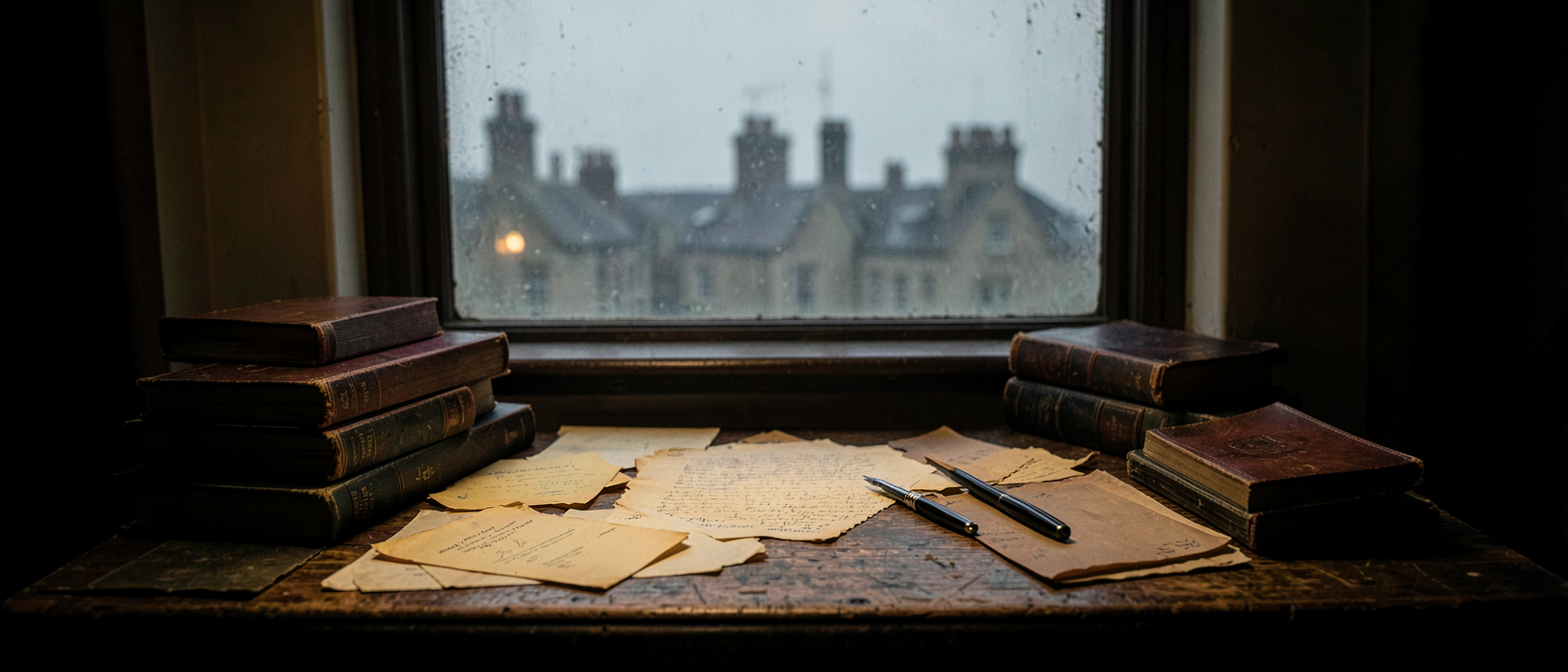
The envelope is still there. Postmarked Birmingham, October 8, 1888, it was addressed to the Detective Offices, Scotland Yard, London, and officially recorded by the Metropolitan Police on October 9, 1888. It is held at The National Archives under catalogue reference MEPO 3/142, page 160, within a file titled “Letters from individuals signed ‘Jack the Ripper'” covering the period 1888 to 1891. The National Archives drew specific public attention to this item on August 3, 2026.
The letter was retained as a matter of routine, one item in a collection of hundreds of similar pieces of correspondence filed during the same investigation. No record indicates it was set apart from the others at the time it arrived.
The Claims on the Page
The letter is signed “Jack the Ripper.” The writer places himself in Birmingham, referring to it as “Brum,” and states that three girls have already been selected as targets there. The specific threat is that three families will be “thrown into mourning” within one week of the letter reaching Scotland Yard. Beyond that, the writer sets out a numbered program: 15 murders in total, followed by suicide to cheat the scaffold, meaning the writer intends to die by his own hand rather than face execution, denying police the prospect of a hanging. The letter closes with expressed confidence that no arrest will be made.
The name “Jack the Ripper” had first appeared in correspondence received by the Central News Agency of London on September 27, 1888, before this Birmingham letter was written. By October 8, that signature was already in wide circulation through press coverage. Whoever wrote the Birmingham letter was using a name that had already been published.
The Whitechapel Investigation, Autumn 1888
Five women were murdered in the Whitechapel district of east London during the autumn of 1888: Mary Ann Nichols, found August 31; Annie Chapman, found September 8; Elizabeth Stride and Catherine Eddowes, both found September 30; and Mary Jane Kelly, found November 9. The killer was never identified and no conviction was recorded.
Later historical accounts characterized all five victims as sex workers, but the contemporary police record does not support that as a category applied to any of them. Elizabeth Stride had cleaned rooms at her lodging house at 32 Flower and Dean Street and had been paid sixpence for that work on September 29, 1888. Catherine Eddowes had recently returned from seasonal hop-picking in Kent. The National Archives notes that all five women had at earlier points held steady work and that some had been married with children. The characterization as sex workers is a later assumption carried forward through popular history rather than grounded in police documentation.
The investigation generated an extraordinary volume of public correspondence. By October 20, 1888, the Illustrated Police News reported that police had looked at over 700 letters. A 2018 study by Dr. Andrea Nini of the University of Manchester, published in Digital Scholarship in the Humanities, analyzed a corpus of 209 surviving letters from the case.
The Official Assessment
Investigators concluded that no strong evidence supported the authenticity of any letters received during the Whitechapel investigation as genuine communications from the murderer. The Birmingham letter is treated as a hoax, a conclusion that emerged from the investigation itself. The National Archives describes the correspondence in the file as having served only to waste police time.
The conclusion rests on an absence: no letter in the file was corroborated by external evidence linking its author to the actual murders. The record does not support the letter’s authenticity; it does not establish who wrote it.
Claims about authorship of the earlier Ripper letters emerged years and decades after the investigation. Fred Best, described as a journalist at The Star, stated in 1931 that he and a colleague had written all the letters signed “Jack the Ripper” to sustain public interest. Detective Chief Inspector John George Littlechild wrote in a 1913 private letter to journalist George Sims that it was “generally believed at the Yard” that Tom Bulling of the Central News Agency had originated the name and early correspondence. Sir Robert Anderson, who served as Assistant Commissioner and head of the Criminal Investigation Division in 1888, wrote in memoirs published in 1910 that the “Dear Boss” letter was the work of “an enterprising London journalist” and that Scotland Yard knew the author’s identity without having named him publicly. Dr. Nini’s 2018 linguistic study concluded there was strong evidence that the “Dear Boss” letter and a subsequent postcard were written by the same person, consistent with the journalist-fabrication account. None of these claims specifically accounts for the Birmingham letter of October 8, 1888.
The Silence in the File
The archive does not record who wrote the Birmingham letter, nor whether investigators followed up on it specifically, whether the postmark prompted inquiries in Birmingham, or whether the letter simply entered the file alongside the rest of the correspondence. The standards by which police distinguished between letters they considered more or less credible are not laid out in what survives.
The numbered declaration, 15 murders followed by suicide to cheat the scaffold, cannot be assessed from the record. Whether it reflected genuine intent or was constructed as performance is not something the file addresses. The identity of the Whitechapel murderer remains unresolved. These are absences in the documentation, noted here as absences, not as indicators of what the file once contained or what the investigation failed to pursue.