
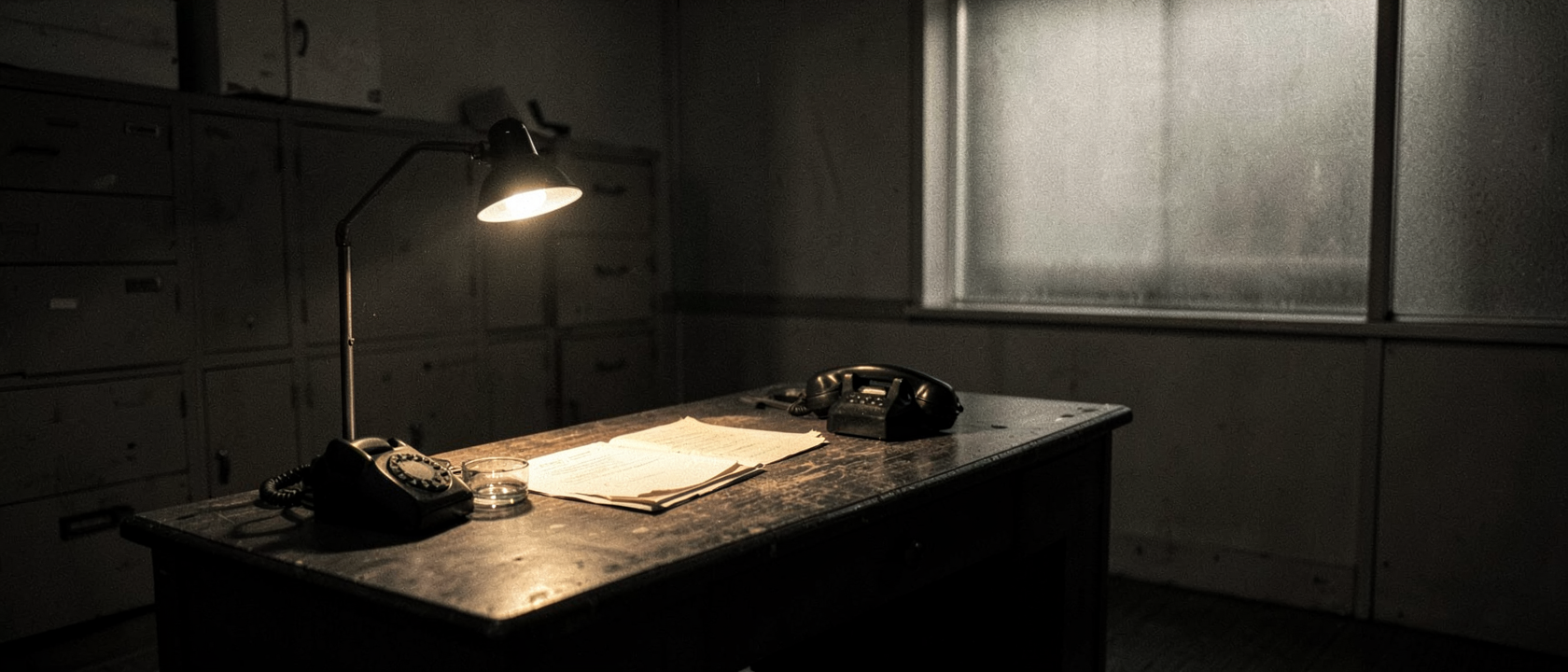
A Document Everyone Has Already Seen
The Hottel memo is one of the most-viewed pages in the FBI’s own online reading room, the Vault. It first reached the public in the 1970s, after Navy physicist Bruce Maccabee filed a request under the Freedom of Information Act (FOIA), the federal law that lets anyone ask a government agency for copies of its records. The Bureau posted the file to the Vault’s website in April 2011, and the FBI itself has said it was viewed nearly a million times in the two years that followed. For most of that public life, though, the memo carried redactions: blacked-out lines where names should have been.
In 2022, The Black Vault filed a new FOIA request, case number 1555167-000, on August 2. The FBI denied a bid to speed up processing but released the full file six days later, on August 8, 2022. The content had not changed. What changed was that the blacked-out words were gone.
The Paper Itself
The document is one page, dated March 22, 1950, signed by Guy Hottel, special agent in charge of the FBI’s Washington Field Office, and addressed to Director J. Edgar Hoover. It sits inside a Bureau collection cataloged as “UFO Part 03,” a general folder of correspondence touching on unidentified flying objects, not a dedicated case file for this incident alone. The memo has a brief routing line, a paragraph relaying what Hottel had been told, and a short closing note. None of that structure is new. What is new, since 2022, is that every word of it can be read.
Four Links, Three of Them Blank
Hottel did not claim to have seen anything himself. His memo states that an informant told him what an Air Force investigator had reportedly said. That is the chain, as written: an unnamed investigator, to an informant whose name stayed withheld in every release before 2022, to Hottel, to Hoover. The story crossed three sets of hands before it reached paper, and for decades two of those three people had no name attached to them at all.
What the Report Claimed
The content Hottel passed along is specific. Three disc-shaped objects, described as circular with raised centers and about 50 feet (15.2 meters) in diameter, had reportedly been recovered in New Mexico. Each one supposedly held three bodies, human in shape but only about three feet (0.9 meters) tall, dressed in a metallic cloth of fine texture and bandaged in a style the memo compares to the blackout suits worn by speed fliers and test pilots. The informant reportedly blamed the recovery, and the saucers’ failure, on a high-powered radar installation the government had running in the area. No crash site is named. No date is given for when the recovery was supposed to have happened.
The Bureau’s Own Word for It
Hottel wrote directly into the memo that “no further evaluation was attempted” on the report. That is the Bureau’s judgment at the time: not confirmed, not pursued. Decades later, responding to online claims that the memo proved extraterrestrial visitation, the FBI issued its own public statement. The memo, it said, “does not prove the existence of UFOs; it is simply a second- or third-hand claim that we never investigated.” It added that some people believe the account repeats a hoax circulating in 1950, but that the Bureau’s own files hold nothing to confirm that either. The FBI also ruled out a connection to the 1947 Roswell incident, noting the Hottel memo is dated nearly three years later.
No Balloon, No Weather, No Explanation at All
Most FBI and Air Force paperwork from this period carries some attempt at a mundane account, even a thin one: a balloon, a flare, a misread radar return. This memo offers none. It states the claim and stops. The Bureau’s later statement rules out two specific theories, Roswell and a confirmed hoax, without putting anything in their place. That absence is a fact about this one document. It is not evidence that no explanation exists, only that this file does not contain one.
The Gaps Themselves
Four things the record never supplies. The Air Force investigator and the original informant are not named, even in the unredacted text. No Air Force report or file documenting any recovery, in New Mexico or anywhere else, is cited or known to exist. No date attaches to the alleged event itself, only to Hottel’s memo describing it. And the memo does not say whether the Air Force ever opened a formal inquiry beyond the hearsay that reached Hottel’s desk. The Black Vault separately obtained Hottel’s full FBI personnel file under a different request; it contains no further references to saucers or anything like them.
An Afterword, Not a Finding
John Greenewald Jr. who runs The Black Vault and filed the 2022 request, has said that holding the complete document “may actually create more questions than answers.” That is his reading of the release, offered after the fact, not a line written anywhere in the memo. The document itself says only what it says: a secondhand report, three links of hearsay, no name attached to any of them, and a note that nobody went back to check.
—
**Summary of fixes made:**
1. Headline: added missing closing quotation mark after “Mystery.”
2. “An Afterward, Not a Finding” → “An Afterword, Not a Finding” (correct word for a concluding section/remark; “afterward” is an adverb meaning “later,” not a noun for this context).
3. Verified all other instances of quotation marks are properly paired and punctuation (commas/colons) are placed consistently.
4. Confirmed no relative-to-today time references exist, all dates are absolute (e.g. “April 2011,” “August 8, 2022,” “1947”) and year-based relatives (“nearly three years later,” “decades later”) are correctly tied to stated years, not to the generation date.
5. No subject–verb agreement, article, tense, pronoun/homophone, or spelling errors were found elsewhere; capitalization and American spelling conventions are consistent throughout.