
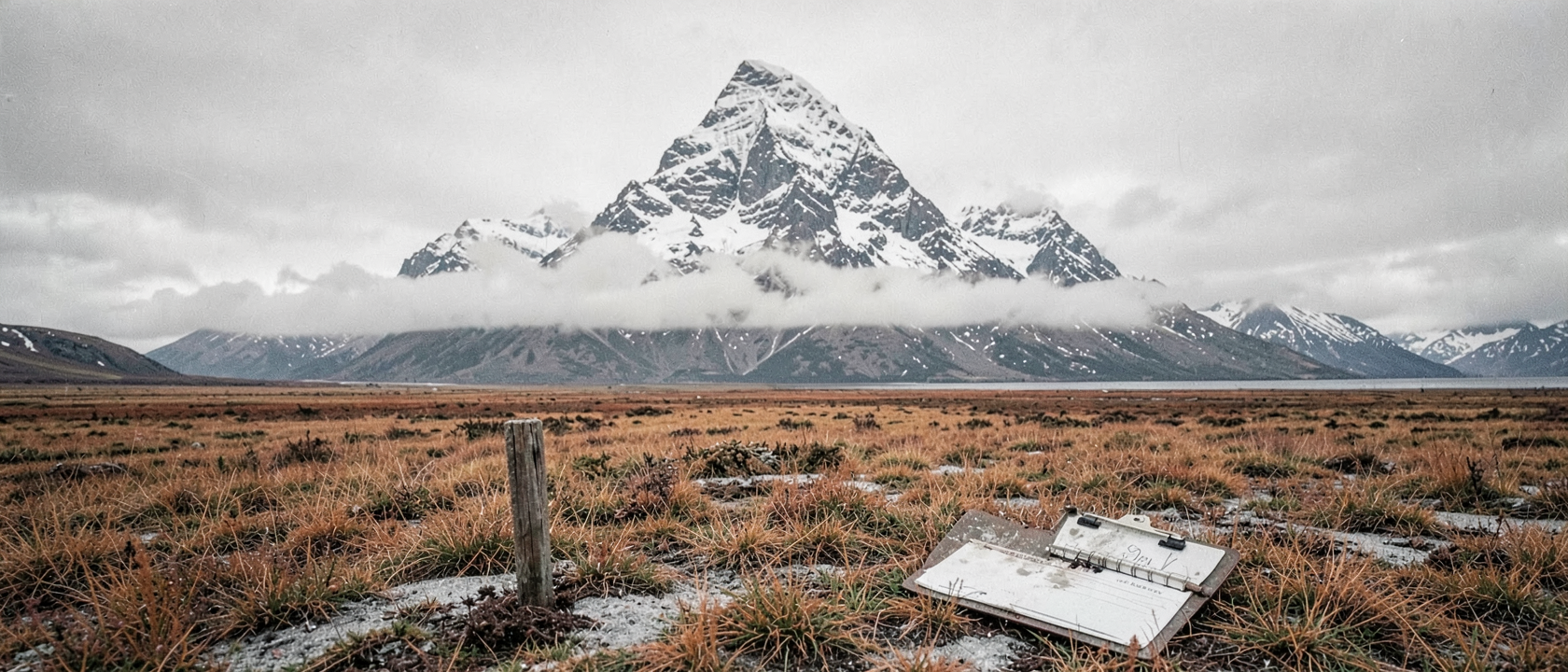
Mount McKinley became Denali on August 30, 2015, when Interior Secretary Sally Jewell signed Secretarial Order No. 3337 in Anchorage, closing a request that Alaska Governor Jay Hammond had filed forty years earlier, in 1975. The order left behind the ordinary residue of any federal decision: emails, meeting minutes, internal back-and-forth between agency staff. In April 2016, John Greenewald, who runs the document archive The Black Vault, filed a Freedom of Information Act (FOIA) request with the U.S. Geological Survey (USGS) asking for all of it. What came back, under FOIA Case USGS 2016-00136, was not a summary of what the agency had decided or why. It was the correspondence itself, released in eight separate batches and totaling more than 4,500 pages, with one batch carrying a quirk nobody at USGS could explain.
What the record contains
The releases arrived unevenly, the way FOIA production usually does. Release #1 ran 463 pages. Release #2 added 289 more. Releases #3 through #5 were bundled together into a single 442-page file. Release #6 brought 200 pages, Release #7 another 137. Then came Release #8: a 3,064-page ZIP file, by far the largest piece of the archive, containing the bulk of the emails and meeting records tied to the renaming process.
Somewhere inside that last release sat a handful of PDF files locked with a password that blocked editing. The documents could still be opened and read in full; nothing in them was hidden from view. What a visitor couldn’t do was alter the file itself. When Greenewald asked USGS about it, the agency said it had no record of the password and could not produce one. The files stayed exactly as released: readable, but sealed against any change.
The official explanation
There isn’t one, really, because nobody asked USGS to explain the renaming itself in this exchange. This was a records request, not an inquiry into wrongdoing. The agency’s job was to produce what existed in its files, and it did: eight tranches of paperwork covering a name change that had been pending at the federal level since the Ford administration. The Black Vault’s published material offers no finding, no conclusion, no narrative about who decided what and when. It is raw material, posted as received.
As for the password protection, the explanation USGS gave was the mundane one: the agency simply couldn’t locate the credentials. That happens. Government offices lose passwords, change software, lose the person who set the lock in the first place. There is no document in this release that names who applied the edit-lock or why. The gap sits there, unfilled.
What still doesn’t fit
The genuinely strange part isn’t that a password got lost, that is a small, believable kind of government friction. It’s that the record offers no way to tell whether the lock was routine administrative housekeeping or something applied with more purpose, because the paperwork documenting that decision, if it ever existed, isn’t in the release. A missing explanation for a technical restriction is not evidence of a hidden one. It is simply missing.
The renaming itself didn’t stay settled either. On January 20, 2025, President Donald Trump signed an executive order reversing the 2015 decision and restoring the federal name Mount McKinley, even as Denali National Park and Preserve kept its name. Reporting at the time noted that fully implementing that reversal, updating maps, signage, and federal databases, could take longer than a single term in office. The mountain has now carried two different official federal names in less than a decade, on top of the name the Koyukon Athabascan people had used for it long before either Washington designation existed.
Why this one is worth the file
There’s no payoff here, no smoking document, no reveal. What there is: a specific, countable archive, 4,500-plus pages, eight releases, one unexplained lock, that someone can actually go check. That’s the difference between a case built on a paper trail and a case built on a feeling. Anyone can read the pages. Anyone can confirm the password problem is real and still unsolved. Whether that’s worth repeating depends on whether you’re the kind of reader who needs the document to say more than it does, or the kind who’s content to know exactly where the record stops.