
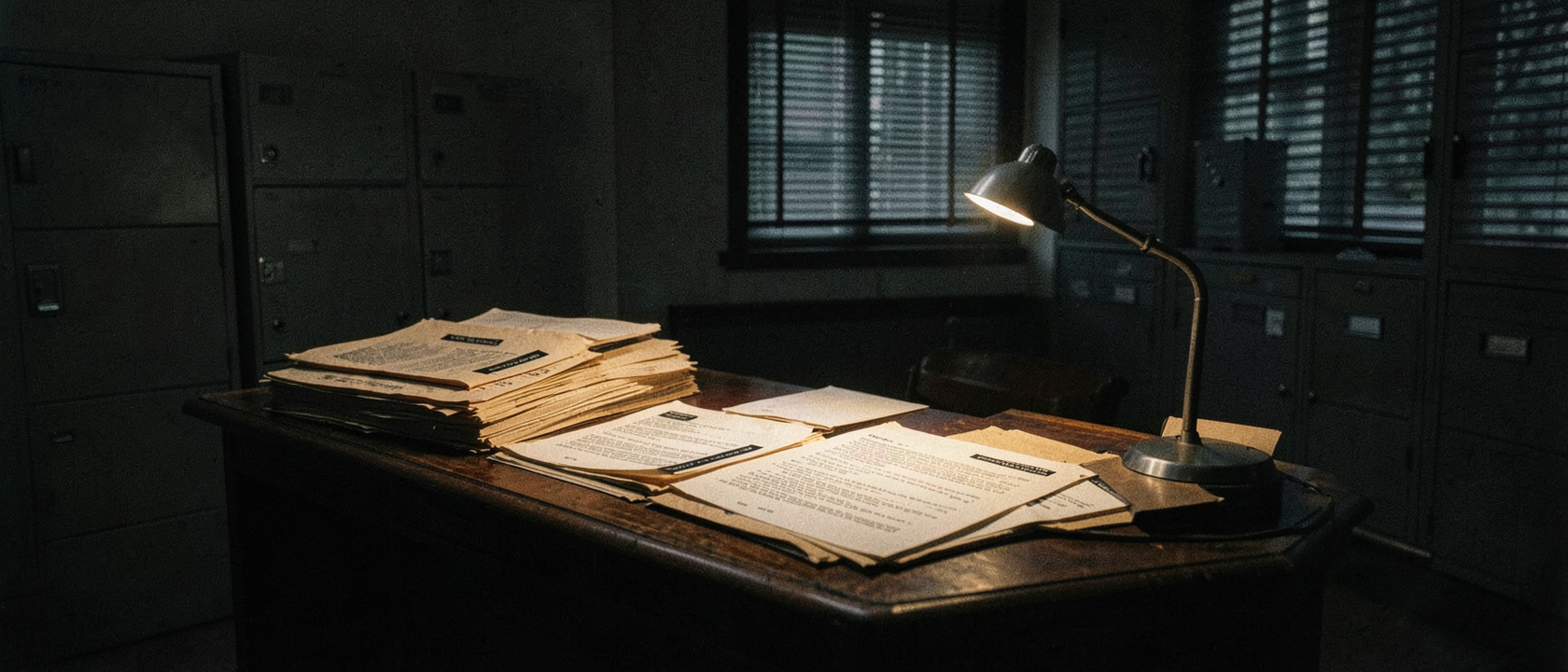
A Manual, Reopened
“KUBARK Counterintelligence Interrogation” is not a new name to anyone who has followed CIA interrogation history. The manual carries a July 1963 date and was originally classified SECRET, marked NO FOREIGN DISSEM on the copies now in circulation. A version first surfaced in 1997 through a Freedom of Information Act request from the Baltimore Sun, and a less heavily redacted copy followed in February 2014 after a request from researcher Jeffrey Kaye. The file released in 2026 runs 132 pages, distributed as a 70-megabyte document.
Inside its own pages, KUBARK, which was the CIA’s cryptonym for itself, cites its own internal paperwork. One passage describes “ODAPSE Directive No. 5,” which the text says governs KUBARK’s role coordinating clandestine activities conducted abroad by other agencies. The same section points to guidance labeled “Chief/KUBARK Directives 5/1 and 5/2” as covering those coordination procedures. Elsewhere, interrogators handling suspected double agents are told to consult a “Field Double Agent Guide” dated August 1960. None of these names are new. What changed in 2026 is how much of the surrounding text is now readable.
The Paper Trail
The request behind this release began on May 13, 2021, when John Greenewald’s The Black Vault filed a Mandatory Declassification Review, a formal process by which an agency re-examines its own prior redactions. The case was logged as EOM-2021-00117. The CIA’s initial response, dated February 9, 2024, granted only limited additional release, citing Executive Order 13526, Sections 3.3(h)(2) and 6.2(d), the current rule governing how national security information is classified and declassified. Greenewald appealed on March 1, 2024.
The CIA’s Agency Release Panel, which handles second-level review of declassification appeals, issued its decision in a letter dated July 21, 2026. The letter states that the earlier determination “can now be revised such that the enclosed document previously released in part may now have more information released,” while other sections stayed withheld under the same authorities.
The Number That Came Out
Among the passages restored is a sentence on Soviet defectors. The manual states that “a certain percentage” of them had proven to be controlled agents, and that estimates of this percentage “ranged as high as seventy percent during a period of several years after 1955.” Earlier released versions of KUBARK kept the sentence visible but blacked out the figure itself. The 2026 release restores it. The manual does not say who produced the estimate, what group of defectors it was measured against, or how a case was determined to be “controlled.”
What the Panel Actually Decided
The July 21, 2026 letter is a declassification ruling, not a historical judgment. It records that the Agency Release Panel found additional text could be released under Executive Order 13526, while other sections remained withheld under those same sections plus FOIA Exemption (b)(3), the clause of the Freedom of Information Act covering material that another statute specifically exempts from disclosure. The letter does not say whether KUBARK’s methods were used as described, when, where, or against whom. It settles a question about paperwork, not about events.
What’s Still Behind the Line
The Agency’s own letter states that “entire phrases, organizational identifiers, operational procedures, and references to internal directives” remain redacted. Chief/KUBARK Directives 5/1 and 5/2 are named in the text but not reproduced in full; parts of that section are still blacked out. The record documents that a redaction exists, and under which legal sections it was made. It does not describe what the missing text says.
Two Loose Threads
A document titled “Field Double Agent Guide” began appearing separately in 2022, through National Archives disclosures tied to JFK assassination records. Whether that document is the same August 1960 guide cited inside KUBARK is not established in either release. No cross-reference connects the two files in the Black Vault’s material or in the published record.
The seventy-percent figure on Soviet defectors also stands alone. It appears in the manual as a period estimate, attributed only to unnamed CIA personnel of the time, with no footnote or sourcing behind it. It is documented as something the manual’s authors wrote down, not as a number that can currently be checked against anything else.
What Got Said About It
Reporting the release on July 28, 2026, John Greenewald of The Black Vault called it “the most complete officially released version of the manual currently available.” That is Greenewald’s own description of the result. It is not language the CIA used. The Agency’s letter confines itself to stating what categories of material were released and what categories stayed withheld, without comparing the release to earlier versions.
What This Tells You About Reading It
Nothing above is a new fact beyond what’s already been laid out. It’s a way of keeping four things separate: a passage the manual itself contains, a decision the Panel made about release authority, a redaction the Agency describes but does not explain, and a claim an outlet made once the file was in hand. Kept apart, each stays what it is. The seventy-percent estimate and the still-withheld Chief/KUBARK Directives sit a few pages apart in the same manual, one now visible with its basis unexplained, the other still sealed with its contents unknown. The July 21, 2026 letter does not connect them, and nothing else in the file does either.