
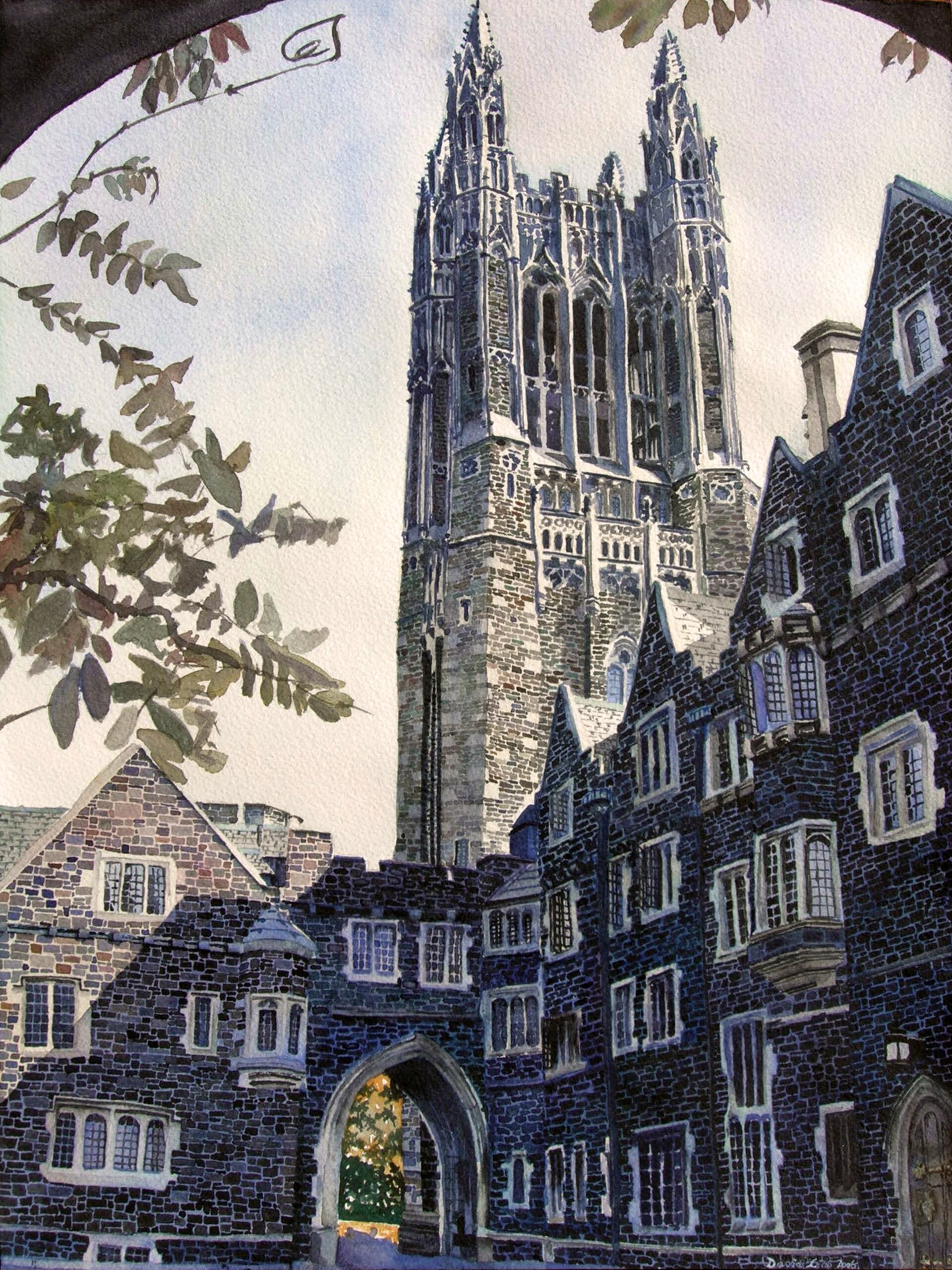
Princeton University is a private Ivy League research university located in Princeton, New Jersey, United States, governed by the Trustees of Princeton University and operating under the motto “Dei Sub Numine Viget” — Latin for “Under God’s Power She Flourishes.” Founded in 1746 as the College of New Jersey, it ranks among the oldest universities in the country and carries a sustained record in research, financial aid innovation, and undergraduate education. Its endowment reached $42.3 billion following a 23.7 percent investment gain during the fiscal year ending June 30, 2026, placing it among the most heavily capitalized universities in the world. With a student-to-faculty ratio of 8:1 and an acceptance rate of 4.4 percent for the 2025-26 academic year, Princeton operates at a scale that is deliberately small relative to its resources.
Key facts
- Country: United States
- Founded: 1746
- Headquarters: Princeton
- Founder: John Witherspoon
- Type: private university; research university; colonial colleges; private not-for-profit educational institution
- Parent organisation: Trustees of Princeton University
- Employees: 1,140
- Website: https://princeton.edu
Origins and Early History
The College of New Jersey was chartered in 1746 by the Presbyterian Synod, with Jonathan Dickinson appointed as its first president. The 1746 charter carried a clause unusual among colonial institutions: it specified that admission was open to ‘any Person of any religious Denomination whatsoever,’ a provision at odds with the institution’s Presbyterian origins. The college first operated in Elizabeth, New Jersey, then moved to Newark in 1747, and settled permanently in Princeton in 1756.
Princeton’s founding is bound up with the history of American slavery in ways the university has publicly examined. Research conducted through Princeton’s slavery and justice project established that every one of the seven original founding trustees of the College of New Jersey was a slaveholder, and that eleven of the twelve trustees named by 1747 were slaveholders.
Nassau Hall, completed in 1756 and Princeton’s oldest building, served a function far beyond education during the Revolutionary era. For approximately four months in 1783, it housed the Continental Congress, making Princeton briefly a seat of national government for the United States.
Becoming Princeton University
In 1896, the College of New Jersey was renamed Princeton University, and the institution formally adopted its Latin motto at that time. The same year, Woodrow Wilson formulated the phrase ‘Princeton in the Nation’s Service,’ which has since functioned as an unofficial motto.
The senior thesis became a mandatory graduation requirement for all undergraduates in 1926. Its roots go back to February 19, 1923, when Luther Pfahler Eisenhart, then Dean of the Faculty, proposed a ‘Four Course Plan’ at a Faculty Meeting. The requirement has remained in place continuously since 1926, shaping Princeton’s academic culture across generations of students.
Coeducation and Access
Princeton admitted its first female undergraduates in September 1969, when 101 freshman women enrolled with the Class of 1973, ending more than two centuries of exclusively male undergraduate education.
In 2001, Princeton became the first university in the United States to eliminate loans from undergraduate financial aid packages entirely, replacing them with grants that students are not required to repay. The policy shift was significant enough that by 2008, at least 20 other colleges and universities had adopted comparable no-loan commitments, each pledging to meet 100 percent of demonstrated financial need without requiring students to take on debt.
Academic Structure and Student Life
Princeton offers two undergraduate degree paths: the Bachelor of Arts (A.B.) and the Bachelor of Science in Engineering (B.S.E.). Students choose from 37 concentrations and more than 50 minors and interdepartmental certificate programs. The university operates on a semester-based academic calendar.
Total undergraduate enrollment in fall 2025 stood at 5,916 students, with a gender distribution of 49.7 percent male and 50.3 percent female. Overall enrollment, including graduate students, reached 9,281. For the 2025-26 academic year, the university received 42,303 applications, admitted 1,868 students, and enrolled 1,408.
Eating clubs are a defining feature of Princeton’s social landscape. Across the senior surveys conducted in 2022, 2023, and 2024, approximately three-quarters of Princeton seniors reported paying dues to at least one eating club during their undergraduate years.
Athletics are woven into undergraduate life as well. Princeton fields 38 varsity teams for men and women competing in NCAA Division I, with about 18 percent of undergraduates participating at the varsity level. The Tigers have won more Ivy League championships than any other school during the last two decades.
Research and the Endowment
The Princeton University Investment Company, known as Princo, was established in 1987 to manage the university’s endowment, which at that time totaled $2.2 billion. The annualized return on the endowment over the past 20 years stands at 9.5 percent. As of the fiscal year ending June 30, 2026, the endowment reached a record $42.3 billion following a 23.7 percent investment gain, surpassing the previous high of $37.7 billion set in 2021.
Sponsored research revenue for fiscal year 2024-25 increased 5.7 percentage points to $558 million, a gain that came despite a federal funding freeze affecting universities broadly. A nearly 15 percent increase in revenue from the Princeton Plasma Physics Laboratory contract contributed to that growth.
Located on Princeton’s Forrestal Campus, the laboratory has focused on research aimed at developing controlled nuclear fusion as a practical energy source.
The Institute for Advanced Study, though organizationally and administratively separate from Princeton University, has maintained close academic ties with the university since the Institute’s founding in 1930. The Institute was originally housed in Fine Hall on the Princeton campus before establishing its own premises.
Arts and Campus
The Princeton University Art Museum reopened on October 31, 2025 in a new building that nearly doubles the exhibition space of its predecessor and displays roughly three times as many objects. Even so, the objects on display represent only 4 to 5 percent of the museum’s total collection.
The university employs 1,140 people and maintains its main operations at its Princeton, New Jersey campus. Its website is princeton.edu.
Did you know
- Nassau Hall, Princeton’s oldest building, was completed in 1756 and was at the time of its construction the largest stone building in the American colonies. (admissionsight.com)
- Princeton was the first university to apply a comprehensive no-loan financial aid policy, doing so in 2001. By 2008, at least 20 other colleges and universities had followed by committing to meet 100 percent of demonstrated need without requiring students to take on debt. (pr.princeton.edu)
- The Princeton University Art Museum, which reopened on October 31, 2025, nearly doubles the exhibition space of the previous building and displays about three times as many objects, yet that still represents only 4 to 5 percent of the museum’s total collection. (princetonperspectives.com)
- The 1746 charter of the College of New Jersey was distinctive among colonial institutions in specifying that ‘any Person of any religious Denomination whatsoever’ might attend, even though the college was founded by Presbyterians. (heartfelthistory.com)
- Sonia Sotomayor, Class of 1976, graduated summa cum laude from Princeton and won the Moses Taylor Pyne Honor Prize, the university’s highest undergraduate honor. She went on to become the first Latina justice on the U.S. Supreme Court in 2009. (admissionsight.com)
Data sources
- Wikidata
- universityarchives.princeton.edu
- towntopics.com
- princo.princeton.edu
- standup.princeton.edu
- slavery.princeton.edu
- blogs.princeton.edu
- pr.princeton.edu
- heartfelthistory.com
- paw.princeton.edu
- usnews.com
- collegedata.fyi
- dailyprincetonian.com
- admission.princeton.edu
Data updated: 2026-10-28