
Chelyabinsk Oblast is a federal subject of Russia covering 87,900 square kilometres on the border between the European and Asian parts of the country, with a population recorded at 3,383,188 in 2024. Founded on 17 January 1934, the region stretches 490 kilometres from north to south and 400 kilometres from west to east, making it comparable in area to Hungary, Portugal, and Austria. Its economy is built above all on heavy industry: metallurgy and mechanical engineering together account for more than 60 percent of regional industrial output. The oblast also carries one of the most consequential nuclear safety records in Russian history.
Key facts
- Country: Russia
- Type: oblast of Russia; federal subject of Russia
- Located in: Russia
- Coordinates: 55.1600, 61.4000
- Population: 3,385,124
- Area: 87,900 km²
- Founded: 17 January 1934
Geography and natural setting
The oblast sits on the divide between Europe and Asia, bordered by Sverdlovsk Oblast to the north, Kurgan Oblast to the east, Orenburg Oblast to the south, the Republic of Bashkortostan to the west, and Kazakhstan to the southeast. The region’s dimensions — 490 km north to south, 400 km west to east — give it a footprint large enough to be compared with several European states.
The climate is moderately continental. Average January temperatures range from -16 to -18°C, while average July temperatures reach +17 to +20°C. That seasonal swing shapes both agriculture and the character of the oblast’s considerable water resources.
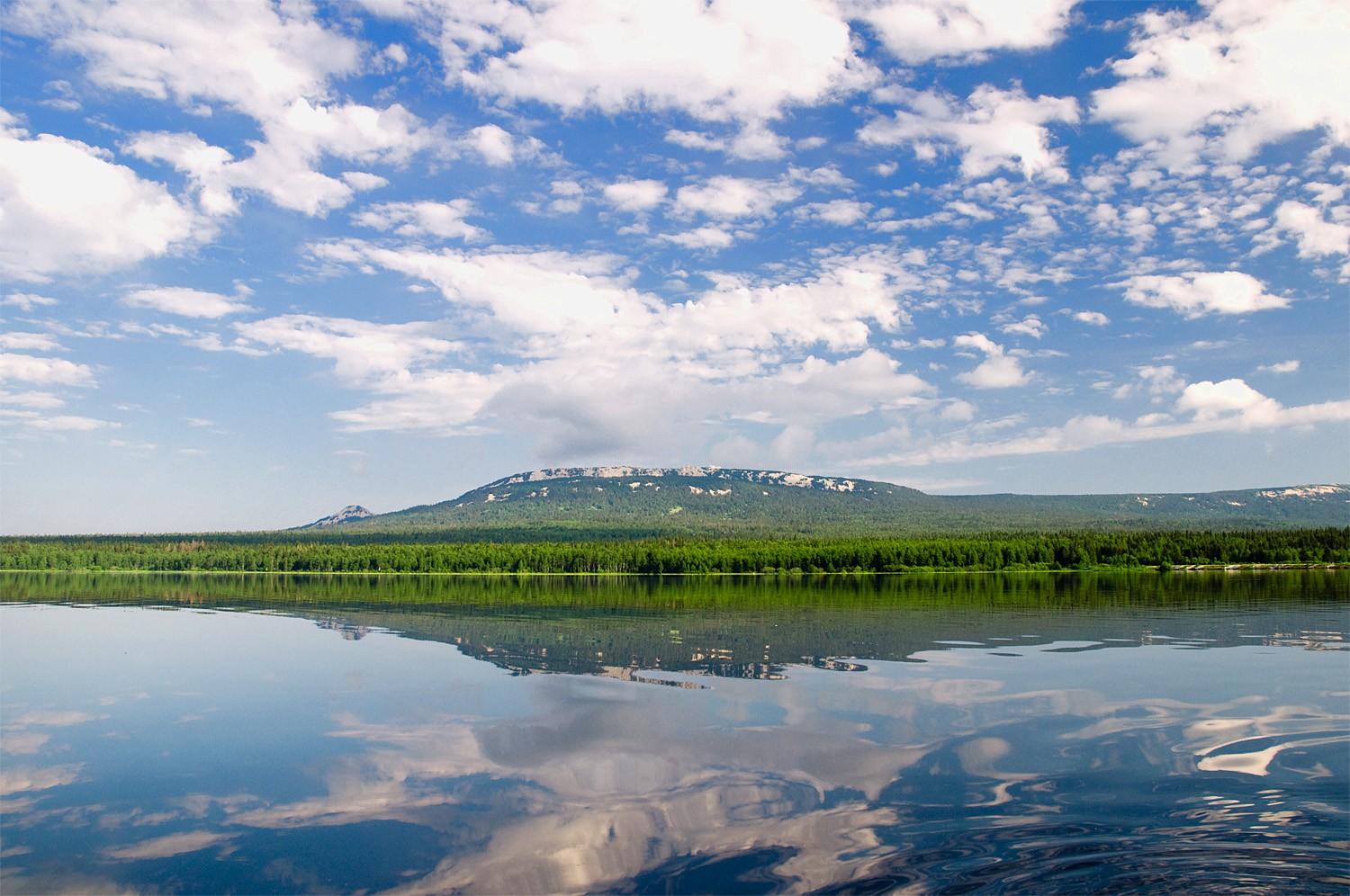
The oblast contains 3,170 lakes, of which 98 have surface areas greater than 5 square kilometres. The largest, Uvildy, covers 68 square kilometres. About 300 mineral deposits have been explored across the territory, and the region produces iron, copper, nickel, chromium, manganese, gold, and platinum-group minerals.
History and boundaries
Chelyabinsk Oblast was established on 17 January 1934.
The wartime years left a defining mark. During World War II, the Southern Urals industrial base centred on the oblast became one of the USSR’s primary manufacturing zones, a role reflected in the production figures preserved in the historical record.
The postwar decades brought a different kind of notoriety. On 29 September 1957, an explosion at the Mayak plutonium-processing plant in the closed city of Ozyorsk released radioactive material across a large area. The event, known as the Kyshtym disaster, was rated Level 6 on the International Nuclear Event Scale. By that rating it stands as the third most serious nuclear accident in recorded history, after Chernobyl and Fukushima.
Industry and economy
The metallurgical complex is the backbone of the oblast’s economy, accounting for more than 60 percent of regional industrial production. Metallurgy and mechanical engineering are the core economic specialisations identified for the region.
The most prominent single facility is the Magnitogorsk Iron and Steel Works (MMK), located in the city of Magnitogorsk. Commissioned in February 1932, MMK has an annual production capacity of 14,500 thousand tonnes of steel. The plant predates the formation of the oblast itself.
Mineral extraction supports the industrial base. Approximately 300 deposits have been explored, covering iron, copper, nickel, chromium, manganese, gold, and minerals from the platinum group.
Transport
The South Ural Railway, a branch of the Trans-Siberian Railway, passes through the oblast, connecting the region to the broader Russian rail network. Air access is provided by two airports: an international airport in Chelyabinsk capable of accepting all types of airliners, and a second airport serving Magnitogorsk.
Population
The population of Chelyabinsk Oblast reached its all-time recorded high in 1990 at 3,706,378. By 2024 it had fallen to 3,383,188, the lowest figure recorded since records began in 1989. The overall population figure used in the regional profile is 3,385,124.
Did you know
- During World War II, the Southern Urals region of Chelyabinsk Oblast supplied 40 percent of all military products manufactured by the USSR. The oblast’s plants produced 60 percent of the Soviet Union’s medium tanks and 100 percent of its heavy tanks during the war. (globalsecurity.org)
- Chelyabinsk Oblast is nicknamed “the land of lakes.” Its 3,170 lakes include bodies of water with mineral compositions and therapeutic muds that have been used for medicinal purposes. (russiatrek.org)
Data sources
- Wikidata
- hedclub.com
- russiatrek.org
- gem.wiki
- council.gov.ru
- investinregions.ru
- energia-nuclear.net
- ceicdata.com
Data updated: 2026-10-29