
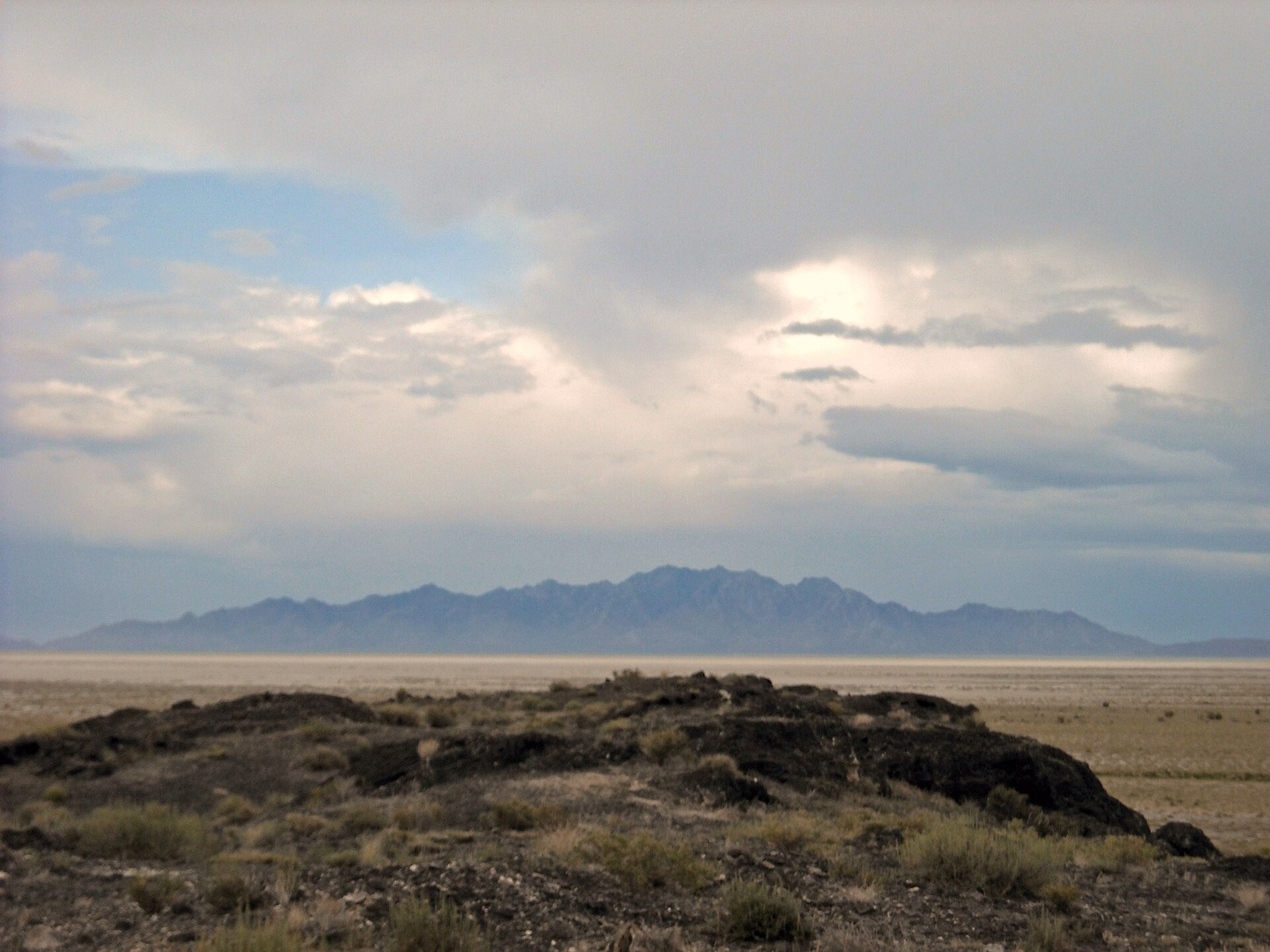
Dugway Proving Ground is a U.S. Army installation in Tooele County, Utah, situated in the Great Salt Lake Desert on the edge of the Bonneville Basin. Officially activated on March 1, 1942, after President Franklin D. Roosevelt withdrew 126,720 acres of Utah land from the public domain on February 6, 1942, it was built to meet the testing demands of wartime. Its primary mission is testing chemical and biological defense systems and performing nuclear, biological, and chemical contamination survivability testing of defense materiel using chemical and biological agents and simulants. The installation employs approximately 1,500 personnel across Department of Defense employees, active-duty military members, contractors, and civilian workers.
Key facts
- Country: United States
- Type: military base
- Located in: Tooele County
- Coordinates: 40.1886, -113.2128
- Founded: 1942
Location and Setting
The installation sits in the Great Salt Lake Desert, a subdivision of the Bonneville Basin, surrounded on three sides by mountain ranges. That geography produces acoustically and electronically quiet conditions free from light pollution, which makes it well suited to sensitive testing work that would be compromised by electromagnetic or acoustic interference at other sites.
The habitat within and around the installation is characterized by salt desert vegetation: pickleweed, shadscale, gray molly, greasewood, budsage, and juniper brush, interspersed with barren salt flats and sand dunes. Non-native plants, including cheatgrass and Russian thistle, have been recorded as invasive species across the area.
The Lincoln Highway once passed through what is now the installation’s footprint. The section of the old transcontinental highway that falls within Dugway’s boundaries is the only portion of that route closed to the public. A historic wooden bridge remnant of the Lincoln Highway Goodyear Cutoff remains on the installation and is listed on the National Register of Historic Places.
History
Roosevelt’s February 6, 1942, withdrawal of federal land transferred the acreage to War Department control, and formal activation followed on March 1, 1942. Biological warfare facilities were established in October 1943 in an isolated area of the installation known as the Granite Peak Installation. The base was phased out after World War II and became inactive in August 1946, then was reactivated during the Korean War as strategic requirements expanded again.
In 1954, Dugway was confirmed as a permanent Department of the Army installation. In 1973 it became part of the U.S. Army Test and Evaluation Command (TECOM), headquartered at Aberdeen Proving Ground, Maryland, placing it within a broader network of Army evaluation facilities.
Testing Facilities
The West Desert Test Center hosts the installation’s primary testing infrastructure. Its facilities include an aerosol test facility, ballistic ranges, a biological test facility, a combined chemical test facility, a decontamination test facility, a cryofracture facility, and a software development laboratory. Most of these are situated in the Ditto Test Area.
Michael Army Airfield (MAAF) lies 9 miles (14 km) west of the Dugway barracks. Its 11,000-foot lighted runway is capable of handling any aircraft in the U.S. Department of Defense inventory. Supporting infrastructure includes a 9,000-foot taxiway and a 20,000-square-foot hangar. Following a 2008 refurbishment of the airfield, the Army’s Unmanned Aircraft Systems office relocated from Redstone Arsenal, Alabama, to MAAF, and the Rapid Integration and Acceptance Center (RIAC) for unmanned aircraft systems was subsequently established there.
The installation accommodates 490 housing units for civilian and contract employees, reflecting the scale of long-term staffing needed to maintain continuous testing operations at a site this remote.
The 2015 Anthrax Shipment Incident
In May 2015, Dugway Proving Ground inadvertently shipped live anthrax spores to 18 laboratories across nine U.S. states and a military base in South Korea. The spores had been intended to be inactivated before shipment. A Pentagon investigation concluded that procedural errors at Dugway’s laboratory caused the problem; the investigation found no single root cause.
Subsequent investigation revealed that the scope of the error extended further than initially reported. Live anthrax spores from Dugway had been sent to 194 laboratories, including facilities in all 50 U.S. states and nine countries, over a period of years. The problem came to light when a commercial laboratory in Maryland tested a sample and found live bacteria.
Did you know
- In 1943, both German Village and Japanese Village at Dugway were completed just 44 days after construction began, partly because the contractor recruited prisoners from Utah jails to work alongside craftsmen in order to meet wartime urgency. (asia-pacificresearch.com)
- The U.S. military describes Dugway Proving Ground as the most remote and isolated duty station within the continental United States, with unpopulated desert or sparsely populated ranchlands in every direction. (installations.militaryonesource.mil)
- The installation’s Rapid Integration and Acceptance Center (RIAC) at Michael Army Airfield, created for unmanned aircraft systems, was established following a 2008 refurbishment of the airfield that attracted the Army’s Unmanned Aircraft Systems office from Redstone Arsenal, Alabama. (army.mil)
- The 2015 anthrax shipment investigation revealed that live anthrax spores from Dugway had been sent to 194 laboratories, including facilities in all 50 U.S. states and nine countries, over a period of years before the problem came to light when a commercial lab in Maryland tested a sample and found live bacteria. (pbs.org)
Data sources
- Wikidata
- militarybases.us
- globalsecurity.org
- installations.militaryonesource.mil
- home.army.mil
- militarytimes.com
- wrpinfo.org
- airforce-technology.com
Data updated: 2026-10-29