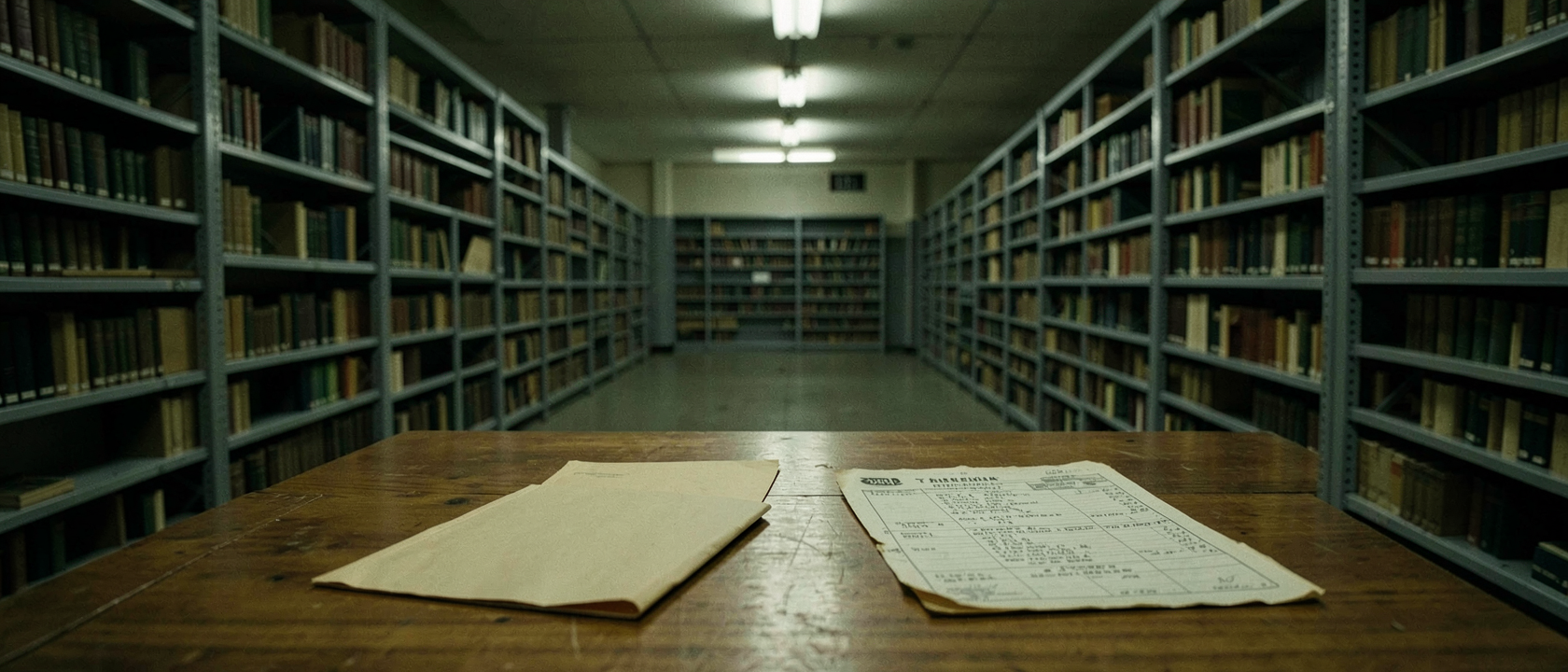
A Request That Went Nowhere in Particular
The National Archives’ answer to case CAS-328470 reads like most other entries in its Freedom of Information disclosure log. The request is titled “Loan and Transfer of Records to the Royal Archives,” its status is marked “Resolved,” and the response carries a metadata publication date of May 3, 2026. It cites Section 3(6) of the Public Records Act 1958, which allows a government department to give away records not selected for permanent preservation, as an alternative to destroying them, provided the recipient qualifies as what the Act calls a “bona fide archive.” The reply also points to paragraph 4.2 of the National Archives’ own Records Collection Policy.
What the published answer leaves out is almost as notable as what it includes. There is no date given for the original request, and no name attached to whoever filed it. Both are routinely omitted from these disclosures, so the absence is not unusual on its own. It is still a gap worth naming rather than skipping past.
The same explanatory paragraph and the same three-row table used to answer CAS-328470 also appear, word for word, on a separate National Archives FOI page titled “Transfer of Records from the Royal Archive to the National Archive,” which addresses a related but different question about traffic in both directions. The Archives is not drafting a fresh answer each time this topic comes up. It is drawing on one internal reference table.
Three Entries in a Table
The substance of the disclosure is three rows.
In 1993, a letter attributed to King Edward VII was presented to the Royal Archives by the Treasury Solicitor. No instrument number is recorded for this transfer.
In 2004, a letter written in 1846 by Prince Adolphus Frederick was presented and transferred to the Royal Archives by Customs and Excise, logged under Instrument No. 1999-27.
In 2010, the Ministry of Defence presented files covering flying training for the Royal Family between 1967 and 1984, logged under Instrument No. 2010-37.
That is the entire disclosure: three departments, three dates, two instrument numbers.
“The Best Information We Can Establish”
The National Archives frames its own answer with some care. It states that it holds information responsive to the request and offers the table as, in its own words, the best information it can establish from the records it holds relating to its supervisory role. That is a narrow and specific claim. It is not a statement that three is the total number of transfers that have ever taken place, and the Archives never asserts that it is. The phrasing describes what one institution’s filing system shows, not what happened across dozens of government departments over more than three decades.
The Edge of the Map
The National Archives’ oversight, by its own account, extends only to presentations made by “relevant departments” acting under its supervision. A transfer arranged directly between two archives, or handled by a department outside that supervisory chain, would not appear in this table. Not because it didn’t happen, but because it would sit outside what this particular office is positioned to see.
The record backs that boundary up in concrete terms. The Royal Household is not covered by the First Schedule of the Public Records Act, so papers held at the Royal Archives are not defined as public records to begin with, and the Royal Archives has never been designated an approved place of deposit. The Archives also states there is no formal or informal agreement between the two institutions governing record transfers. An earlier, differently worded request makes the same point from the other side: CAS-213161, published in October 2024, asked for a list of any records transferred from the National Archives itself to the Royal Archives since January 1, 1970. The answer given was “no information held,” because no such transfers had occurred through the National Archives in that direction. Two separate questions, landing on the same jurisdictional line.
This is the ordinary, unremarkable reason a list like this might be short: the limits of one office’s reach, not concealment.
What the Table Doesn’t Say
Four things are missing, and they are worth keeping apart rather than folding into one vague impression.
The response never states whether three transfers is the complete count. It simply does not settle the question in either direction.
The 1993 entry carries no instrument number, while the 2004 and 2010 entries both do. No reason for the difference is given.
The descriptions of the records are brief: a letter, a letter, a set of files. Nothing about their contents is transcribed or summarized.
And the response gives no date for the original request, and no name for the requester.
None of these four gaps is evidence of anything beyond itself. They are facts about what one FOI reply does and does not contain.
Why This One Travels
What makes CAS-328470 worth reading has nothing to do with a hidden meaning. It is that anyone can go and read it, on the National Archives’ own site, under that case reference, and see exactly where the answer stops. That is a different kind of document from one built on inference stacked on inference, where each layer borrows its credibility from the layer underneath.
This one does not resolve. It stops at the precise point where the National Archives’ own competence to answer runs out, and it says so plainly, in its own procedural language, rather than pretending otherwise. An institution being exact about the limits of what it can vouch for makes a duller story than a cover-up would. On the page, it is also considerably rarer.
—
**Summary of corrections made:**
1. **Capitalization**, Fixed inconsistent title-case in the two FOI page titles (“Loan and Transfer of Records to the Royal Archives” and “Transfer of Records from the Royal Archive to the National Archive”) to match standard title capitalization, and removed the erroneous capital “T” in “The National Archive” in the CAS-213161 reference to match consistent style (“the National Archives”).
2. All other grammar, tense, punctuation, spelling, and agreement were already correct, no other changes were needed. No relative-to-today date references were present (all dates are absolute), so no changes were required there.