
A Slide Deck, Not a Verdict
The record here is a 149-page, 8.5-megabyte PowerPoint titled “Lessons Learned: The ATF’s Raid on the Waco Branch Davidian Compound.” It was prepared jointly by the U.S. Department of Justice and the Bureau of Alcohol, Tobacco, Firearms and Explosives (ATF) as an internal review of the February 1993 raid on the Branch Davidian compound outside Waco, Texas. John Greenewald Jr. founder of the FOIA archive The Black Vault, obtained it through a Freedom of Information Act request, the federal law that lets a member of the public ask an agency to release its records, and published it on March 13, 2024. Neither the date the presentation was created nor the date it was handed over to Greenewald appears in the material as described. What survives is built for an internal audience: slides meant to walk ATF leadership through its own failures, not a report drafted with the public in mind.
What the Raid Assumed
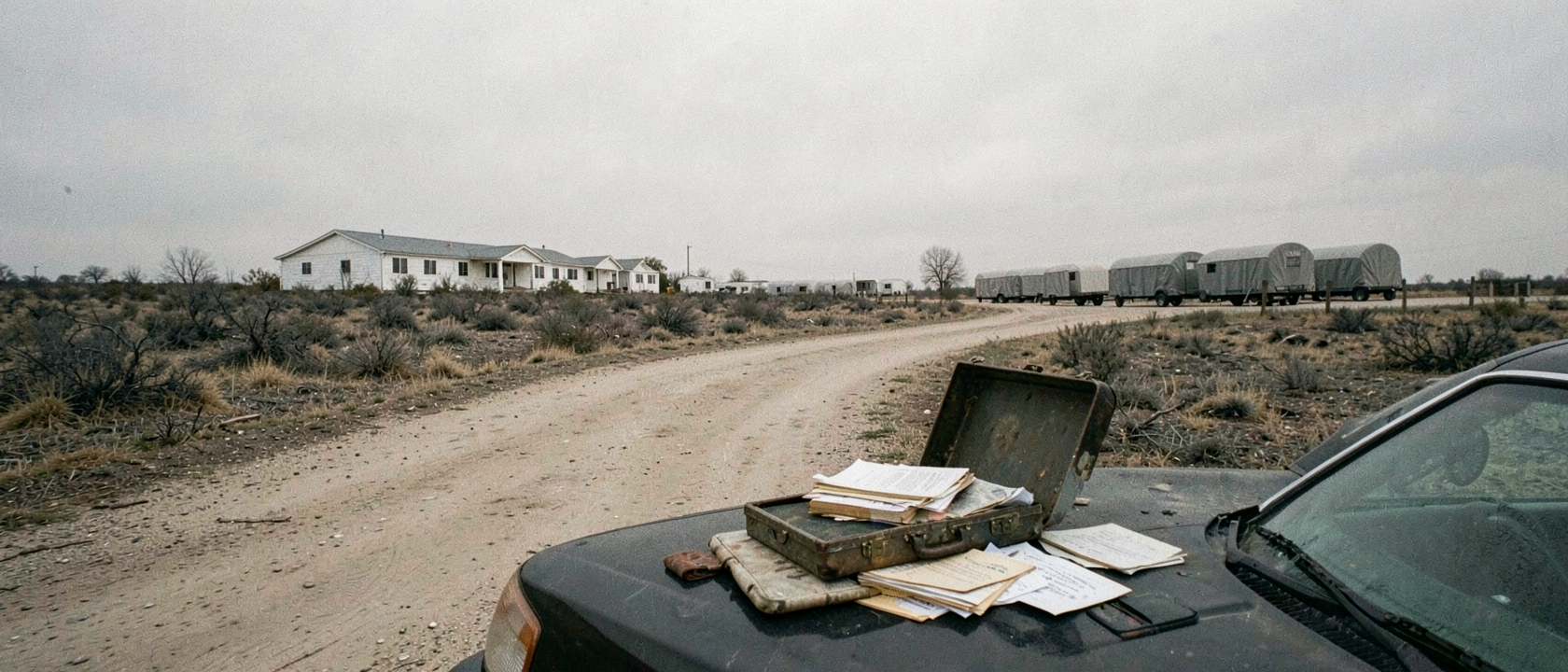
On the morning of Sunday, February 28, 1993, the ATF launched Operation Trojan Horse, sending 137 personnel, including three Special Response Teams, the bureau’s tactical units, drawn from Dallas, Houston, and New Orleans, to serve a search warrant on David Koresh at the Mount Carmel Center. The warrant, signed by a U.S. magistrate judge, targeted suspected illegal machine guns and destructive devices on the 77-acre property. The operation’s planning rested on one key assumption: that the compound’s male occupants would be outside, working in a pit, when agents moved in. The presentation itself identifies that assumption as wrong.
The Agency’s Own Account
The findings, as the presentation states them, fall into five categories. Intelligence was faulty. The planning team’s structure excluded relevant case agents and undercover personnel. The element of surprise was lost. There was no working incident command structure once the raid began. Afterward, the agency fell short on notifying victims’ families, debriefing agents, and handling the media. The one stated recommendation is procedural: build a culture in which personnel can flag changing risk conditions while an operation is underway. This is the ATF and the Justice Department grading their own work, presented here as their own conclusion, not as a verdict reached by an outside investigator.
What the Slides Don’t Say
The presentation does not name who wrote it or who approved its release. It states that surprise was lost without explaining how. ABC News later reported that the Branch Davidians had been tipped off before the raid and that ATF commanders knew surprise was gone but proceeded regardless; that account comes from news reporting, not from the presentation, which stays silent on the mechanism entirely. The slides also carry no casualty count, though the public record elsewhere does: four ATF agents, Conway LeBleu, Robert Williams, Todd McKeehan, and Steven Willis, were killed, and fifteen more were wounded. Nor does the presentation note that ATF Director Stephen E. Higgins retired early afterward, or that in December 1994 two supervisory agents suspended over the raid, Phillip Chojnacki and Charles Sarabyn, were reinstated with back pay despite a Treasury Department finding of gross negligence. Those facts live in other federal and news records. They do not live in this document, which closes its own account at procedure and recommendation.
One Phrase That Isn’t in the File
The Black Vault’s article describing the release calls the raid “the longest shootout in law enforcement history.” That line belongs to the outlet, not to the presentation; it appears nowhere across the 149 slides. The document never characterizes the raid in comparative terms at all. It lists what went wrong and what the agency decided to recommend, nothing more. One is a finding written into a federal file; the other is a description added by a researcher in 2024. The 149 slides remain the only document of their kind released through this request. No companion file naming an author or an approving official has surfaced alongside them.