
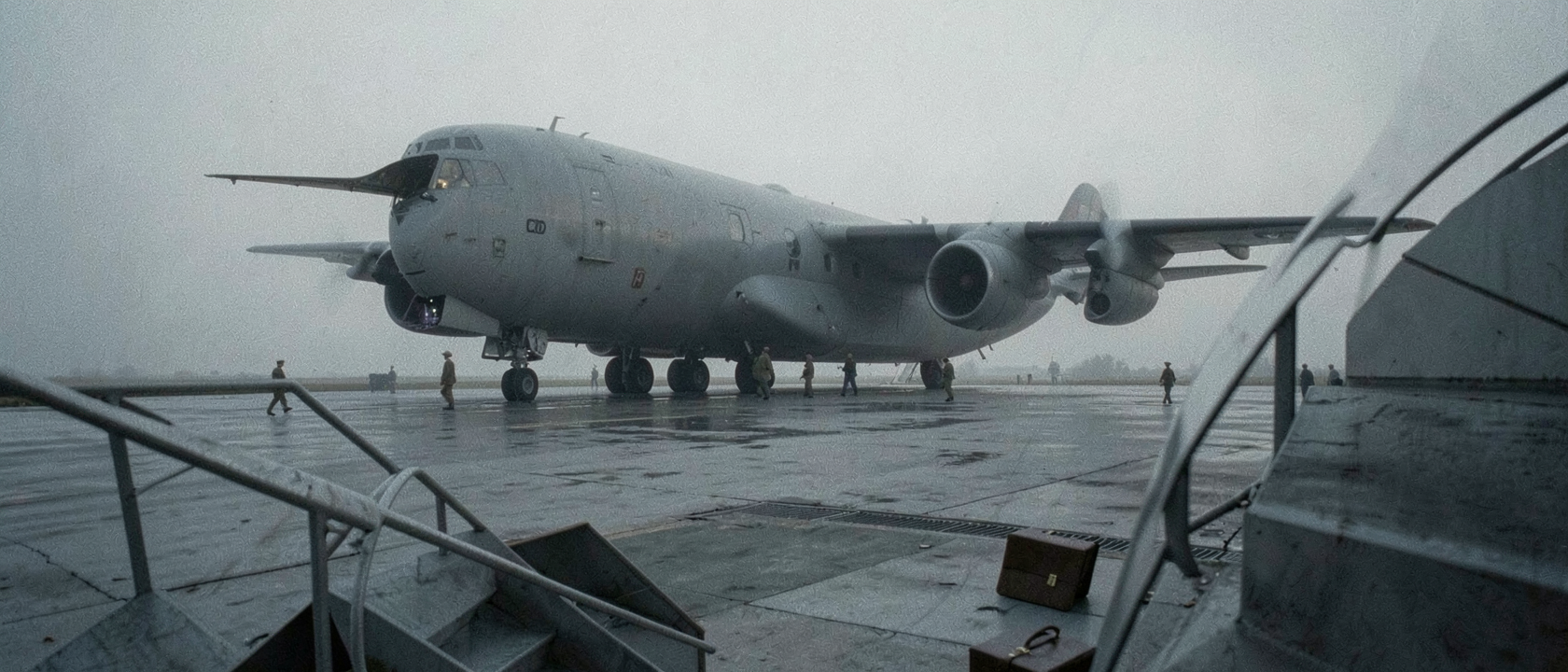
A Photograph and a Volume
Start with the image. Jimmy Carter and Rosalynn Carter are walking toward an aircraft at Robins Air Force Base, Georgia, on February 13, 1977, about to board for the flight back to Andrews Air Force Base. The photograph is held by the Jimmy Carter Presidential Library under the catalog number NLC 00304.19. The caption gives the base, the date, and the two people in frame. It does not say who took the picture, or why the president was at Robins that day beyond the return flight itself.
That photograph is the entry point for a different kind of document: Foreign Relations of the United States, 1977-1980, Volume IV, National Security Policy, edited by James Graham Wilson under General Editor Kathleen B. Rasmussen, released by the State Department’s Office of the Historian on March 11, 2024. The National Security Archive, an independent research group, paired the photograph with the new volume in its briefing book, “New State Department History Details Nuclear Targeting and Continuity of Government, 1977-1980,” published April 17, 2024. The Archive notes that the compilation reached print after nine years of delay.
February 11, Aboard NEACP
Two days before that photograph was taken, on February 11, 1977, Carter received a top-secret briefing aboard the National Emergency Airborne Command Post, an aircraft built to let a president continue directing U.S. nuclear forces from the air if ground command centers were destroyed. According to the photo caption’s own description, the briefing covered the Single Integrated Operational Plan, the Pentagon’s master targeting plan for nuclear weapons, and what the caption calls “Emergency Action procedures.”
The photograph does not show that briefing. It shows an aircraft and two people walking toward it, two days later, at a different base, before a flight home. The record gives no agenda for February 11, no list of who else was present besides Carter, and no further description of what “Emergency Action procedures” meant that day in practice. The two events sit close together in time and, judging by the aircraft, in subject. They are not the same document.
What the Archive Says the Volume Shows
The National Security Archive frames the new volume as a record of how nuclear and continuity-of-government decisions were actually made inside the Carter administration: how the SIOP was reviewed, how presidents were briefed on their options, how officials prepared for a war meant never to be fought. That is the Archive’s reading of what the volume’s 222 documents amount to, offered in its April 17, 2024 briefing book. The FRUS text itself, covering national security policymaking from 1977 to 1980, does not characterize its own significance. That judgment belongs to the Archive, not to the Office of the Historian.
The Pentagon’s Redactions
The same briefing book states plainly that Defense Department redactions remain in the published volume. The Archive does not quote the withheld passages, does not give a page range, and does not reproduce a stated rationale for the withholding. What is on the record is narrower than that: Pentagon objections held up publication for roughly nine years, and many of those objections were eventually resolved. A number were not. Pages are missing or altered in the finished text. The record does not say what was in them.
Overclassification, and a Claim About Retaliation
The Archive goes further than simply flagging the gaps. It describes some of the Pentagon’s withholding as overclassification, meaning information kept secret at a level the Archive judges higher than its actual sensitivity warrants, and it notes that some of the withheld material had reportedly been declassified elsewhere years before this volume went to print. Separately, the briefing book cites other, previously declassified material, not named, dated, or sourced in the text available, in support of a claim that weaknesses in U.S. nuclear command-and-control could have made American retaliation “virtually impossible.”
Both statements belong to the Archive’s own framing of the volume, offered at the time of the April 2024 briefing. Neither is a quotation from a named Pentagon document, and neither is tied to a file a reader can go and check. They are the investigators’ conclusion about what the paperwork, including the withheld parts, adds up to. The paperwork stands apart from the investigators’ reading of it.
What Isn’t in the File
Four things stay open in the material reviewed here. Which passages the Pentagon redacted, and on what specific grounds, is not stated beyond the general charge of overclassification. The previously declassified record the Archive cites on command-and-control weaknesses is not named, dated, or attributed to an author. Whether that record is the same material the Pentagon redacted from the new volume, or an entirely separate document, is not addressed either way. And beyond “the SIOP and Emergency Action procedures,” nothing in the available record describes what Carter was actually told aboard NEACP on February 11, 1977: no agenda, no list of who briefed him, no transcript.
The photograph of the Carters boarding at Robins Air Force Base two days later is dated, located, and captioned. The briefing it followed is not described beyond its subject. Both sit in the same archive, attached to the same episode, and neither one explains the other.