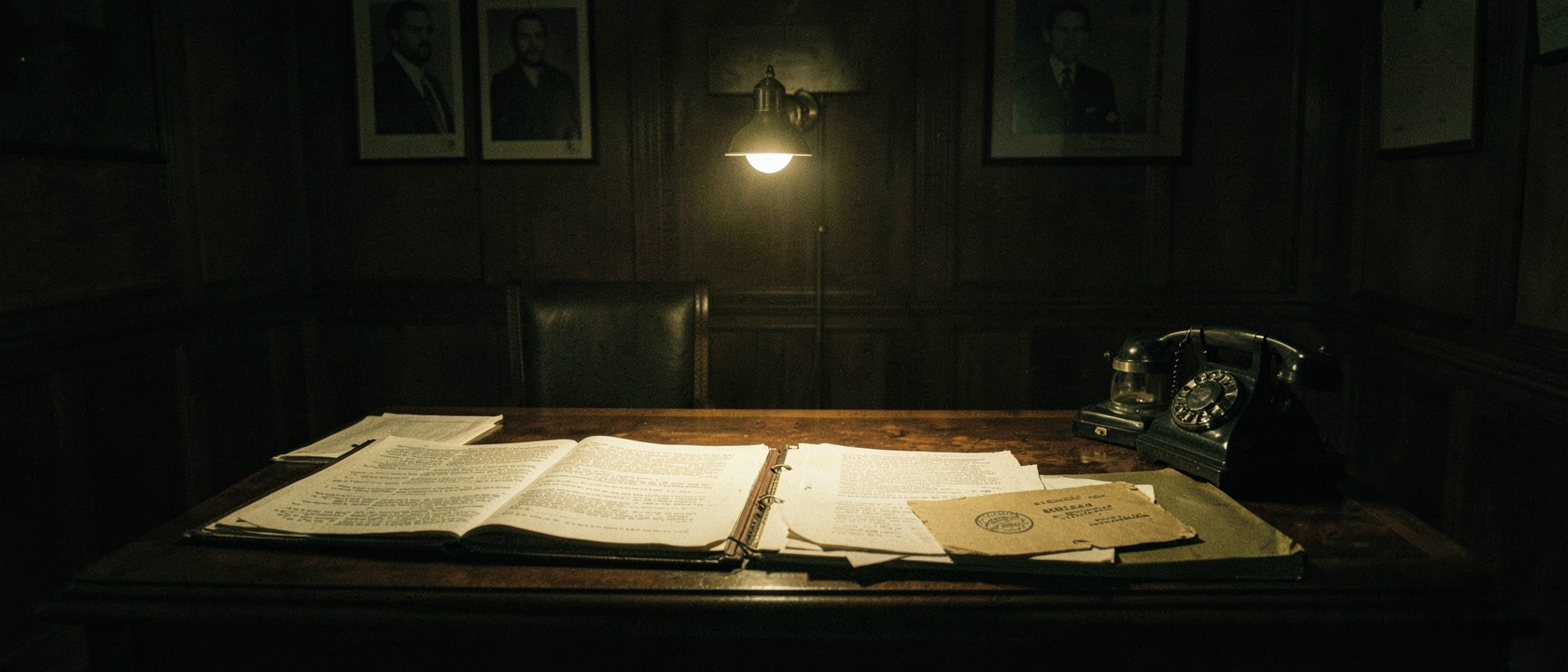
A government letter that describes a man and his partners as swindlers who “never dropped a victim until the victim was completely stripped” does not usually end with a recommendation for full presidential clemency. This one does, and the same eleven pages carry both statements.
The Paper Itself
The record here is a letter of advice from the Attorney General’s office to President John F. Kennedy, dated December 17, 1962. As released, it runs eleven pages and totals 4.8 megabytes as a scanned file. It is not a court order, a pardon warrant, or a public statement. It is internal advice, the kind of memo written for a president who has to decide whether to grant clemency.
The letter reached the public through the Freedom of Information Act (FOIA), the federal law that allows citizens to request the release of government records. Researcher John Greenewald examined the document in an article for The Black Vault, published November 9, 2023.
The Man and the Conviction
The subject is John Factor, known in press coverage of the era as “Jake the Barber.” He was convicted in 1942 of mail fraud connected to whisky warehouse receipts. The letter itself sets out the underlying scheme: Factor and his associates, it states, swindled an elderly widow out of $280,000, of which $100,000 went to Factor personally.
The letter’s language about that operation does not soften anything. It calls Factor and his associates “absolutely ruthless” and says they “never dropped a victim until the victim was completely stripped.” That phrase belongs to the letter’s account of the earlier scheme. It is not the office’s later judgment on the man asking for clemency.
The Recommendation
By 1962, that same office reached a different conclusion about Factor. The letter states that he had made restitution to his victims, paid substantial back taxes, and spent the years since his conviction building what it calls a “successful business” and a “good reputation.” On that basis, the Attorney General’s office recommended a full and unconditional pardon, writing that “the ends of justice would not be ill-served by extending clemency to him at this time.”
Kennedy acted on the recommendation. He granted Factor a full and unconditional pardon in December 1962.
How the Letter Explains Itself
The letter is careful about what the pardon does and does not do. It does not claim the fraud conviction was mistaken, and nothing on its later pages walks back the description of the widow swindle. What it argues is that Factor had reformed and that he needed the pardon, in its own words, because he “apparently needs a pardon of a conviction recorded against him eighteen years ago in order for him to become a citizen of the United States.”
What the letter does not do is explain the mechanics of that claim. It never says why a federal conviction from two decades earlier stood between Factor and U.S. citizenship, or why a presidential pardon specifically was the remedy required. It states the need and moves straight to the recommendation. No other page in the released document fills that in.
What the Letter Leaves Out
Three things are missing from the eleven pages, and they are worth naming separately rather than folding together. The letter speaks throughout in the institutional voice of the Attorney General’s office, but no individual author is identified anywhere in the released copy. The FOIA release carries no stated date of its own; the only firm date attached to its public surfacing is November 9, 2023, when Greenewald’s article discussed it. And the letter makes no mention at all of the episode for which Factor’s name is separately known, a reported 1933 kidnapping and the criminal case that followed it. The letter’s business is the fraud conviction and the pardon application. It does not reach past that.
The Story Attached Afterward
That second legend belongs to a different set of documents. In 1934, Roger Touhy and two associates were convicted in Chicago of kidnapping Factor and were sentenced to 99 years; Touhy served 26 years before his release in November 1959. Years afterward, Factor sued a publisher, a printer, several bookstores, and two authors in federal court for libel over a book describing the same episode from Touhy’s side, evidence of how unsettled the story remained long after the trial. Some later accounts go further, describing the kidnapping itself as staged. Those are claims made by later writers, not findings entered into the 1962 letter of advice, which never touches the subject. What the letter establishes is a fraud conviction, eighteen years of restitution and rebuilt reputation, and a recommendation for clemency signed off, on the record, in December 1962.