
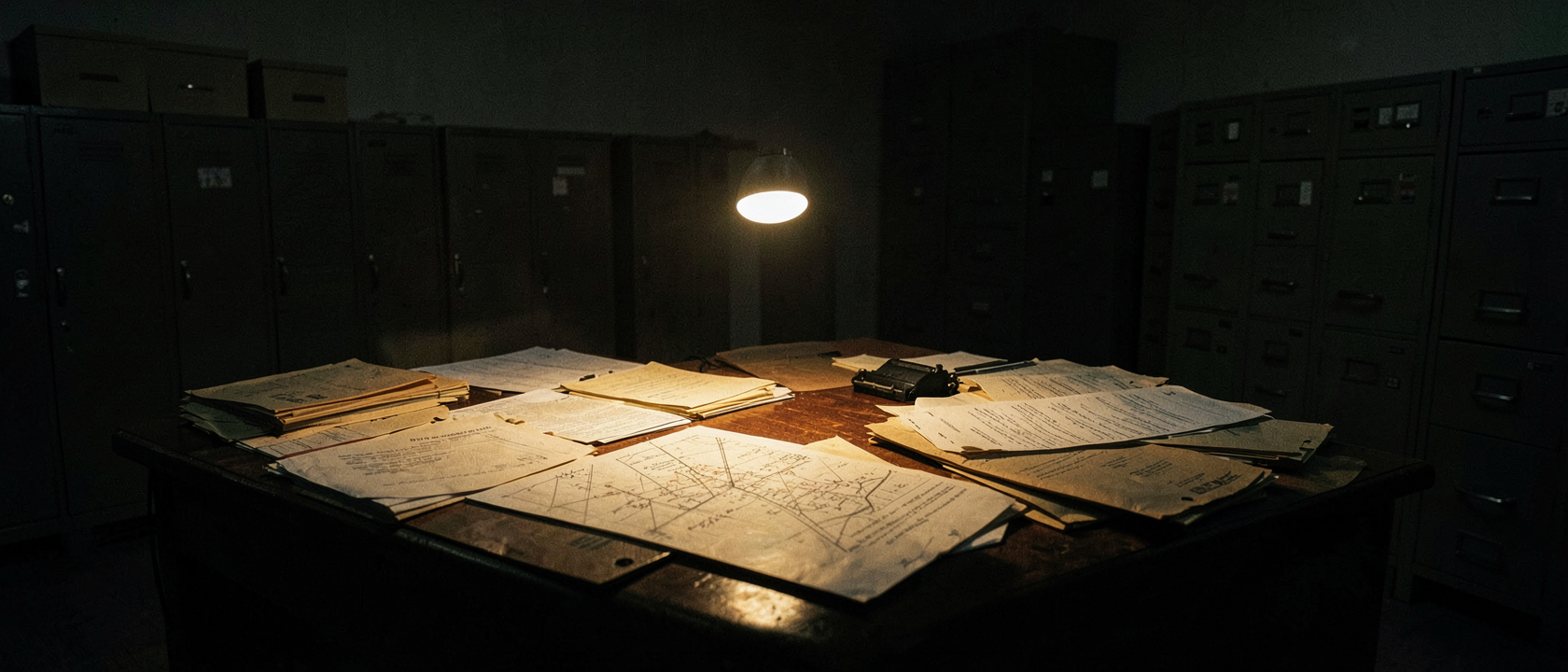
A government researcher wrote a planning paper in January 1963 explaining how American cities might be defended, hardened, or simply thinned out in the event of a nuclear war. It took until April 2024 for the public to see it, and the record offers no account of where it sat for the nine years in between.
Nine years between a request and an answer
John Greenewald Jr., who runs the document archive The Black Vault, filed a Freedom of Information Act request with the Department of Defense on July 20, 2015, seeking the report that would later be identified as “Military Technology and the Survival of Cities.” The Office of the Under Secretary of Defense for Policy, the Pentagon unit that handled the search, logged it as case number 15-F-1529. The department’s own response letter muddies the starting date slightly: it references a request dated July 3, 2015, while separately stating the request was received on July 20, 2015. Neither date cancels the other out, and nothing in the file explains the gap between them.
The department determined the report was appropriate for release in full, without invoking any of the exemptions that let an agency redact or withhold part of a record. The response arrived April 5, 2024. The Black Vault published the document, along with an article describing it, on April 12, 2024. Between filing and release lies close to nine years. No release letter, processing note, or internal memo in the public record says what happened to the request in that interval, whether it sat untouched, was reassigned, or was simply backlogged. That gap is a fact about the paperwork, not a clue about what the paperwork contains.
The document itself
The report is titled “Military Technology and the Survival of Cities,” written by Clark C. Abt and dated January 1963. The Black Vault’s article gives its length as 76 pages; the archive’s own file listing says 77. The difference is a single page, unexplained, and does not carry more weight than that.
Abt, born in Germany in 1929, earned a PhD in political science from MIT in 1965 and founded Abt Associates, a research firm in Cambridge, Massachusetts, immediately afterward. Nothing in the released material states what classification marking the 1963 report originally carried, or when, if ever, it was formally declassified before the FOIA release. The department’s letter confirms only that it was cleared for full release in 2024, not that an earlier declassification ever took place.
What the report argues
The report states that “the effects of modern strategic weapons on urban-industrial areas are considered from the aspects of weapon technology, military strategy, and arms control considerations.” It sorts possible responses into three categories: active defense, meaning interception of incoming weapons; passive defense, meaning the hardening of structures to withstand damage; and urban dispersal, meaning the deliberate spreading of population and industry so no single strike could destroy a concentrated target. This is the shape of the argument Abt built, not a verdict on whether any of it would have worked.
The 1963 assessment
Abt’s conclusion, as the report lays it out, is restrained. Cities faced a serious and growing risk from nuclear-capable weapons, and no single countermeasure, whether hardening, dispersal, active defense, or arms control, would remove that risk on its own. A combination of all four might reduce the danger. None would eliminate it.
This is a policy study weighing strategic options, not an investigation of a specific attack. There is no incident to solve here, only a risk modeled on paper, for a catastrophe that, as of January 1963, had not happened.
What the file leaves open
Three things are missing from the public record, and they stay separate from each other.
Nothing released explains why the request took close to nine years to answer. Nothing in the file says whether any of Abt’s proposed strategies, including hardening programs, dispersal planning, investment in interception systems, or a particular arms control posture, were ever adopted, funded, tested, or dropped. And there is no account of the report’s classification history between 1963 and 2024: how sensitive it was considered, who had access, or whether a formal declassification review ever occurred.
Each of these is an absence in the paperwork. None of them is evidence of what was decided, built, or buried.
A claim made about the report, not by it
In its April 12, 2024 article, The Black Vault wrote that the report’s concepts “remain pertinent” to current debates on civil defense and urban planning. That is the publisher’s interpretation, offered six decades after the fact, not a statement the 1963 document makes about itself. Abt was analyzing weapons technology and strategy current to the early 1960s; he could not have been writing about arguments that came later. The claim belongs to 2024. The report belongs to 1963.
What is public now is the document in full, a case number, two processing dates nine years apart, and no memo explaining what filled the space between them. Whether Abt’s recommendations were ever used, and why the file took as long as it did to surface, is not answered in anything the Department of Defense has released.