
Two documents, one classroom folder
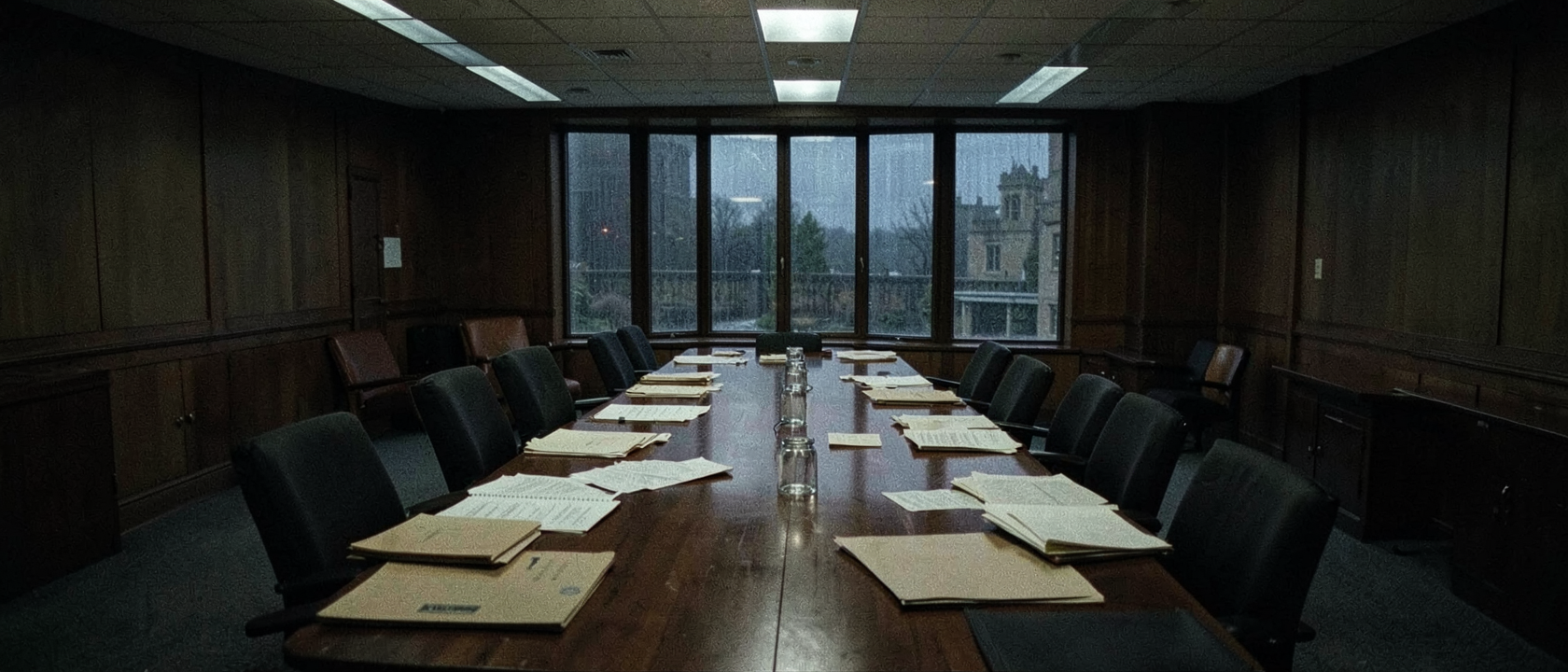
Two documents sit together in a folder built for a classroom, and between them lies most of what anyone can actually prove about the three days before the Belfast Agreement was signed. One is a piece of live television. The other is a civil servant’s account of the same stretch, written down almost as soon as it was over. Neither says which of the roughly twenty turns in between decided how the story ended.
Two files, one folder
The pack that holds both documents, titled “72 Hours to the Belfast (Good Friday) Agreement (KS3),” is a teaching resource aimed at younger secondary students in England’s Key Stage 3 band, roughly ages 11 to 14, published by the National Archives on November 27, 2023. It draws on two separate holdings. The first is catalogued as PREM 49/412: extracts from a report written on April 13, 1998, by John Holmes, who as Principal Private Secretary ran the day-to-day office of Prime Minister Tony Blair. The second is catalogued as P1140529, a transcript held by the National Archives of Ireland of an interview broadcast on UTV’s “Live at Six” on April 7, 1998. The two records come from separate holdings, one in Kew and one in Dublin. There is no indication in the pack that they were produced together, and pairing them for a lesson is the archive’s own editorial choice, made twenty-five years after the fact.
What the broadcast shows
On April 7, 1998, three days before the Agreement was signed, “Live at Six” carried an interview with Jeffrey Donaldson of the Ulster Unionist Party and David Adams of the Ulster Democratic Party. Both men, Donaldson more forcefully, told the program they were unhappy with the shape the deal was taking. The transcript has Donaldson describing the emerging agreement as “some sort of charter for a United Ireland.” Adams spoke in the same broadcast, raising his own objections. The transcript is a record of an exchange between two politicians on live television, three days before a signing neither of them yet knew would happen, and it goes no further than that.
Holmes’s roller coaster
The Holmes report covers the same window from the inside, written on April 13, 1998, three days after the signing. The teaching pack breaks it into roughly twenty extracts, which students are asked to plot on a graph as signs of progress or signs of trouble, an exercise design rather than a count Holmes made himself. What survives in extract form is specific. On Tuesday, April 7, Holmes wrote that “the situation looked bleak” as the British delegation reached Belfast, after Senator George Mitchell, the American chair of the talks, insisted on adding two long unagreed annexes on North-South cooperation that unionists had not seen before and judged too far-reaching. David Trimble was called to Hillsborough that evening to explain his objections. April 9 had been Mitchell’s own deadline, set in late March, and it passed without a deal; Holmes describes an angry breakfast between Irish officials and Taoiseach Bertie Ahern over the same North-South issues. On Friday, April 10, Trimble brought Taylor, Empey, Maginnis and Donaldson to tell Blair the text was unacceptable to unionists, with the decommissioning of paramilitary weapons named as the largest single obstacle. Holmes’s own summary of those three days, quoted in the extract the pack uses last, is that they were “a roller-coaster of a nightmare.”
What isn’t there
Several things are missing from the pack, and each is specific to what the pack actually is. It does not reproduce Holmes’s full report. It does not print the complete Live at Six transcript beyond the lines used for the lesson. And of the roughly twenty points it asks students to plot, it never names which one actually tipped events toward agreement rather than collapse. This reflects the scope of the resource, not a withholding of information: a set of extracts drawn from two much larger holdings, built for a classroom hour, not a full release of either file. It was never designed to answer which turn mattered most.
Three readings, offered afterward
Alongside the documents, the teaching notes offer three ways to sum up the same three days, framed explicitly as discussion prompts rather than conclusions drawn from the files. One option is that the period amounted to tidying up loose ends. Another is that it was tough negotiation in which agreement was, in the end, never seriously in danger. A third points to compromise, the pressure of Mitchell’s missed deadline, and personal relationships between negotiators as the reason it held. None of these is presented in the source material as a finding. They are options set before a class asked to argue a case from the same twenty points, which is a different exercise from settling what actually happened.
The one thing that doesn’t move
Whatever reading a student picks, one fact stays fixed underneath it. A senior unionist politician was on live television describing the deal as a charter for a united Ireland less than three days before his party’s leadership stood in the room where it was signed. The pack offers no document that closes that gap, and it never sets out to. Between “bleak” on Tuesday and a signature on Friday, the surviving extracts mark no single point as the hinge. Anyone reading the file straight through gets alarm, then agreement, and no seam showing where one turned into the other. A viewer who wants that seam named is asking the record for something it was never built to give.