
A List Built to Catch the People Who Ask Too Many Questions
The FBI maintains an internal designation for people it regards as asking too much, too often: “Vexsome Filer.” The phrase is the Bureau’s own language, not a term coined by the outlet that eventually obtained the list. It applies to individuals and organizations whose Freedom of Information Act (FOIA) requests arrive often enough that the agency tracks them as a separate category of requester.
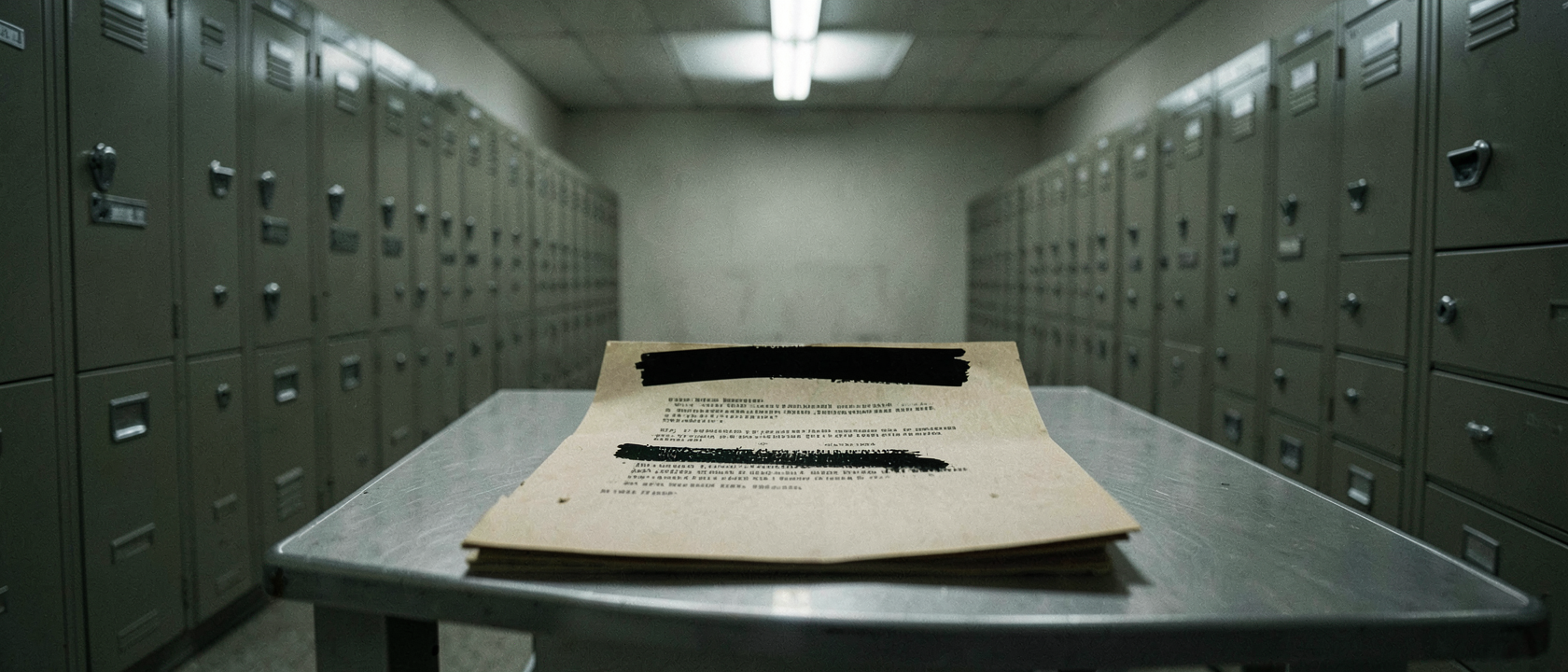
The Black Vault, the FOIA transparency site run by John Greenewald, published its account of the latest release of that list on February 7, 2024. The document it obtained runs five pages and 1.55 megabytes, titled by the FBI itself as “FBI Releases Redacted ‘Vexsome Filer’ List.” It is shorter, and far more heavily redacted, than comparable lists the Bureau has released in past years. Of everything on those five pages, only one entry survives the redaction fully intact: the Cato Institute, a Washington, D.C.-based public policy research organization known for its libertarian orientation.
A similar list the FBI released in 2016, obtained through a separate request, carried no redactions at all. It named researchers and journalists outright, among them Ken Klippenstein, now at The Intercept. The contrast between that release and the 2024 version is the first thing the paperwork itself establishes: something changed in how the Bureau handles this particular list, visible in the redaction pattern, nowhere else.
A Request, and a Denial That Did Not Hold
The Black Vault filed its request on August 7, 2023, logged by the FBI under case number 1600755-000. The Bureau’s first answer was that no responsive records existed. On its own, that kind of response is unremarkable. Agencies tell requesters “no records” often, sometimes correctly, sometimes because the search behind the answer was too narrow. What makes this particular denial worth noting only becomes visible in what happened next: it did not survive an appeal.
A Remand, Not an Explanation
According to The Black Vault, the “no records” determination was appealed to the Department of Justice’s Office of Information Policy, the office that reviews FOIA disputes across federal agencies. The DOJ remanded the request, meaning it sent the matter back to the FBI for reprocessing rather than ruling on what the FBI should have found in the first place. That outcome is procedural, not explanatory. The written determination, as The Black Vault describes it, does not say why the original “no records” answer was wrong. It does not describe what the second search turned up. It does not address the redaction scheme that eventually came out of it.
The Ordinary Explanation, and Where It Stops Working
None of this requires a dramatic reading. A “no records” response is a known failure mode in FOIA processing, usually traced to an inadequate initial search rather than concealment, and sending a request back for reprocessing is the DOJ’s standard remedy for exactly that problem. The redactions themselves are also unremarkable in form. The FBI invoked FOIA exemptions b6 and b7C, which let an agency withhold names and identifying details on privacy grounds. Lists of people’s FOIA activity get redacted on that basis routinely.
The specific problem is narrower than the redaction itself. Privacy exemptions of that kind are supposed to apply across a list, not selectively. Nothing in the release, and nothing in the appeal correspondence, explains why one entry, the Cato Institute, was left fully legible while the FBI treated the identity of nearly every other filer on the same pages as private. The Cato Institute is not a private individual. By its own account it has filed hundreds of FOIA requests against the FBI since 2019, seeking a better understanding of the Bureau’s operations. Whether that history has anything to do with how the list was processed is not something the file addresses either way.
What the Paperwork Does Not Say
Across the released pages and the appeal record, there is no document stating a reason for the redaction scheme, for the list being shorter than earlier releases, or for the Cato Institute’s visibility. That is not a missing page or a destroyed file. It is an absence of stated reasoning in paperwork that otherwise exists and was produced on request. The record stops at the release itself.
Three questions sit in that gap, unanswered by anything on file: why the FBI’s first search turned up nothing before the DOJ intervened; why nearly every name but one was withheld under the same pair of exemptions; and whether entities named in the 2016 list reappear here, now redacted, meaning the roster may be shorter in print without being shorter in substance.
The Cato Institute, for its part, told FOIA Advisor it regarded being the only unredacted name as a badge of honor, a comment made after the release and separate from anything in the FOIA file itself. The Black Vault has said its next step will be a second appeal, alongside a comparative analysis against earlier “Vexsome Filer” releases, checking redacted entries against names that surfaced in past years, in an attempt to account for the redaction pattern and the Cato Institute’s exposure. That comparison has not been published. Whether it resolves anything is not yet known.
What exists for now is the five-page release, the case number attached to the original request, and a determination that ordered a second search without explaining the first. The rest sits where the paper trail currently ends, which is, for anyone used to reading these files, exactly the point where the document and the story about the document stop being the same thing.