
What exists, and when
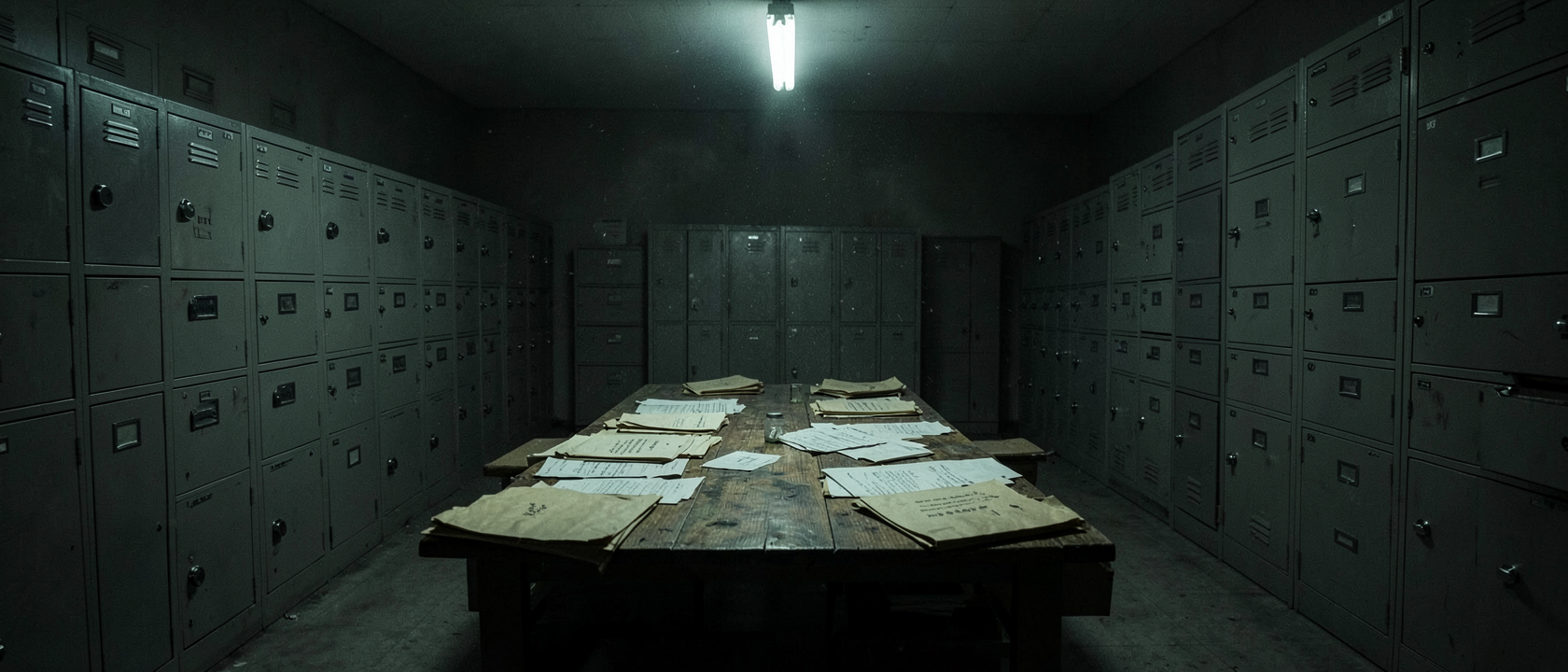
The paper trail on Ayotzinapa is unusually dense for a single disappearance. The Interdisciplinary Group of Independent Experts, sponsored by the Inter-American Commission on Human Rights and known by the acronym GIEI, produced six reports between its arrival in Mexico in March 2015 and its final report, “Findings, Advances, Obstacles, and Unresolved Issues,” presented on July 25, 2023. On December 4, 2018, President Andrés Manuel López Obrador signed a decree creating the Commission for Truth and Access to Justice in the Ayotzinapa Case, known as COVAJ, which issued its own report on August 18, 2022. Separately, the National Security Archive has filed hundreds of requests since 2015 under the Freedom of Information Act, the U.S. statute that requires federal agencies to release records on request, seeking American government documents tied to the case. A GIEI inquiry, a presidential commission, and a stream of FOIA filings have run alongside one another for eight years, each keeping its own record.
The night of September 26 and 27, 2014
According to the documented account, municipal police in Iguala, Guerrero, attacked a group of students from the Ayotzinapa Rural Teachers College on the night of September 26 into the early hours of September 27, 2014. Six people were killed, dozens were wounded, and 43 students were forcibly disappeared. The record ties the attack to collusion between the municipal police and the criminal group Guerreros Unidos. It does not, on its own, establish who outside that local chain gave which order.
What investigators found
GIEI’s reports document falsified records, destroyed evidence, and the use of torture against detainees and suspects in the original investigation. The experts concluded that high-level officials and members of the military were complicit in a cover-up, and their final report states that authorities, including police, army, navy, and intelligence services, knew where the students had been taken. A government surveillance center recorded at least 500 calls related to the case in the hours after the students disappeared, according to that report. By June 2021, the remains of two students, Christian Alfonso Rodríguez Telumbre and Jhosivani Guerrero, had been positively identified; by the time of the 2023 final report, a third set had also been confirmed, out of 43. On August 19, 2022, the day after COVAJ labeled the case a “crime of the State,” the government announced the detention of former Attorney General Jesús Murillo Karam, and special prosecutor Omar Gómez Trejo obtained 83 arrest warrants, 20 of them against military personnel. These are GIEI’s and the prosecutor’s conclusions, not an independently adjudicated verdict.
The official verdict, and what happened to it
COVAJ’s August 18, 2022 report called Ayotzinapa a “crime of the State,” the government’s own formal reckoning with the case. The Attorney General’s Office later canceled 21 of the 83 arrest warrants, including 16 against military personnel, a move that drew public criticism. Gómez Trejo’s resignation was made public on September 27, 2022, and by October 2022 he had left the country, citing fear for his safety. GIEI’s final report, presented in July 2023, named the military’s refusal to grant full access to its archives as the chief remaining obstacle to the investigation. Both events are part of the same documented sequence.
What the record does not say
Three gaps remain, each one simply a gap. The record does not state what became of the 83 arrest warrants beyond the fact that the government had achieved no conviction in the case as of the 2023 final report. It does not resolve the location or fate of the 41 students whose remains have not been recovered. And it does not reconcile two statements that cannot both be fully true: López Obrador’s public insistence that the military fully complied with his 2018 decree, and GIEI’s documented finding that it had not. None of this is evidence of what the missing pages would show. It is a description of which pages are missing.
What was said afterward
Not everything that follows the record belongs inside it. In May 2023, press reports alleged that Alejandro Encinas, the deputy secretary who had led COVAJ, had been targeted with Pegasus spyware by the Mexican military; Encinas resigned from his post shortly afterward. The claim lacks the documentary confirmation that supports the rest of this account, and it remains an allegation reported in the press, not a finding in any of the six GIEI reports or the COVAJ file. Separately, the National Security Archive records that, with little progress from the officials who replaced Encinas and Gómez Trejo, the victims’ families announced they would no longer meet with the government. That announcement says something about confidence in the process. It does not add a new fact about what happened to the 43.
The shape of what’s missing
Read together, six GIEI reports, a presidential commission, a prosecutor’s office, and years of FOIA requests add up to one of the better-documented disappearances on record anywhere. They establish, as findings rather than allegations, that the original government account was fabricated and that state and military actors were involved in covering it up. They do not establish what happened to the 43 students. Both COVAJ and GIEI identified the same unresolved obstacle: the military archive. Access was not granted when the commission was created in 2018, and it had still not been granted when the last of the GIEI’s experts left the country in July 2023, nearly five years later.