
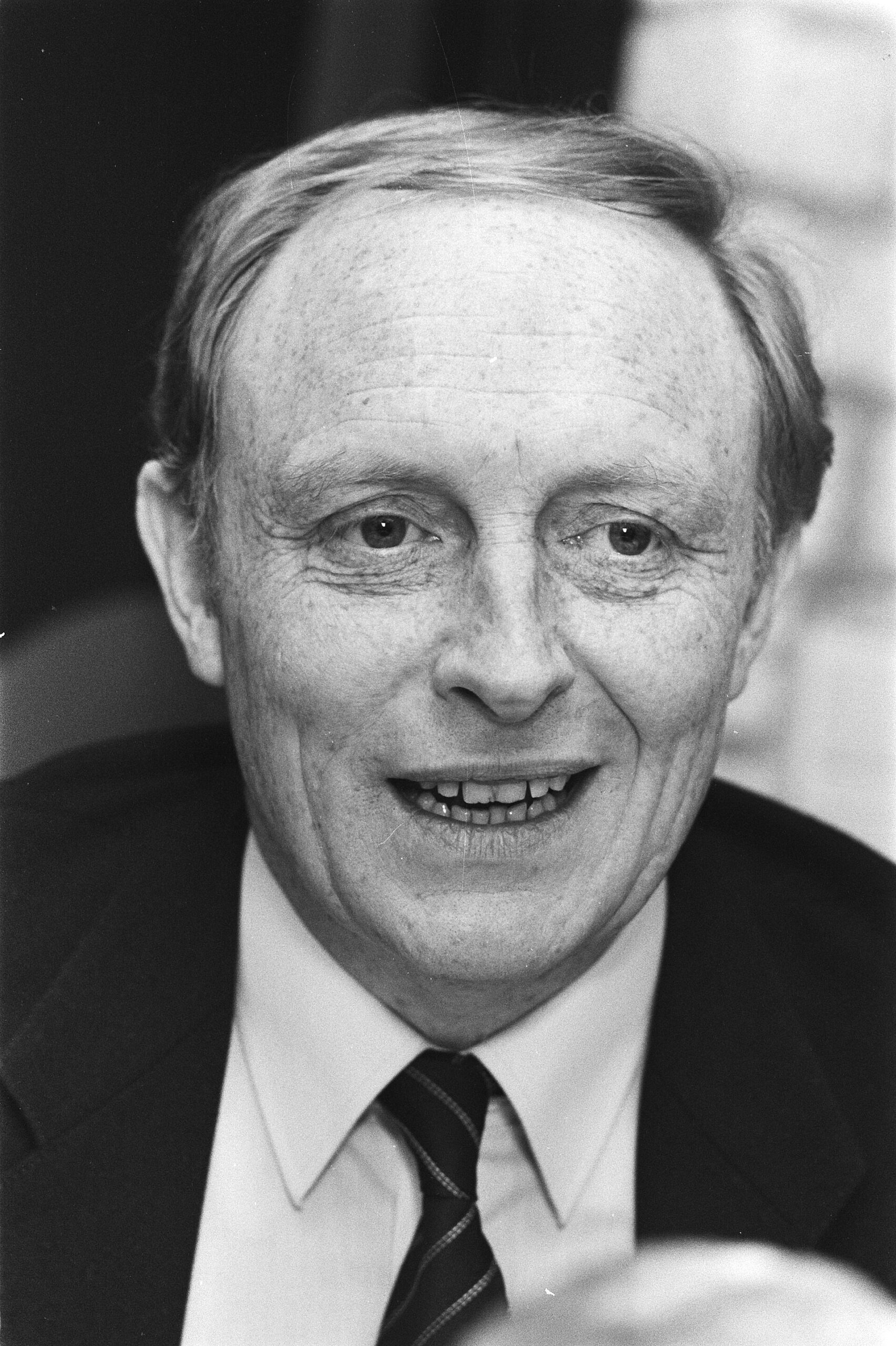
Neil Kinnock, born on 28 March 1942 in Tredegar, Wales, served as leader of the British Labour Party through a period in which he attempted to modernise a party that had suffered heavy electoral defeats. Though he never became Prime Minister, many credit him with laying the groundwork that enabled Tony Blair’s later electoral successes under the “New Labour” banner. He subsequently served in European politics for nearly a decade, reaching the office of Vice-President of the European Commission. His career spanned local Welsh roots, Westminster, and Brussels, and touched public debate on both sides of the Atlantic.
Key facts
- Born: 28 March 1942
- Birthplace: Tredegar
- Country: United Kingdom
- Occupation: politician
- Employer: Cardiff University
- Education: Cardiff University; Lewis School Pengam
Early life and education
Kinnock was born into a working-class family in Tredegar, a town in the South Wales valleys. His father, Gordon Herbert Kinnock, was a former coal miner who suffered from dermatitis and later worked as a labourer. His mother, Mary (née Howells), was a district nurse. The household was embedded in the culture of Welsh Labour politics, and Kinnock’s earliest political memory, by his own account, was hearing local MP Aneurin Bevan, founder of the NHS, speak in Tredegar.
Kinnock attended Lewis School Pengam and joined the Labour Party at the age of 15. He went on to study industrial relations and history at the University College of South Wales and Monmouthshire, graduating in 1965. In 1966 he obtained a postgraduate diploma in education from what is now Cardiff University. It was during his student years in the early 1960s that he met Glenys Elizabeth Parry; the two married in 1967.
Early career and entry into Parliament
Between August 1966 and May 1970, Kinnock worked as a tutor for a Workers’ Educational Association (WEA). That work placed him in direct contact with the working communities of South Wales and sharpened his abilities as a public speaker and organiser.
In 1970, Kinnock was elected as the Labour MP for Bedwellty. Boundary changes later adjusted his constituency to Islwyn, and he served in Parliament until 1995. Over those years he built a reputation as an impassioned platform orator, a skill that would define his leadership style.
Labour leadership and the battle against Militant
His most celebrated moment as Labour leader came on 1 October 1985, at the Labour Party conference in Bournemouth, when he delivered a speech attacking the Trotskyist Militant Tendency. He excoriated Militant for causing what he called ‘grotesque chaos’ in its management of Liverpool City Council. The speech was a public declaration that the Labour leadership would confront the hard left within its own ranks, a step that carried considerable political risk at the time.
Despite the internal reforms Kinnock pursued, the party lost the 1987 general election to Margaret Thatcher’s Conservatives. The Conservatives won 376 seats with 42.2 per cent of the vote; Labour won 229 seats with 30.8 per cent. Blair himself was appointed to Kinnock’s shadow cabinet in 1988, and many observers regard that appointment as an early sign of the direction Labour would eventually travel.
The Biden speech controversy
During his 1987 presidential campaign, US Senator Joe Biden used passages from a Kinnock speech delivered at the Welsh Labour Party conference in Llandudno in May 1987 without attribution at a debate at the Iowa State Fair. The controversy contributed to Biden’s withdrawal from the 1988 presidential race.
Kinnock later said of the incident: ‘I had no objections to Joe using my speech and, as I discovered later, he usually did it with attribution.’
European Commission career
After leaving the House of Commons in 1995, Kinnock joined the European Commission as European Commissioner for Transport under Commission President Jacques Santer. From 1999 to 2004 he served as Vice-President of the European Commission under Romano Prodi, with responsibility for administrative reform. The role was a substantial one in Brussels terms, focused on restructuring the internal workings of a large supranational institution.
His employer has also been recorded as Cardiff University, reflecting his connections with Welsh public life.
Post-Commission public life
In December 2020, Kinnock advised Labour MPs not to support the post-Brexit trade deal negotiated by Boris Johnson, arguing that backing a deal negotiated by the Conservatives could be politically ‘lethal’ for Labour. The intervention showed his continued willingness to engage directly with live political questions long after leaving elected office.
His son, Stephen Kinnock, born on 1 January 1970, became the Labour MP for Aberavon in 2015 and was appointed minister of state for care following Labour’s victory in the 2024 general election. His wife, Glenys Kinnock (née Parry), had served as a Labour MEP for Wales from 1994 to 2009 and as minister of state for Europe under Gordon Brown in 2009. She was diagnosed with Alzheimer’s disease in 2017 and died on 3 December 2023 in London, aged 79.
Did you know
- Both Neil Kinnock and his wife Glenys were among the first in their respective families to attend university, graduating from the same institution in 1965. Kinnock later drew on that personal history in a celebrated speech at the Welsh Labour Party conference in Llandudno in May 1987, the same speech whose passages US Senator Joe Biden used without attribution at the Iowa State Fair later that year. (politics.co.uk)
Data sources
Where it appears
Data updated: 2026-11-03