
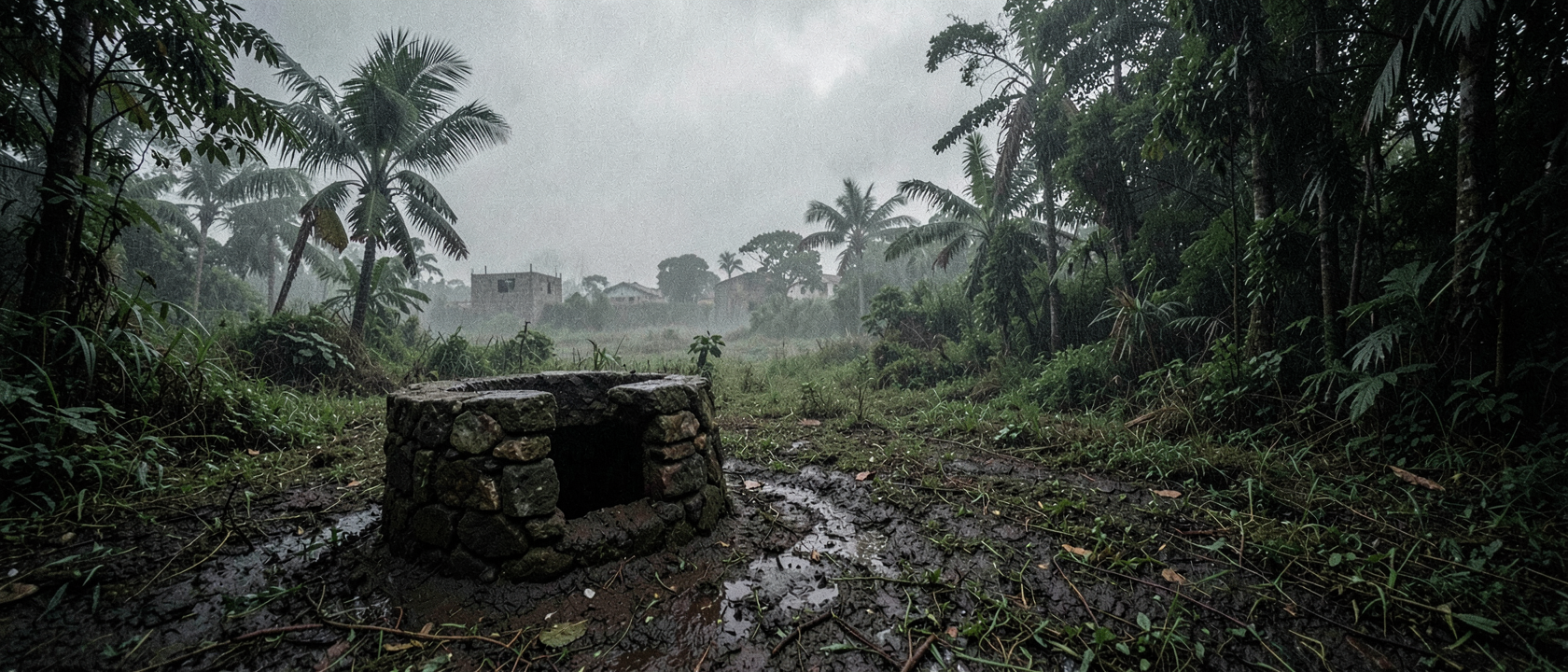
The ruling records that when the well at Dos Erres was nearly full, some of the people still alive inside tried to climb out, while others called for help or prayed aloud. Jorge Vinicio Sosa Orantes, the judgment states, fired his gun into the well to silence a man begging for a quick death, then threw in a grenade. After the explosion, the screams stopped. That account appears in a 136-page judgment of the Federal Court of Canada.
Three documents, released together
Justice Roger R. Lafrenière issued the ruling on February 5, 2026. The National Security Archive, a research organization in Washington, published it on February 24, 2026, alongside two other papers that had never been public before: “Campaign Plan Victoria 82,” a 1982 Guatemalan Army counterinsurgency strategy document entered as trial evidence, and a set of U.S. Embassy cables from the weeks after the massacre naming the military unit held responsible. Together the three make up the first public release of the evidentiary record this case was built on.
December 6 to 8, 1982
Dos Erres was a village of 65 families. In early December 1982, a special patrol of about 40 Kaibil soldiers, Guatemala’s special forces, was sent there to recover 21 rifles reportedly stolen from the army in a guerrilla ambush and to question residents about the missing weapons. The ruling states that when the patrol arrived, the rifles were not there, and there was no evidence guerrillas had ever operated in the area. Villagers were separated by sex and age and held in the village school and the church. Over the following two days, they were killed and their bodies put into the village well. Justice Lafrenière found that Sosa, then fourth in command of the unit, personally shot and killed villagers and was an accomplice to killings carried out by soldiers under him. Testimony from two Kaibiles who took part, cited in the ruling, states that Sosa supervised the soldiers as they filled the well. The ruling puts the death toll at more than 250, though other accounts give different figures, 200 or more in one count, at least 162 including 67 children in another, and the number has never been settled across the historical record.
Twelve years underground, and after
About twelve years after the massacre, forensic anthropologists from the Argentine Forensic Anthropology Team exhumed the well, 40 feet (12.2 meters) deep, and recovered remains that corroborated the killings. In 1999, Guatemala’s UN-sponsored Commission for Historical Clarification published its report on the civil war, finding that 93 percent of documented wartime abuses were carried out by state forces and allied paramilitary groups, and that the army had destroyed 626 villages in scorched-earth operations. At trial, Kate Doyle of the National Security Archive gave expert testimony, as did Ramiro Osorio Cristales, who was five years old at Dos Erres and was taken from the village by a Kaibil soldier, raised under another name, and only learned the truth of his own history as an adult. He now lives in Canada as a refugee. The ruling also concludes that Sosa misrepresented his background when he sought asylum in the United States in 1985 and later when he applied for permanent residency and citizenship in Canada, describing himself as a persecuted factory worker.
What a civil court can, and cannot, find
The case began in 2017, when Canada’s citizenship and public safety ministers asked the Federal Court for two declarations under sections 10.1(1) and 10.5(1) of the Citizenship Act: that Sosa obtained his citizenship through fraud, and that he had committed acts outside Canada amounting to crimes against humanity. The trial ran more than five weeks in Ottawa. Sosa did not appear, in person or by video link, and in his written filings denied being at Dos Erres at all. Justice Lafrenière rejected that, writing that the uncontradicted documentary and oral evidence showed Sosa was one of the officers commanding the operation, and calling him elsewhere in the ruling a “consummate liar.” On February 5, 2026, nearly nine years after the case opened, the court found reasonable grounds to believe Sosa committed crimes against humanity and revoked a citizenship he had held for 34 years. Reasonable grounds to believe is a civil standard, lower than the criminal standard of proof beyond a reasonable doubt, and the ruling is explicit that it carries no finding of personal guilt under criminal law. What it does is administrative: Sosa is now inadmissible to Canada, which opens the door to removal proceedings. It does not put him on trial for what happened at the well.
What the ruling does not say
Canada’s Crimes Against Humanity and War Crimes Act has given its courts universal jurisdiction, the power to try these offenses regardless of where they were committed, since 2000. In the 26 years since, only two cases have gone to trial under it: Désiré Munyaneza, convicted in 2009, and Jacques Mungwarere, acquitted in 2013; a third, against Ahmed Eldidi, followed his arrest in 2024. Sosa was never charged under this law. The ruling does not say when Canada’s Department of Justice decided not to prosecute him, or why, and no public explanation of that decision appears anywhere in the record reviewed here. Nor does the ruling state when, or to where, Sosa will be removed. The National Security Archive has suggested Guatemala is the likely destination, noting that Canada returned Sosa to the United States once before, in 2011, but that is the Archive’s own reading of what comes next, not a line in the judgment. His current whereabouts are not confirmed in the record.
After the ruling
Osorio Cristales, who testified at trial, said afterward that the outcome amounts to no real justice: all that happens to Sosa, in his words, is that he loses his citizenship and gets expelled, with nothing done to make him answer for his actions and nothing like a trial for his crimes. Avocats Sans Frontières Canada, which supported Osorio through the proceedings, described a “clear lack of political will” among Canadian authorities to use the legal tools available to them. Legal scholars Fannie Lafontaine and Mark Kersten have made a related argument, that Canada’s practical capacity to prosecute international crimes has weakened over time even though the 2000 Act remains on the books. These are readings of what the ruling means, offered by people outside the court that wrote it. The judgment itself decides one man’s citizenship, nothing more.