
A Watchdog Investigating Itself
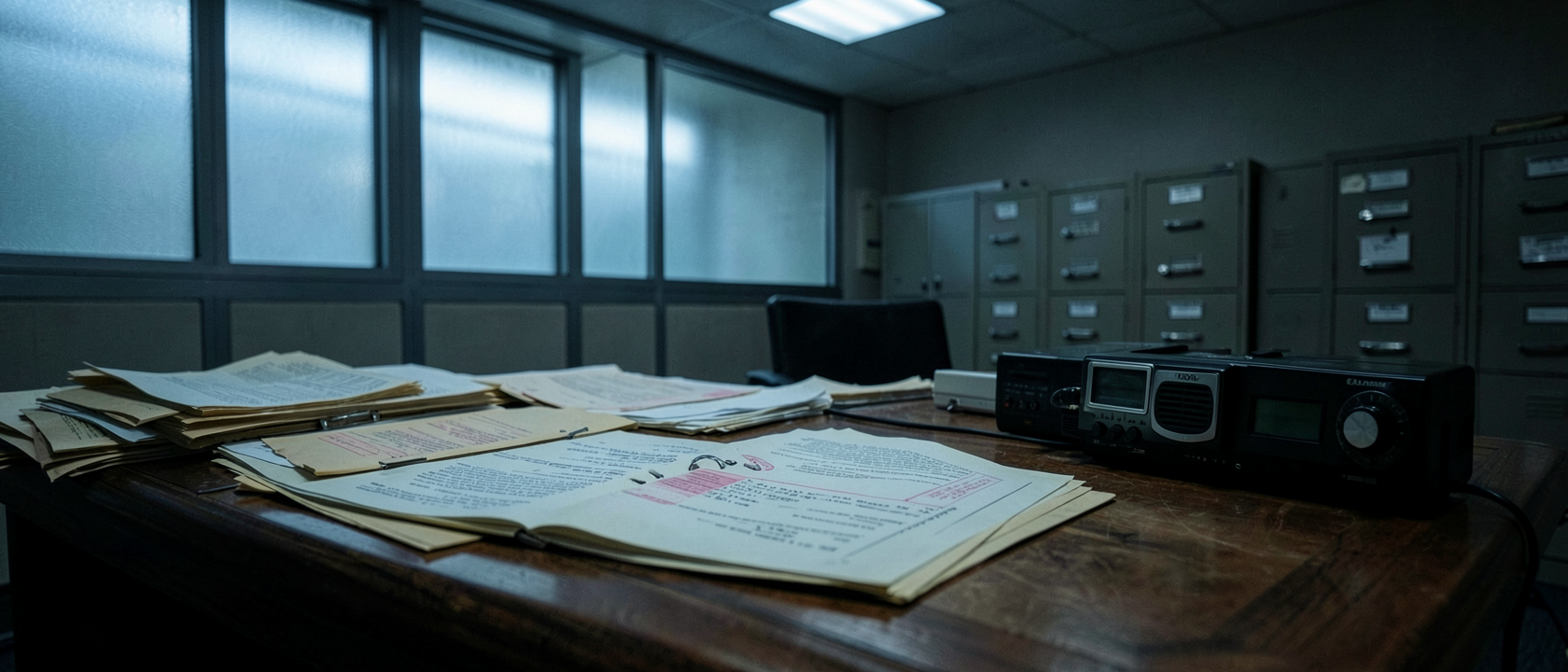
Inspector general offices investigate the departments that employ them, and when they clear a complaint, the clearance usually becomes the end of the file, at least on paper. Luis Elizondo’s whistleblower-reprisal complaint against three named Pentagon officials followed that pattern for almost two years, until a public records request forced the office to release the one document it had been sitting on: the transcript of its own interview with him.
The Release
On February 9, 2023, the Department of Defense Office of Inspector General released a 64-page, 17.9-megabyte archive of records. It came in response to three Freedom of Information Act (FOIA) requests, a legal mechanism for compelling federal agencies to disclose records, filed in October 2022 by researcher John Greenewald Jr., who publishes as The Black Vault. The requests were logged as FOIA cases DODOIG-2023-000010, DODOIG-2023-000018, and DODOIG-2023-000019. What came back was a partially redacted transcript of Elizondo’s interview with investigators, a set of internal OIG emails mentioning him by name, and records connected to attorney Daniel Sheehan. The audio recording of that interview was not included; the office stated it had been unable to process it for release, and an appeal over the withholding was pending.
The Complaint
The file documents a complaint Elizondo filed on May 3, 2021, through the DoD’s Fraud, Waste and Abuse Hotline, a formal channel for reporting misconduct within the department. It named three officials: Garry Reid, Director of Defense for Intelligence and Security; Susan Gough, a Department of Defense Public Affairs Officer; and Neill Tipton, a former Director for Defense Intelligence, Collection and Special Programs. Elizondo’s own language, drafted with the help of attorney Daniel Sheehan, accused them of “malicious activities, coordinated disinformation, professional misconduct, whistleblower reprisal and explicit threats.” Those are his words, from his complaint. On or around May 19, 2021, investigators from the OIG’s Whistleblower Reprisal Investigations unit interviewed him about it.
The Closing Letter
The case closed on February 16, 2022. A letter signed by Nilgun Tolek, Director of Whistleblower Reprisal Investigations, addressed to Elizondo’s attorney, stated the finding without hedging: “Your client’s eligibility for access to classified information remains intact. Accordingly, we are closing his case.” The investigators had reviewed the evidence and found nothing to support a claim that his clearance access had been threatened or acted against. That is the one conclusion in this file that was actually reached and stated plainly.
The Narrow Scope
The finding answers exactly one question: whether Elizondo suffered reprisal affecting his access to classified material. It does not say whether Reid, Gough, or Tipton underwent any disciplinary review as a result of his complaint. It does not address “coordinated disinformation” at all, not to confirm it and not to dismiss it. The letter closes a reprisal case. It is silent on everything else Elizondo alleged.
What’s Still Withheld
Three further items sit outside what the released record discloses, and each is a fact about the paperwork rather than a claim about its contents. The full audio and video of the May 2021 interview remains withheld, pending The Black Vault’s appeal. The transcript that was released is only partially redacted, and the content behind those redactions is not disclosed anywhere in the file. The correspondence between the OIG and attorney Daniel Sheehan is referenced in the release but not reproduced in full. None of these three gaps indicates what they contain. They indicate only that something was withheld.
The Allegation Nobody Tested
Set against all of this is the language Elizondo used when he filed: “malicious activities,” “coordinated disinformation,” “professional misconduct,” “explicit threats.” Those words are his, written in the complaint, not findings reached by any investigator. The OIG’s closure addressed one narrow question, reprisal against his clearance access, and concluded against it. It never tested the rest of what he alleged. The released file does not confirm Elizondo’s broader claims about his treatment, and it does not refute them either. It simply never reaches them.
The closed case, the released transcript, and the pending appeal over the audio all belong to the same file. What the record currently shows is a reprisal complaint that was investigated and closed on one specific point, and a set of larger accusations that remain exactly where Elizondo left them: stated, unexamined, and unresolved.