
The Defense Threat Reduction Agency (DTRA) is a U.S. Department of Defense combat support agency headquartered at Fort Belvoir, Virginia, and operating under the Office of the Secretary of Defense. Its central mission is reducing the danger posed by weapons of mass destruction and other threats through arms control verification, cooperative threat reduction, research and development, and active combat support. Founded in fiscal year 1999 from the merger of several predecessor offices, DTRA fields approximately 2,000 military and civilian experts working in more than 50 countries and executes more than $2 billion in annual funding.
Key facts
- Country: United States
- Founded: 1998
- Headquarters: Fort Belvoir
- Type: Combat support agency
- Parent organisation: Office of the Secretary of Defense; United States Department of Defense
- Website: https://www.dtra.mil/
Origins and Formation
The November 1997 Defense Reform Initiative set DTRA’s creation in motion by directing the consolidation of the Defense Special Weapons Agency and the On-Site Inspection Agency with the Cooperative Threat Reduction Program and the Chemical-Biological Defense Program. Those four bodies formed the core elements of the new agency, which became operational in fiscal year 1999. At founding, DTRA had approximately 2,100 employees and a budget of about $1.9 billion.
The On-Site Inspection Agency, one of DTRA’s direct predecessors, was itself established in 1988 to carry out inspection and escorting duties under the Intermediate-range Nuclear Forces Treaty. By the time it merged into DTRA in 1998, the directorate had grown to more than 600 employees. Its experience predated DTRA’s existence by years: as early as July 1991 the agency served as the U.S. Executive Agent supporting the United Nations Special Commission on WMD inspections in Iraq.
Leadership and Structure
Mr. Andrew ‘Drew’ Walter serves as the Director of DTRA and a member of the Senior Executive Service. DTRA’s leadership structure is organized into directorates covering Nuclear Enterprise, Global Threat Reduction, Combat Support, Research and Development, Operations/Plans/Programs, Human Resources, Acquisitions/Contracts/Logistics, and C4 Systems.
The On-Site Inspection and Building Capacity Directorate handles arms control treaty verification by conducting intrusive inspections of declared strategic facilities in the Russian Federation and by escorting Russian inspection teams at U.S. strategic sites under the New START Treaty.
Cooperative Threat Reduction
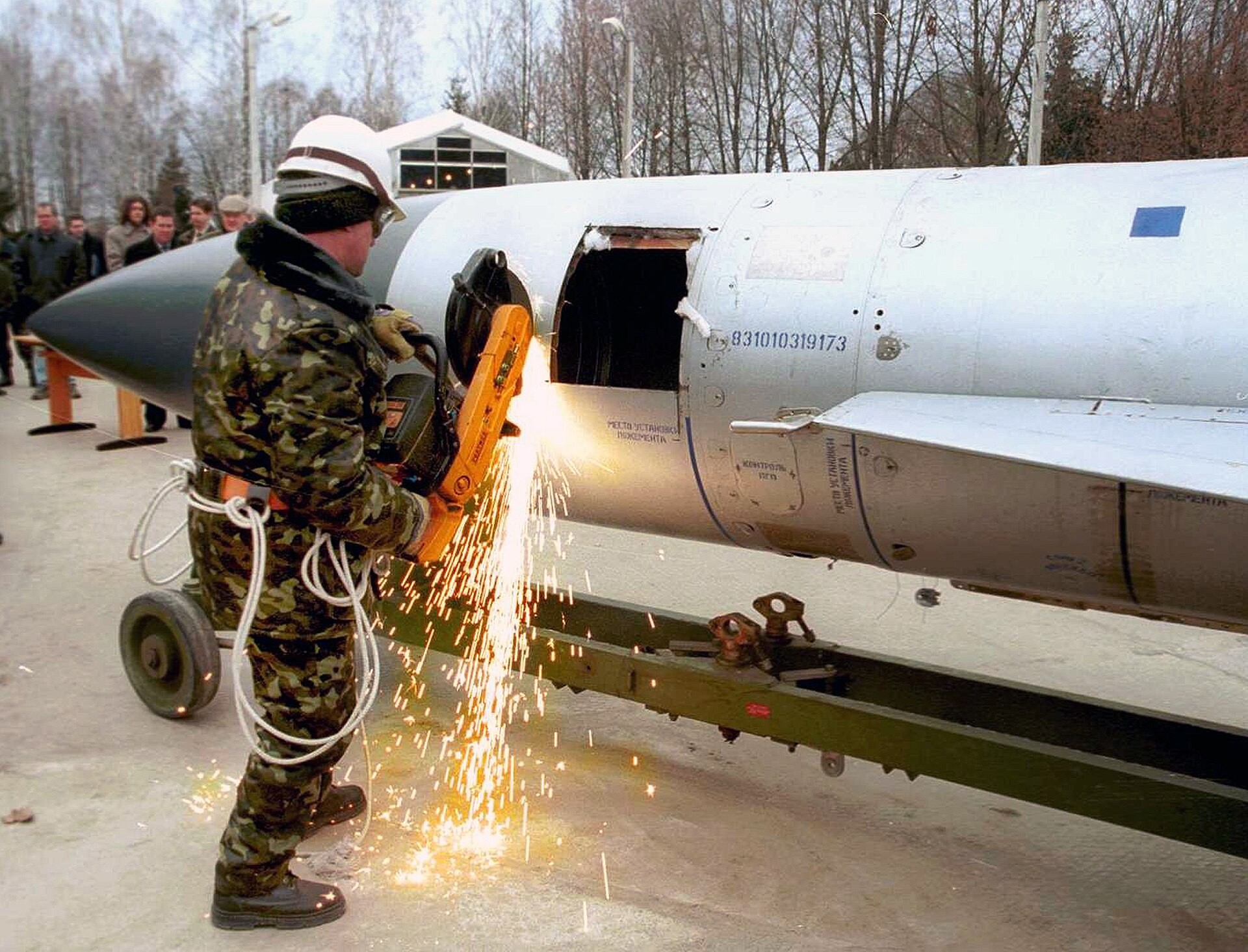
The Cooperative Threat Reduction (CTR) program, often called Nunn-Lugar after its congressional sponsors, is one of DTRA’s most consequential areas of work. Through the program, Ukraine, Kazakhstan, and Belarus were assisted in removing all strategic nuclear warheads they had inherited after the Soviet Union’s collapse in 1991, making all three countries nuclear-weapons-free. The program has also engaged more than 30 countries on three continents in biological threat reduction efforts.
On the chemical weapons side, the CTR program has secured 10 chemical weapons sites and destroyed more than 4,700 tons of chemical weapons agents originating in Albania, Libya, Russia, and Syria. In October 2004, Nunn-Lugar funds were used for the first time outside the former Soviet Union to destroy chemical weapons in Albania. Albania subsequently became the first modern nation to completely destroy its entire supply of chemical weapons.
The Proliferation Security Initiative (PSI), launched by President George W. Bush in May 2003, is now maintained by DTRA. The PSI focuses on interdicting the transfer of weapons of mass destruction, delivery systems, and related materials.
Iraq Operations and WMD Elimination
In March 2003, DTRA was designated the Department of Defense Executive Agent for WMD elimination operations within Iraq. In that capacity, DTRA conducted nearly 70 sensitive site surveys across the country, applying the inspection experience its predecessor agencies had built up over more than a decade.
Expansion: JIDO and Cyber Operations
On September 30, 2016, the Joint Improvised-Threat Defeat Agency (JIDA) became part of DTRA under the 2016 National Defense Authorization Act and was renamed the Joint Improvised-Threat Defeat Organization (JIDO). The transfer broadened DTRA’s portfolio to include the defeat of improvised threats in addition to its traditional WMD focus.
In June 2025, Parsons Corporation was awarded a $137 million ceiling-value contract by DTRA for cyber operations, reflecting the agency’s growing responsibilities in the digital domain.
Controversies and Disputed Claims
In October 2018, Russia’s Defense Ministry alleged that a DTRA-funded public health research center in Tbilisi, Georgia, the Richard G. Lugar Center for Public Health Research, was a clandestine biological weapons laboratory. The Pentagon rejected these allegations as disinformation. The allegation and the Pentagon’s denial are part of the documented public record; no independent finding has resolved the dispute.
Recent Activity
DTRA’s International Counterproliferation Program, in partnership with the EU CBRN Centres of Excellence and UNICRI, hosted the Africa Shield 2026 Regional Counterproliferation Workshop in Tunis, Tunisia, on July 14-16, 2026. The event brought together more than 100 participants from across the African continent.
DTRA’s first Mentor-Protégé Agreement, a partnership between Shield Analysis Technology as protégé and ARServices, Limited as mentor, was approved in April 2023. That partnership earned a 2026 Nunn-Perry Award presented at the DoD Mentor-Protégé Program Summit in April 2026.
Did you know
- Under the Nunn-Lugar CTR program, 500 metric tons of highly enriched uranium from Russian nuclear warheads were converted to commercial reactor fuel, providing electricity to American homes in what became known as the “Megatons to Megawatts” program. (armscontrolcenter.org)
- The CTR program helped dismantle all 906 nuclear air-to-surface missiles in the former Soviet arsenal, representing a 100 percent completion rate for that category as tracked by the Nunn-Lugar Scorecard compiled by DTRA. (armscontrolcenter.org)
- DTRA’s predecessor, the On-Site Inspection Agency, became the U.S. Executive Agent supporting the United Nations Special Commission conducting WMD inspections in Iraq as early as July 1991, seven years before DTRA itself existed. (dtra.mil)
- DTRA team members in August 2018 were awarded the Secretary of Defense Medal for Valor, one of the highest non-combat honors in the Department of Defense, recognizing extraordinary actions in the line of duty. (dtra.mil)
Data sources
- Wikidata
- dtra.mil
- armscontrol.org
- bootcampmilitaryfitnessinstitute.com
- armscontrolcenter.org
- washdiplomat.com
- acronym.org.uk
- navytimes.com
- dvidshub.net
- defsecwire.com
- cbinsights.com
Where it appears
Data updated: 2026-11-03