
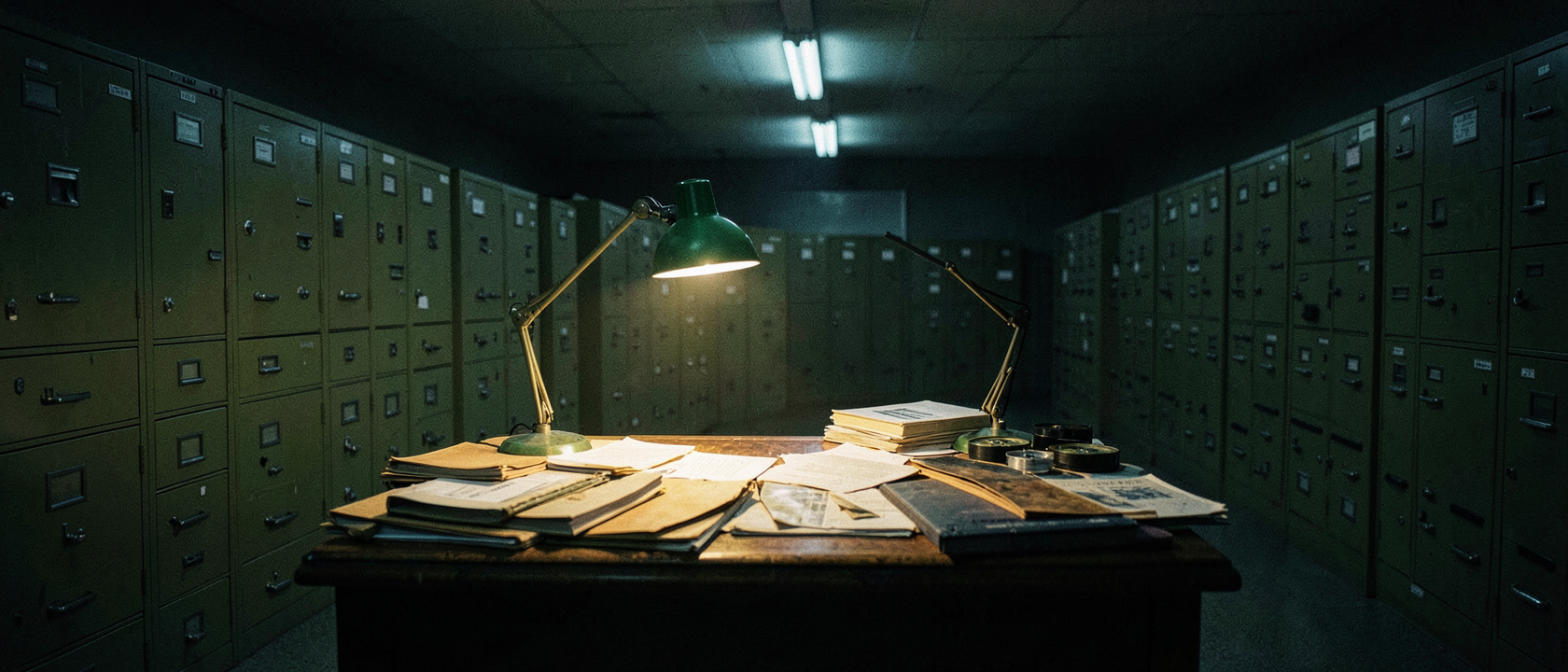
Delivery to the Hill
In March 2024, the Department of Defense delivered to Congress a sixty-three-page document titled Historical Record Report on Unidentified Anomalous Phenomena, Volume I. Mandated by the National Defense Authorization Act for Fiscal Year 2023, the review required a formal accounting of the government’s historical involvement with unidentified anomalous phenomena (UAP). The law gave the All-domain Anomaly Resolution Office (AARO) 540 days, setting a deadline in July 2024. Volume I arrived roughly four months early, in the first days of March, marking the first AARO report submitted ahead of schedule.
AARO’s acting director, Tim Phillips, briefed reporters around March 6, 2024. On March 8, 2024, AARO posted the document online, researcher John Greenewald Jr. republished it via The Black Vault, and Pentagon press secretary Major General Pat Ryder issued an accompanying statement. The report’s stated window runs from 1945 through October 31, 2023; material gathered after that date was reserved for a second volume.
Cataloging the Rumor Network
Across dozens of interviews, current and former government and contractor personnel told investigators that the United States and private aerospace firms held crashed non-human craft, preserved biological remains, and ran a hidden reverse-engineering effort outside congressional oversight. The report describes its purpose: “to use a rigorous analytic and scientific approach to investigate past USG-sponsored UAP investigation efforts and the claims made by interviewees that the USG and various contractors have recovered and are hiding off-world technology and biological material.” One interviewee, a former Air Force intelligence officer, alleged a covert reverse-engineering program built around recovered vessels. AARO traced claims of congressional concealment to what the report calls circular reporting: a small group citing each other’s beliefs without independent evidence.
Opening the Controlled Access Programs
To verify testimony, investigators examined Controlled Access Programs, Special Access Programs, and compartmented intelligence channels. AARO pulled operational files, security logs, and budget records dating to 1945, matching them against names and locations supplied by interviewees. The report states that investigators “successfully located” the programs, officials, companies, and documents identified by witnesses. Locating a file confirms its existence, not what a witness believed it proved. Regarding an allegation involving a named former CIA official, the report states directly that the individual was not involved in moving extraterrestrial technology. AARO also found no evidence of authentic UAP-related non-disclosure agreements or threats of violence tied to disclosures.
The Negative Return
The Pentagon’s statement read: “AARO has found no evidence that any U.S. government investigation, academic-sponsored research or official review panel has confirmed that any sighting of a UAP represented extraterrestrial technology.” On specific programs named by interviewees, the report sorts every one into three outcomes: “all of the named and described alleged hidden UAP reverse-engineering programs provided by interviewees either do not exist; are misidentified authentic, highly sensitive national security programs that are not related to extraterrestrial technology exploitation; or resolve to an unwarranted and disestablished program.” The report adds that no physical sample, test record, or documented chain of custody for recovered non-human material exists in government holdings.
The Real Projects Behind the False Names
The report’s ordinary explanation rests on the second outcome: authentic programs misread. Personnel with genuine clearances saw actual classified work in materials science, low-observable airframe design, and high-altitude sensor platforms built for conventional military purposes, mistaking parts of it for recovered hardware. Secrecy was maintained to prevent foreign intelligence services from assessing American capabilities. The report’s account of unresolved cases points to the same underlying limitation; page 45 states that “if quality data were available, most of these cases also could be identified and resolved as ordinary objects or phenomena.” The limiting factor cited is data quality, not the nature of what was observed.
Redacted Titles and the Cutoff Date
The report does not name the real programs mistaken for alien projects; files identifying them remain classified, and Volume I lists none of them. Volume I evaluates only material gathered through October 31, 2023. Subsequent interviews, contractor submissions, and reports filed through AARO’s intake channel covering the period up to April 15, 2024, were held for Volume II. On the public record, Volume I covers 1945 through October 31, 2023, concluding with a negative finding on recovered hardware alongside the October cutoff.