
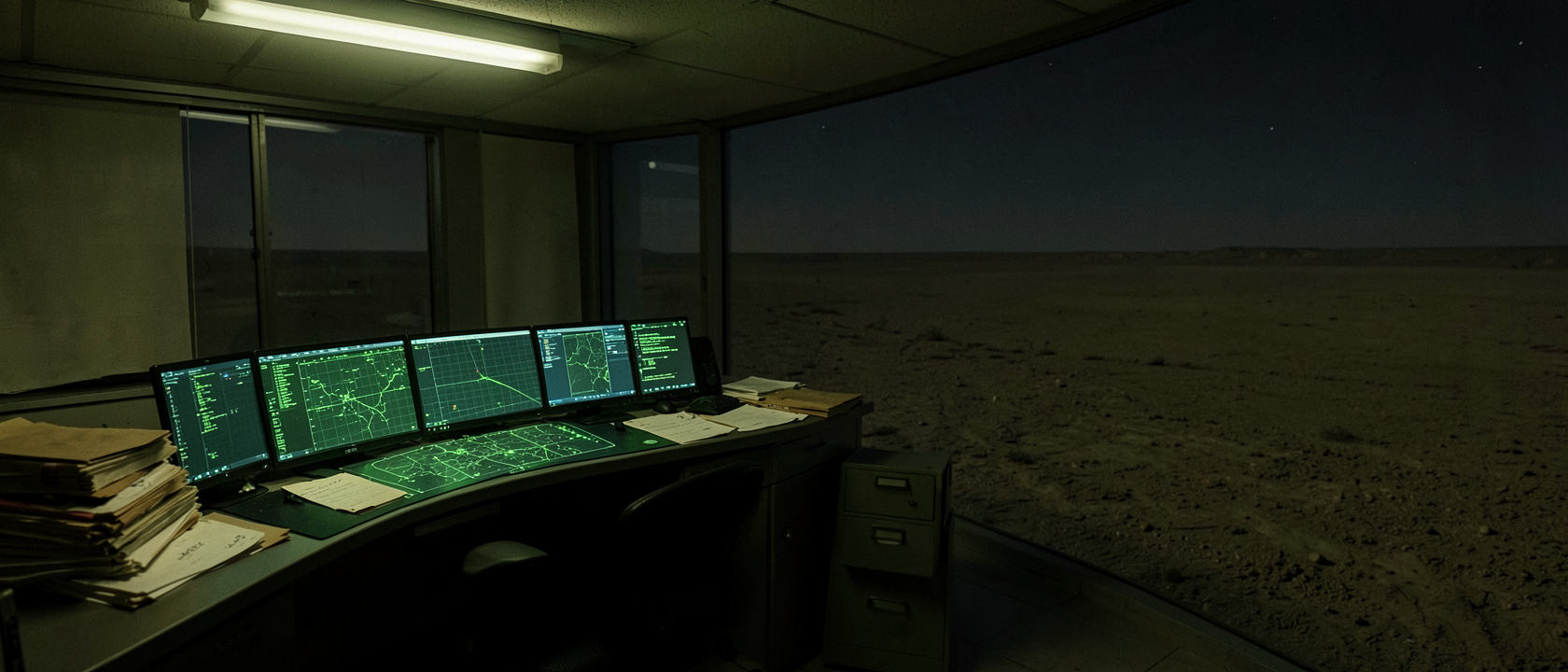
An Army counterintelligence report from the fall of 2023 told officers in the Great Lakes region that “high UAP activity” had been detected over Lake Erie. The same report mentions vessel movements near Detroit Arsenal. The line after that detail is redacted, and nothing in the file says what, if anything, came of it.
The Request and the Response
John Greenewald, who runs The Black Vault, filed a Freedom of Information Act (FOIA) request with the Army Intelligence and Security Command (INSCOM) on December 11, 2024. The request, logged as case 0034F-25, sought all Army records, classified or unclassified, sent to the Pentagon’s All-domain Anomaly Resolution Office (AARO) for its Fiscal Year 2024 UAP report. It covered photos, videos, memos, emails, investigation files and attachments dated from May 1, 2023, through the date the request was processed.
INSCOM issued its final response on April 15, 2025. The release ran to 70 pages, most of them blacked out. The agency withheld material under three FOIA exemptions: (b)(1), covering information properly classified for national defense; (b)(3), citing 50 U.S.C. § 3024(i), the statute protecting intelligence sources and methods; and (b)(7)(E), covering law enforcement and investigative techniques. INSCOM’s cover letter stated it was “not reasonable to segregate meaningful portions of the record for release.” The Black Vault published the documents on April 22, 2025, describing the release as one of the few confirmed instances in which specific Army activity tied to AARO’s UAP work has been documented at all.
Four Reports, One Filing System
Inside the 70 pages, four incidents can be identified by date and originating office.
A June 1, 2023, Army counterintelligence report lays out planning for a Dugway Proving Ground exercise, run with the Mountain West Resident Agency (MWRA), meant to visually corroborate UAP sightings during the exercise.
A July 17, 2023, report describes delayed and incomplete reporting of UAV and UAP sightings by U.S. military personnel near an unnamed sensitive site in Saudi Arabia.
A September 12, 2023, MWRA report describes expanded, ongoing monitoring of UAP activity. It notes that the radar in use could estimate an object’s direction and velocity but not its altitude or other flight characteristics.
A September 26, 2023, Great Lakes Field Office report records “high UAP activity” over Lake Erie and discusses vessel movements near Detroit Arsenal.
What the Army Did Next
The documents describe organizational responses, not conclusions. After the Dugway report, a monthly working group was proposed to carry the visual-corroboration effort into future exercises. After the Lake Erie report, Great Lakes counterintelligence officers were told to stay informed of new sightings and to coordinate with Army pilots.
Separately, counterintelligence personnel modified the firmware on DJI Phantom 4 drones to block telemetry and device data from reaching foreign servers. Two detection systems, the Windtalker UAS Sensor and the Low Altitude Surveillance Platform (LASP) at White Sands Missile Range, were used to detect and locate drones and their pilots at ranges of more than 35 kilometers (the figure as reported; the original unit was not independently verified). The records also note continuing unauthorized drone incursions in restricted airspace zones R-5107B, at White Sands, and WVA, near Albany International Airport, often involving self-piloted drones without GPS-based control software.
The Explanation That Isn’t There
Nowhere in the released material does a determination appear. There is no finding on the Lake Erie activity, none on the Saudi Arabia sightings, no stated outcome for the Dugway exercise, and no identification of the “large amount of ‘airborne’ debris” that one still-unnamed office reported finding. In a document of this kind, an ordinary explanation usually shows up as a short closing line: a radar return traced to a known aircraft, a drone matched to a registered operator, a weather phenomenon noted and dismissed. None of that language appears in what was released. Its absence does not mean a determination doesn’t exist somewhere in the withheld pages; it means none was disclosed.
The Specific Unknowns
Five questions remain open, each tied to a specific point in the record.
Which office reported the “airborne debris,” and what the debris was, is not stated; both the originating office and the description are classified.
How long MWRA had been monitoring UAP activity before its September 12, 2023, report is not given. The report describes the monitoring as long-running but does not date its start.
The outcome of the Dugway visual-corroboration effort is not recorded in the released pages.
The identity of the “sensitive location” in Saudi Arabia named in the July 17, 2023, report is redacted.
And the full scope of what the Army sent to AARO for the FY2024 report is unknown, because most of the responsive records were withheld in full rather than released with redactions.
The Redaction Itself
Set the content aside and look at the paperwork. INSCOM withheld the bulk of 70 pages under three exemptions: (b)(1) for classified national defense information, (b)(3) tied to a statute protecting intelligence sources and methods, and (b)(7)(E) for law enforcement and investigative techniques. These are standard FOIA exemptions used across intelligence and defense agencies for reasons that range from protecting a human source to withholding a technical capability. INSCOM’s letter offers no further explanation beyond stating that meaningful portions could not be segregated for release.
That is a fact about the document, not a fact about what it describes. A page withheld under (b)(3) is a page the Army has chosen not to release; it is not evidence of what is written on it. The FOIA release confirms that the Army sent specific material to AARO about Lake Erie, Saudi Arabia, and a Dugway exercise. It does not confirm, and does not deny, anything about what any of those sightings turned out to be.