
A Truckload to Tarrytown
In late October 1976, more than a decade of Henry Kissinger‘s own telephone transcripts left Washington for Nelson Rockefeller’s estate in Tarrytown, New York, not for the National Archives. The shipment surfaces in files the National Archives and Records Administration’s (NARA) National Declassification Center released in November 2023, published by the National Security Archive on February 13, 2024, as “The Kissinger Telcons: The Story Behind the Story.”
Seventeen Cartons
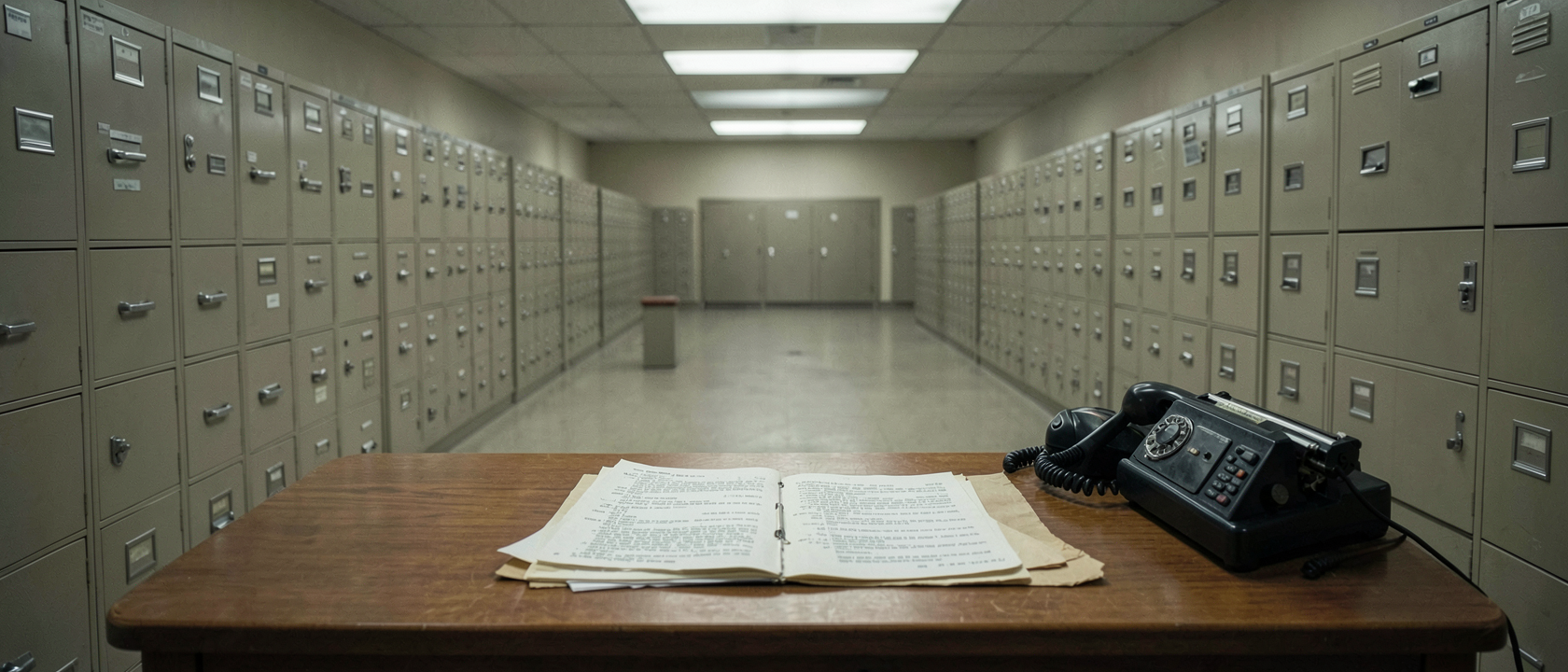
The release consists of seventeen cartons from the office of Monroe Leigh, the State Department’s Legal Adviser from 1975 to 1977, obtained through an Indexing on Demand request, which asks the Declassification Center to process a specific accession. Two items anchor what follows. Document 1, undated and filed in the chronological record for January through April 1975, discusses the “hypothetical case” of who owns a transcript of a government phone call. Document 2, in box 11, is listed in the finding aid, the index NARA staff write to describe a collection, as a “memorandum of law.” The finding aid’s description of it stops mid-sentence; what the rest of that memorandum said is not stated in what was released.
A Practice That Began in 1969
Kissinger had his calls transcribed by staff from January 1969, when he became National Security Adviser, through his years as Secretary of State beginning September 1973. In a 1973 interrogatory in former aide Morton Halperin‘s wiretapping lawsuit, Kissinger described the transcription as “a routine government practice.” Nothing in that description made the telcons unusual on its own.
Safire, Oberdorfer, and Tarrytown
William Safire’s New York Times column of January 14, 1976, made the telcons public and prompted a Freedom of Information Act (FOIA) request, the law obliging federal agencies to release records unless an exemption applies, which the department denied. In August 1976, Librarian of Congress Daniel Boorstin proposed over lunch that Kissinger donate his records to the Library’s Manuscript Division. On December 21, 1976, Washington Post reporter Don Oberdorfer reported that the resulting donation excluded the telcons entirely.
Forty-Eight Hours in December
Reporters pressed the department on this at a briefing on December 22, 1976. On December 23, Leigh warned Kissinger in writing that the American Historical Association, through an Arnold & Porter attorney, was preparing to sue over his personal control of the transcripts. On December 24, Kissinger amended his deed of gift, the instrument transferring papers to an institution, to add the telcons to the Library donation, announced publicly on December 28. Leigh’s December 23 memo does more than warn of a lawsuit: it frames the amended gift as a way to move the dispute out of the courts and out of the newspapers.
The Legal Theory
By then Leigh’s office had already settled the underlying argument. Leigh and deputy Michael Sandler concluded the telcons were Kissinger’s personal papers, and that depositing them with the Library placed them outside both FOIA and the Privacy Act, which restricts disclosure of records tied to a named individual, since Congress itself is not an agency subject to FOIA. Sandler’s memo held that whether the telcons were personal papers or copies of agency records, “there should not be any basis for access” either way. Leigh later invoked that same position in Document 32, a legal opinion denying NARA’s Archivist access to the telcons on the grounds that the Archives was not a neutral custodian but an advocate against officials’ personal-papers claims.
An Inspection That Settled Nothing
Archivist James Rhoads pushed back. Kissinger refused his first request in early 1977; a renewed request in February, addressed to Kissinger as a private citizen, produced a limited joint inspection with the State Department. Document 34 records that State and NARA examined the material together and reached no agreement on which telcons were official records and which were personal. A 1980 review promised by Secretary of State Edmund Muskie never took place. The dispute reached the Supreme Court as Kissinger v. Reporters Committee for Freedom of the Press, after lower courts split the material between the two custodies. The Court ruled only that private plaintiffs lacked standing, the legal right to bring a claim, to compel return of records, leaving that authority to the Archivist, the agency head, or the Attorney General. It did not decide who owned the telcons.
What the Record Doesn’t Show
Four things remain open. The files do not show NARA and State ever agreeing which telcons were official records. Lawrence Eagleburger’s custodial files on the collection remain closed. Kissinger’s own papers are closed, so only his lawyers’ reasoning is documented. And Document 2’s description simply breaks off. None of these gaps says what the missing material contains. They are facts about the paperwork, nothing more.
What People Said About It
Oberdorfer’s reporting, and the questions put to State’s spokesman that December, reflect the skepticism of the moment toward an official claiming sole ownership of transcripts typed on government time. The National Security Archive has described the telcons as kept “out of reach” of FOIA for decades, until its own pressure led to the recovery of more than 15,000 pages beginning in 2001, with further releases through 2004 and after a later lawsuit. Those are characterizations, not findings. What Leigh’s files settle is what his office argued, and when. Whether anyone at State or NARA ever resolved which telcons belonged to the government is a question the record still leaves open.